India is not one country when it comes to food. It is a dozen distinct culinary nations held together by a shared love for spice. For the culinary traveler planning a trip in 2026, the challenge is not finding good food. It is narrowing down where to go and what to taste. A well planned India spice tour itinerary should feel less like a checklist and more like a story told through aroma, heat, and texture.
This guide walks you through the essential spice routes of India. You will learn which regions to visit, what spices define each area, and how to structure your days so you taste the real thing. Whether you have two weeks or a full month, this curated itinerary will help you eat with intention.
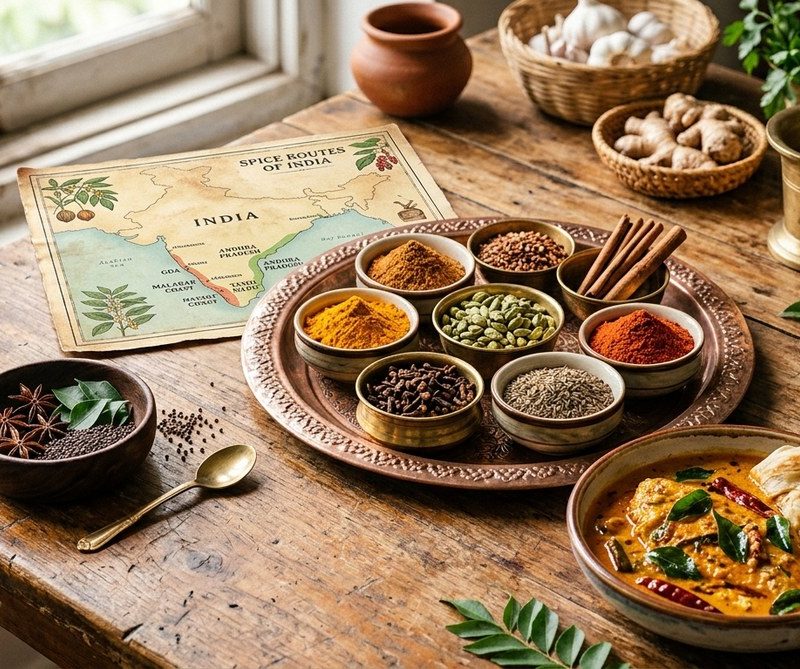
A successful India spice tour itinerary balances four distinct regions: Kerala for black pepper and cardamom, Rajasthan for saffron and cumin, Bengal for panch phoron and mustard, and Tamil Nadu for curry leaves and tamarind. Each stop requires at least three days to visit markets, attend a cooking class, and eat with a local family. The best months are November through February.
Why a Regional Spice Tour Beats a General Trip
Many travelers visit India and eat butter chicken in Delhi, then assume they have tasted Indian food. That is like eating a hamburger in New York and claiming to know American cuisine. India’s spice identity shifts every few hundred miles.
The geography of spice in India is tied to soil, rainfall, and centuries of trade. Black pepper grows best in the humid hills of Kerala. Saffron thrives in the dry cold of Kashmir. Turmeric from Tamil Nadu has a higher curcumin content than turmeric grown anywhere else. A focused itinerary lets you taste these differences side by side.
A general tour skips this nuance. A spice route itinerary forces you to slow down, visit farms, and understand why a spice from one region tastes completely different from the same spice grown elsewhere.
The Four Pillar Regions for Your Itinerary
To build a complete picture of Indian spices, you need to visit four core regions. Each one offers a different flavor profile and a different window into how spices shape daily life.
| Region | Defining Spices | Signature Dish | Best Market |
|---|---|---|---|
| Kerala | Black pepper, cardamom, cloves, cinnamon | Meen Moilee (fish in coconut milk) | Spice Market, Mattancherry, Kochi |
| Rajasthan | Saffron, cumin, red chili, asafoetida | Laal Maas (spicy lamb curry) | Johari Bazaar, Jaipur |
| West Bengal | Panch phoron, mustard, poppy seed | Shorshe Ilish (hilsa in mustard sauce) | New Market, Kolkata |
| Tamil Nadu | Curry leaves, tamarind, mustard seed, turmeric | Chettinad Chicken | George Town Market, Chennai |
Each region deserves at least three full days. That gives you time to adjust, visit a spice farm or plantation, take a cooking class, and eat at a home based restaurant.
Building Your 14 Day India Spice Tour Itinerary
Here is a sample timeline for a two week trip. It is designed to minimize travel time while maximizing flavor exposure.
Days 1 to 4: Kochi and the Kerala Spice Coast
Start in Kochi. This is the historic gateway for the spice trade. Portuguese, Dutch, and British ships all docked here to load pepper and cardamom.
On day one, walk through the Mattancherry spice market. Do not buy anything yet. Just smell. Let the vendors show you the difference between Tellicherry black pepper and Malabar black pepper. Tellicherry is larger and milder. Malabar is smaller and more pungent.
On day two, drive two hours into the Western Ghats to visit a cardamom plantation. The Cardamom Hills near Munnar are ideal. You will see the plant growing in shaded rows under tall trees. The guide will show you how pods are hand picked and dried over wood fires.
On day three, take a cooking class focused on coconut based curries. The Keralan technique involves grinding fresh coconut with roasted spices into a paste. You will learn how to temper mustard seeds and curry leaves in coconut oil. That single technique unlocks dozens of dishes.
On day four, eat breakfast at a local toddy shop. These are informal restaurants that serve fermented palm wine alongside spicy fish fry and banana fritters. It is the most authentic meal you will have in Kerala.
Days 5 to 7: Jaipur and the Rajasthani Spice Palette
Fly from Kochi to Jaipur. The change is dramatic. You leave the humid green coast and land in a dry desert city. The spices here are built for preservation and heat.
On day five, visit Johari Bazaar in the late afternoon. The spice stalls are stacked with red chili powder, turmeric, and dried mango powder. The saffron vendors keep their threads in small locked boxes. Ask to see both Iranian and Kashmiri saffron. The Kashmiri variety has a deeper color and a more floral aroma.
On day six, take a cooking class that focuses on Rajasthani meat dishes. Laal Maas uses a heavy hand of red chili and garlic. Do not be scared by the color. The heat is balanced by yogurt and ghee. You will also learn how to make dal baati, a lentil dish served with hard wheat rolls that are baked in a wood fire.
On day seven, drive to a village outside Jaipur for a farm lunch. Many families welcome guests into their homes. The meal will be vegetarian, cooked over a charcoal fire, and served on a thali. The flavors are simple and direct. Cumin, coriander, and chili do all the work.
Days 8 to 10: Kolkata and the Bengali Mustard Belt
Fly from Jaipur to Kolkata. Bengali cuisine is a world apart from the rest of India. The defining spice here is mustard, used both as seeds and as a paste.
On day eight, visit the New Market spice section early in the morning. Look for panch phoron, a five spice blend that includes fenugreek, nigella, cumin, black mustard, and fennel. Each seed plays a specific role. Fenugreek adds bitterness. Nigella adds a peppery onion flavor. Fennel adds sweetness.
On day nine, take a fish cooking class. Bengalis eat fish daily, and the preparation methods are precise. You will learn how to make shorshe ilish, where hilsa fish is cooked in a paste of yellow mustard seeds and green chilies. The trick is to grind the mustard fresh and never boil it. High heat kills the pungency.
On day ten, eat at a traditional Bengali lunch home. These are family run restaurants that serve a multi course meal on a banana leaf. The meal starts with a bitter preparation to stimulate digestion, then moves through lentils, vegetables, fish, and a sweet rice dessert. The spice level is moderate, but the complexity is high.
Days 11 to 14: Chennai and Chettinad Spice Country
Fly from Kolkata to Chennai. The final leg of your itinerary takes you to Tamil Nadu and the Chettinad region.
On day eleven, visit the George Town spice market in Chennai. This is a wholesale market, not a tourist spot. The vendors sell turmeric roots, tamarind blocks, and curry leaves by the kilo. The smell is overwhelming in the best way.
On day twelve, drive two hours south to the Chettinad region. This area is famous for its aromatic spice blend, which includes star anise, fennel, cinnamon, and black stone flower (a dried lichen). Take a tour of a Chettiar mansion to see how the spice trade built these grand homes.
On day thirteen, take a Chettinad cooking class. The star dish is Chettinad chicken, where the chicken is marinated in a paste of roasted spices and coconut. The heat builds slowly and lingers. You will also learn how to make a simple rasam, a tamarind and pepper soup that is the ultimate digestive aid.
On day fourteen, return to Chennai for a final meal at a banana leaf restaurant. Order a full thali and eat with your right hand. This is the most respectful way to eat in Tamil Nadu, and it changes the texture of every dish.
“The best spice tour is not about covering the most ground. It is about understanding one spice deeply in each region. Spend a morning with cardamom in Kerala. Spend an afternoon with mustard in Bengal. That is how you learn.” — Chef Meera Iyer, author of Spice Roots of Southern India
3 Essential Steps for Planning Your Own Spice Itinerary
If you want to customize this plan, follow these three steps.
-
Choose your spice anchor. Pick one spice you want to understand deeply. Black pepper, cardamom, saffron, or mustard. Then build your route around the region where that spice is grown and used most heavily. This gives your trip a clear focus.
-
Book a cooking class on day two of each stop. The first day is for arrival and market wandering. The second day is for learning. A cooking class teaches you the techniques behind the local spice usage. You will retain that knowledge long after the trip ends.
-
Eat one meal with a local family. Use services like Traveling Spoon or ask your cooking instructor for a referral. Home cooked food in India uses spices differently than restaurant food. The balance is more subtle. The oil is fresher. You will taste the difference immediately.
What to Pack for a Spice Focused Trip
Your packing list matters more than you think. Here are the essentials:
- A small notebook for writing down spice names and uses
- A zippered bag for bringing back whole spices (not ground)
- Closed toed shoes for farm visits
- A scarf or bandana for dusty market days
- An empty stomach every morning
Do not bring pre ground spices from home. The whole point of this trip is to taste spices at their source. Buy small quantities of whole spices at each market and use them in your cooking class. The freshness is incomparable.
When to Go: The Spice Calendar
India’s spice regions have distinct seasons. The best window for a comprehensive tour is November through February. The weather is cool and dry across most of the country.
- Kerala: Best from November to March. The monsoon ends in October, leaving the hills green and the air clear.
- Rajasthan: Best from October to March. Summer temperatures exceed 110 degrees Fahrenheit and make outdoor visits miserable.
- Bengal: Best from November to February. The humidity drops and the mustard harvest begins.
- Tamil Nadu: Best from December to February. The northeast monsoon ends in December, and the curry leaf plants are at their peak.
Avoid April through June unless you have a high tolerance for heat. Avoid July through September in Kerala and Bengal unless you want to experience monsoon cooking, which is a different but valid experience.
How This Trip Changes Your Cooking
A well designed India spice tour itinerary does more than fill your Instagram feed. It changes how you cook at home. You will start toasting whole cumin seeds before grinding them. You will understand why curry leaves must be fried in oil to release their flavor. You will learn that fresh turmeric stains your hands yellow but tastes nothing like the dried powder.
These are not abstract lessons. They are practical skills that transfer directly to your kitchen. The spice trade routes that changed world history are still alive in every market, farm, and home kitchen you visit. You just have to know where to look.
If you want to build a similar trip around another cuisine, you can follow the same structure. A week long culinary journey through Tuscany uses the same logic of region, market, class, and home meal. The principles are universal. The spices are not.
Your Next Step: Start With One Region
Do not try to do everything at once. If you only have one week, pick one region and go deep. Kerala is the best choice for a first timer because the spice farms are accessible, the cooking classes are plentiful, and the food is gentle on an unfamiliar palate.
Book your cooking class before you leave home. Many of the best classes fill up months in advance. Pack light. Bring a good appetite. And trust the spice vendors who tell you to smell before you buy. Your nose knows more than any guidebook.
The spice routes of India are waiting. All you have to do is follow the aroma.