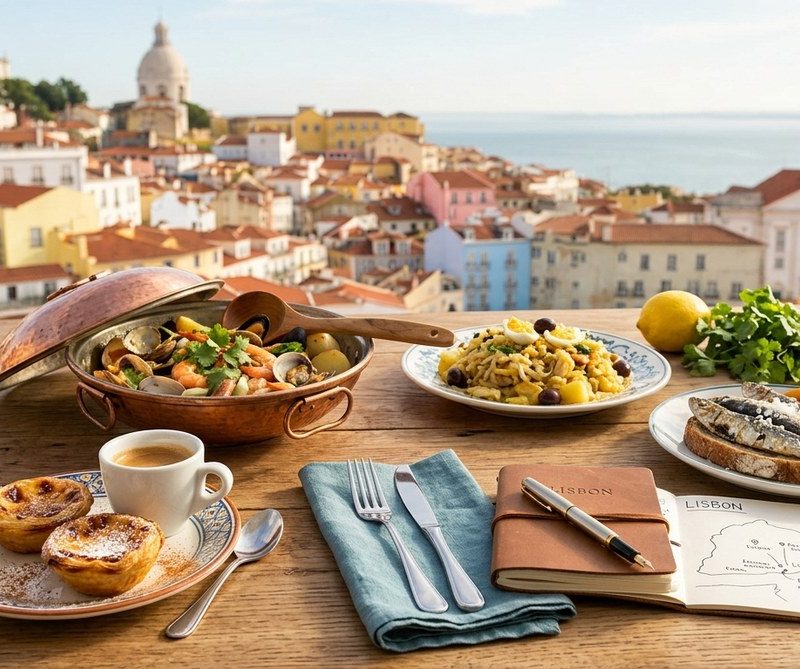
You’re a food traveler and you have four days in Lisbon. That’s enough time to taste Portugal’s soul – but only if you plan each meal wisely. The city rewards those who wander, but it also hides its best bites behind unmarked doors and steep hills. This Lisbon 4 day food itinerary is designed to show you exactly where to go, what to order, and how to eat like a local. We’ll hit classic tascas, waterfront seafood spots, and one or two modern surprises. No tourist traps. Just honest, delicious Portuguese food.
Over four days you will eat pastéis de nata in Belém, grilled sardines in Alfama, and perfectly salted cod in a family-run tasca. You will drink ginjinha in Chiado and vinho verde in Príncipe Real. This itinerary balances tradition and innovation, sweet and savory, cheap eats and one splurge. By day four you will leave Lisbon’s food scene full and deeply satisfied.
Day 1: Alfama, Chiado, and the Soul of Lisbon
Morning: Pastéis de Nata and a View
Start your first day in Alfama, Lisbon’s oldest neighborhood. Skip the hotel breakfast buffet. Instead, walk to Manteigaria on Rua do Loreto. This pastry shop bakes pastéis de nata all day long, and the line moves fast. Order one with a shot of espresso – the locals call it a bica. The contrast between the flaky, buttery crust and the creamy, almost caramelized custard is a lesson in Portuguese pastry technique. Stand at the counter, eat it in three bites, and repeat.
After that, climb to Miradouro de Santa Luzia. The view over the Tagus River is stunning, but more importantly, you’ll pass tiny tascas where old men play cards and the day’s fish is still on ice. Take a mental note. You’ll come back for dinner.
Lunch: Bacalhau at a Tasca
For lunch, head to Tasca do Chico in Bairro Alto. This isn’t a tourist spot – it’s a real neighborhood joint. Order bacalhau à brás, a scramble of salt cod, shredded potatoes, onions, and eggs. It’s comfort food that tastes like the sea. Pair it with a glass of vinho verde, the slightly fizzy green wine from the Minho region. If you’re feeling adventurous, try moelas (chicken gizzards in a rich tomato sauce). They are messy, spicy, and unforgettable.
Afternoon: Time Out Market (But Do It Right)
The Time Out Market in Mercado da Ribeira gets crowded, but for good reason. You can sample dishes from Lisbon’s best chefs under one roof. The trick is to go around 3 p.m., after the lunch rush. Focus on the seafood counters: the arroz de marisco (shellfish rice) from Marlene Vieira’s stall is a must. Avoid the overpriced sushi. Save room for a pastel de feijão (bean pastry) from the bakery stand.
Dinner: Fado and Grilled Sardines
End day one with a fado dinner in Alfama. Clube de Fado offers both excellent music and honest food. Order sardinhas assadas – grilled sardines served with roasted peppers and boiled potatoes. The sardines are wild-caught, salty, and smoky. Listen to the fado vadio (amateur fado) that often happens after the main set. It’s raw, emotional, and the perfect soundtrack to your first night.
Day 2: Belém and Monuments by the Water
Morning: Pastéis de Belém and a Monastery
The most famous bakery in Portugal is Pastéis de Belém. Yes, it’s a tourist magnet, but the original recipe from the 1830s deserves the hype. Arrive before 10 a.m. to beat the crowds. The queue moves surprisingly fast. Order a half-dozen and eat them warm with a dusting of cinnamon and powdered sugar. The secret? The pastry is slightly thicker than a regular pastel de nata, and the filling has a whisper of lemon.
After breakfast, tour the Jerónimos Monastery. It’s walkable from the bakery. The architecture is a Unesco World Heritage site, and the cloisters are breathtaking. You worked off the pastéis just by climbing the stairs.
Lunch: A Seafood Feast at Belém
For lunch, walk five minutes to Ribadouro on Rua do Poço. It’s a classic cervejaria (beer hall) that serves some of the freshest seafood in Belém. Order ameijoas à Bulhão Pato – clams steamed with garlic, cilantro, and white wine. The sauce is so good you’ll want to sop it up with crusty bread. Follow it with arroz de pato (duck rice) if you’re still hungry. Or just order another beer.
Afternoon: LX Factory and Its Food Stalls
Take a cab or the tram to LX Factory, a revamped industrial complex in Alcântara. The Sunday market here is famous, but on weekdays the food stalls are less crowded. Head to Quatro ao Largo for a francesinha – a monstrous sandwich from Porto that layers cured meats, steak, and cheese, all drowned in a tomato-beer sauce. It’s not subtle. It is delicious.
Dinner: Modern Portuguese in Alcântara
For a more refined dinner, book a table at A Cevicheria. Despite the name, the chef focuses on Portuguese ingredients with a Peruvian twist. The ceviche de peixe with fresh coriander and sweet potato is a revelation. Save room for leite creme (Portuguese crème brûlée) with a blowtorch finish.
Day 3: Sintra Day Trip with Wine and Queijadas
Morning: Sintra National Palace and a Pastry Stop
Sintra is just 40 minutes by train from Lisbon’s Rossio station. Start at Sintra National Palace – the twin conical chimneys are unmistakable. Before you climb the hill, stop at Casa do Preto for a queijada de Sintra. These small cheesecakes are made with fresh cheese, sugar, cinnamon, and sometimes a hint of lemon. They are dense, sweet, and the perfect energy boost for the steep walk ahead.
Lunch: Regional Specialties in a Sintra Tasca
For lunch, find Tascantiga, a tiny spot near the palace. Order esparregado (creamed spinach with garlic) and travesseiros – puff pastry filled with almond cream, a Sintra specialty. Yes, it’s a dessert, but it’s also lunch. Don’t argue. Pair it with a glass of vinho regional Lisboa.
Afternoon: Pena Palace and a Vinho Verde
After lunch, visit the Pena Palace, a colorful Romanticist castle perched on a hilltop. The walk up is punishing, but the views of the Atlantic are worth it. On the way down, stop at Quinta da Ribafria for a tasting of local vinho verde. The slight effervescence cuts through the heat and the sweetness of the pastries.
Dinner: Return to Lisbon for a Cozinha Experience
Take the train back to Lisbon and head to Cozinha das Flores in Príncipe Real. This restaurant focuses on Portuguese ingredients with modern technique. The tasting menu changes daily, but you can expect dishes like black pork with clams or octopus with sweet potato purée. Reserve ahead – it’s a small space and fills up fast.
Day 4: Príncipe Real, Bairro Alto, and Final Tastes
Morning: Mercado de Campo de Ourique
Start your final day at Mercado de Campo de Ourique. This market is less touristy than Time Out and full of local families. Grab a bica from Luís & Companhia and a pastel de bacalhau from the fish vendor. These are deep-fried salt cod fritters – crunchy outside, creamy inside. Eat them at the communal tables and watch the butcher slice presunto.
Lunch: Prego no Pão and a Bica
For a true Lisbon lunch, find a cervejaria that serves prego no pão – a steak sandwich on a crusty roll. Cervejaria Trindade in Bairro Alto does a classic version. The beef is thin, the bread is crisp, and the garlic butter seeps into every bite. Order a bica (espresso) afterward. In Lisbon, coffee is a standalone experience, not an afterthought.
Afternoon: A Ginjinha Crawl
Ginjinha is a sour cherry liqueur served in tiny shot cups. It’s sweet, boozy, and the perfect digestif. Do a crawl: start at Ginjinha do Rossio (the oldest one, from 1840), then walk to Ginjinha do Calhariz in Bica. Most places sell it for around €1 a shot. Some add a whole cherry to the bottom. Sip slowly. This is not a race.
Dinner: A Grand Finale at a Michelin-Starred Spot
For your last dinner, book Belcanto, José Avillez’s two-Michelin-star restaurant in Chiado. It’s pricey, but the tasting menu is a tour of Portuguese history in food. The signature dish is “The Oysters of Júbilo” – a play on the classic amêijoas à Bulhão Pato served in an oyster shell. The desserts are equally inventive. This is the kind of meal you remember for years.
Local tip from a Lisbon food writer: “When you order pastéis de nata, dust them with cinnamon and powdered sugar. It’s not just for show – the cinnamon brings out the custard’s nuttiness. And always, always eat them fresh. Day-old pastéis are a crime.”
Portuguese Food Terms Every Visitor Should Know
| Term | Meaning | Example Dish |
|---|---|---|
| Bacalhau | Salt cod, Portugal’s national ingredient | Bacalhau à Brás (shredded cod with eggs and onions) |
| Ameijoas | Clams | Ameijoas à Bulhão Pato (clams in garlic-coriander broth) |
| Pastel de nata | Custard tart in a flaky pastry | Eaten warm with cinnamon and sugar |
| Bica | Small, strong espresso (similar to an Italian ristretto) | Served after any meal |
| Ginjinha | Sour cherry liqueur | Served in a shot glass, often with fruit |
| Vinho verde | “Green wine” – young, slightly sparkling white wine | Pairs with seafood and light dishes |
| Francesinha | Layered meat sandwich with cheese and beer-tomato sauce | A hearty, messy treat from Porto |
| Pão de Deus | “God’s bread” – sweet bun with a coconut topping | Breakfast pastry |
How to Master the Pastel de Nata Experience in 3 Steps
- Find the right bakery. Manteigaria, Pastéis de Belém, or a local confeitaria that bakes them fresh every hour. Avoid gas station pastéis.
- Order correctly. Ask for “dois pastéis de nata e uma bica, por favor.” That’s two tarts and an espresso. Eat them while standing at the counter.
- Add the finishing touch. Sprinkle powdered sugar and cinnamon on top. Don’t be shy. The cinnamon is what makes the custard sing.
Essential Portuguese Dishes You Must Try
- Sardinhas assadas – Grilled sardines, especially in June during the Santos Populares festivals
- Caldo verde – Hearty kale and potato soup with a slice of chouriço
- Pudim de leite – Portuguese crème caramel, dense and silky
- Pastéis de feijão – Bean pastries from Torres Vedras, sweet and spiced
- Polvo à lagareiro – Octopus roasted with olive oil, garlic, and potatoes
Your Last Bite in Lisbon
Four days in Lisbon might feel short, but this Lisbon 4 day food itinerary packs every essential taste into a tight, walkable schedule. You’ve eaten pastéis de nata from both Manteigaria and Pastéis de Belém, so you can decide which one you prefer. You’ve sampled bacalhau in three different forms. You’ve drunk ginjinha under the glow of Chiado’s streetlamps. And you’ve experienced the full arc of Portuguese cuisine – from a humble tasca to a Michelin-starred tasting menu.
What’s next? If you love curated food trails like this, take a look at our guide on It follows a similar philosophy: eat with intention, follow the locals, and always save room for dessert.
Now go book your flight. Lisbon is hungry for you.