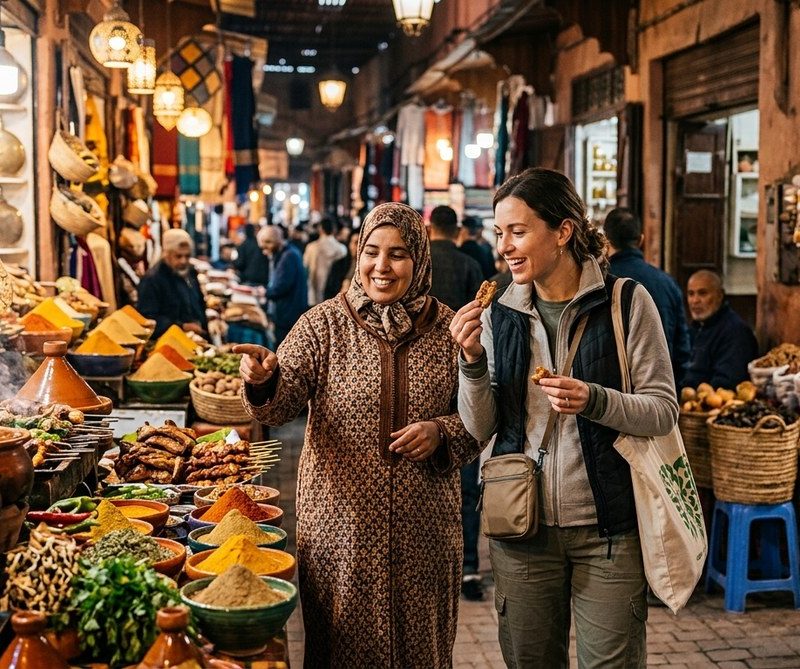
Marrakech hits you with a wall of scent before you even see the food. Cumin and saffron drift from open doorways. Smoke from charcoal grills curls around corners. The call to prayer echoes overhead while a vendor presses a warm piece of msemen into your hand. It is chaotic, loud, and absolutely intoxicating.
But here is the truth. Many visitors wander into the first stall they see near Jemaa el-Fnaa and pay triple the price for a plate of tagine that has been sitting out for hours. They leave thinking Moroccan food is just okay. They could not be more wrong.
The key to a great Marrakech food tour is knowing where to go, what to say, and when to walk away. These Marrakech food tour tips will turn you from a nervous tourist into a confident eater who finds the best bites in the medina.
To eat like a local in Marrakech, skip the main square and head to the side streets where families eat. Learn three Arabic phrases for ordering, eat bread with your right hand only, and always ask for the price before sitting down. A great food tour focuses on street stalls, bakeries, and morning markets rather than fancy restaurants.
Why Most Food Tours in Marrakech Miss the Mark
Many organized tours take you to restaurants that cater to Western palates. The couscous is bland. The harissa is missing its kick. The price includes a commission for the guide.
Real Marrakech food is not found in a sit down restaurant with a menu translated into five languages. It is found on a plastic stool next to a busy street. It is handed to you through a small window. It is scooped up with bread from a communal dish.
If you want to understand the food culture here, you need to adjust your expectations. A 2026 trip to Marrakech should prioritize street food and market visits over white tablecloth dinners.
Master the Morning Souk Strategy
The best time to eat in Marrakech is early morning. The souks open around 7 a.m., and that is when the food is freshest. Vendors have just baked their bread. The olives are still glistening with oil. The honey is dripping from the comb.
Here is a practical step by step process for a morning food walk:
- Start at the Mellah (Jewish Quarter) market near Place des Ferblantiers. Look for women selling homemade bread from baskets.
- Walk toward the spice souk and buy a small bag of ras el hanout. Ask the vendor to show you how they blend it.
- Find a hole in the wall stall selling bissara (dried fava bean soup). It costs about 5 dirhams (roughly 50 cents).
- Stop at a communal oven. Watch women bring their dough to be baked. Buy a round of khobz (Moroccan bread) while it is still warm.
- End at a dairy stall for a bowl of rayeb (fermented milk) drizzled with honey.
This route takes about two hours and costs less than a single appetizer at a tourist restaurant.
The Three Arabic Phrases You Must Know
You do not need to speak Darija (Moroccan Arabic) fluently. But three phrases will change how vendors treat you.
- Salam alaikum (Peace be upon you). Always greet before ordering.
- Bshhal hada? (How much is this?). Say this before you touch anything.
- Zwin, baraka (Good, enough). Use this when you want to stop a vendor from adding more items to your plate.
Moroccans respect effort. Even a clumsy attempt at these phrases will earn you a smile and often a better price.
Where to Find the Best Street Food
The main square, Jemaa el-Fnaa, is a spectacle. You should visit it for the atmosphere. But do not eat dinner there. The food stalls in the square are famous, but they are also expensive and inconsistent.
Instead, use this table to guide your choices:
| Location | What to Eat | Why It Works |
|---|---|---|
| Rue Riad Zitoun el-Jedid | Grilled merguez sausages | Local workers line up here at lunch. The meat is fresh, the harissa is house made. |
| Derb Dabachi | Harira soup with chebakia | This area near the Ben Youssef Mosque serves the best post fast soup during Ramadan, but it is available year round. |
| Bab Doukkala | Stuffed snails (babbouche) | This neighborhood market has a dedicated snail stall that has operated for 40 years. The broth is deeply spiced. |
| Sidi Ben Slimane | Maakouda (potato fritters) | A student area with cheap, crispy potato cakes served with spicy sauce. |
| Gueliz (New Town) | Modern Moroccan sandwiches | The new town has bakeries doing creative takes on kefta and amlou (nut butter). |
The Bread Rule That Matters
Moroccan meals are eaten with the right hand. Bread is the utensil. You tear a piece, use it to scoop food, and bring it to your mouth. Never use your left hand for eating. The left hand is considered unclean.
This is not a suggestion. It is a cultural norm. If you are left handed, practice using your right hand before your trip. Locals will notice and appreciate the effort.
“The first time I ate with a Moroccan family, I reached for the bread with my left hand. The grandmother gently tapped my wrist and handed me a fresh piece. She smiled, but I learned my lesson. Use your right hand. Always.”
This advice comes from Fatima, a home cook in the medina who has hosted travelers for over a decade. She also warns against asking for a fork. It signals that you do not trust the food or the hygiene. If the stall looks clean and busy, trust the bread.
Avoid These Common Tourist Mistakes
Even savvy travelers make errors in Marrakech. Here are the most common ones and how to skip them.
- Sitting down without agreeing on a price. Always ask “bshhal hada?” before you sit. Some restaurants add a cover charge or a service fee after you eat.
- Ordering couscous on Friday. Friday is couscous day for Moroccan families. Many restaurants serve leftover couscous on Saturday. Order it fresh on the correct day.
- Drinking tap water. Even locals avoid it. Buy bottled water or bring a reusable bottle with a filter. Street food is safe, but water is not.
- Touching food at a market stall. Do not pick up olives, dates, or bread with your hands unless the vendor hands it to you. Wait to be offered a taste.
- Eating at the first stall with an English menu. If the menu is in English and the prices are in dollars, walk away. You are in a tourist trap.
How to Handle the Hard Sell
Marrakech vendors are persistent. It is part of the culture. They will call out, compliment your shirt, and try to guide you to their cousin’s restaurant. Do not take it personally.
A simple “la, shukran” (no, thank you) while continuing to walk works every time. Do not stop. Do not make eye contact. If you stop to talk, you have already lost the negotiation.
If a food vendor insists you try something, accept a small taste. That is normal hospitality. But if they try to serve you a full plate, politely decline. You can say “shwiya, baraka” (a little, enough).
The Best Beverages to Try
Moroccans do not drink alcohol with meals in most traditional settings. Instead, the meal centers on tea and fresh juices.
- Mint tea (atay b’nana). You will be offered this everywhere. Accept it. The first glass is sweet, the second is stronger, and the third is for love.
- Fresh orange juice. Jemaa el-Fnaa has dozens of juice stalls. Look for the ones where the vendor is actively squeezing oranges. Avoid pre bottled juice.
- Lben. This is a salty, tangy buttermilk drink. It is an acquired taste, but it pairs perfectly with spicy food.
- Saffron milk. A warm, golden drink sold in the morning. It is calming and slightly sweet.
Building Your Own Self-Guided Food Tour
You do not need to pay for an organized tour. You can build your own using these principles.
- Start early. The best food is gone by 10 a.m.
- Walk away from the main square. Go two streets deep into any direction.
- Follow the locals. If a stall has a line of Moroccan workers, join it.
- Eat small portions at multiple stops. Do not fill up on one dish.
- Carry small bills. Many stalls cannot break a 200 dirham note.
For a longer culinary journey, consider combining Marrakech with a broader Moroccan food trip. You can embark on a culinary safari through Morocco’s food markets and traditional dishes to see how the cuisine varies from city to city.
When to Say No
Not every food experience in Marrakech is worth your time. Some vendors target tourists with low quality ingredients. Here is when to politely decline.
- If the tagine has been sitting in a clay pot with no steam rising from it.
- If the vendor offers you a “special price” before you ask.
- If the meat smells gamey or looks grey.
- If the stall has no Moroccan customers.
Your gut instinct is usually right. If something feels off, trust that feeling and move on.
What to Eat Before You Leave
Before you leave Marrakech, make sure you have tried these dishes from a proper source.
- Tanjiya. A slow cooked meat dish made in a tall clay pot. It is traditionally prepared by men who take the pot to the public oven. Find it in the Mellah.
- Rfissa. Shredded bread with lentils, chicken, and fenugreek. It is a comfort dish served on special occasions. Look for it at a home style restaurant.
- Sfenj. Moroccan doughnuts. Light, airy, and fried to order. The best ones are sold from small street carts in the morning.
- Bastilla. A sweet and savory pie with pigeon or chicken, almonds, and cinnamon. The best versions are made fresh, not reheated.
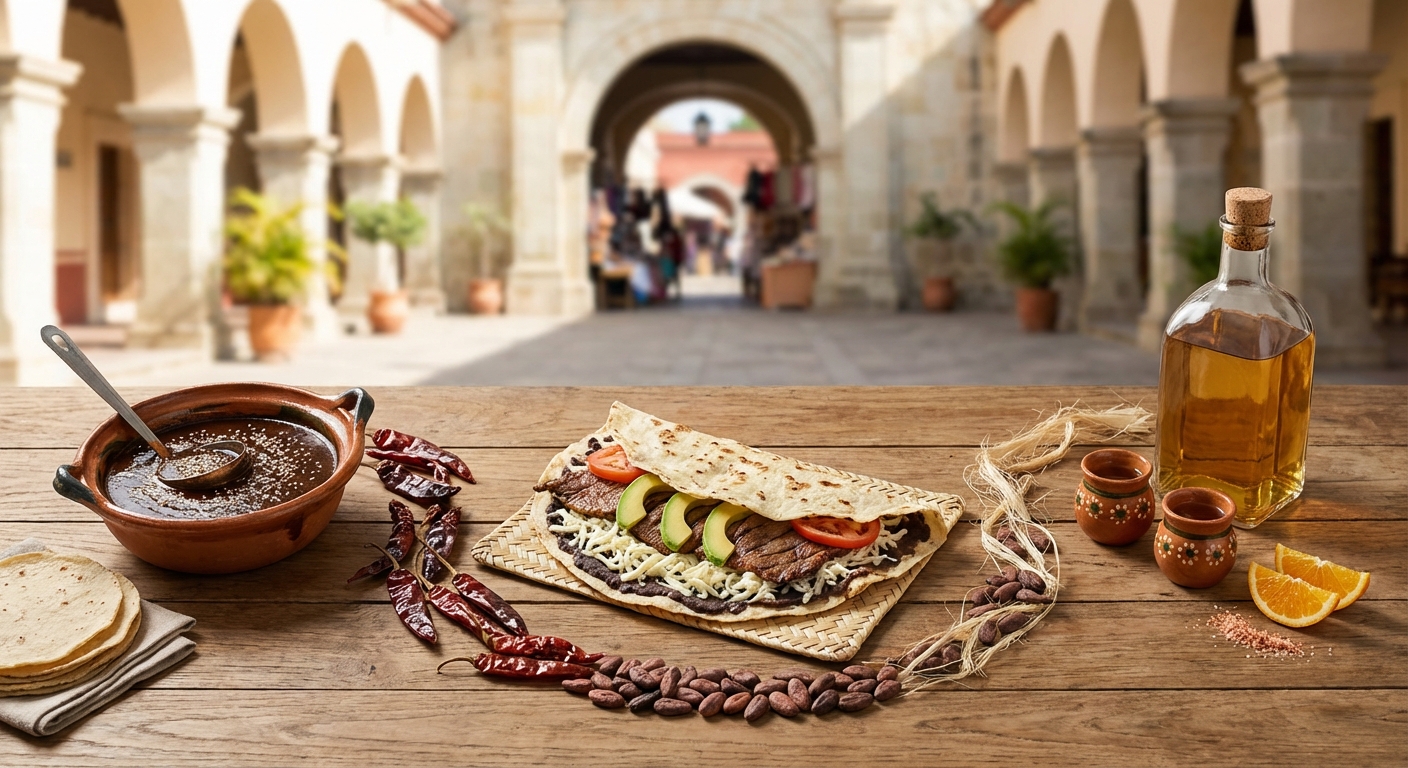
If you want to compare Marrakech’s street food culture to other global destinations, check out 48 hours of street food paradise: your ultimate Bangkok eating guide or the complete Oaxaca food trail: where to eat mole, tlayudas, and mezcal.
Your First Bite Sets the Tone
Marrakech is a city that feeds you from the moment you step into the medina. The trick is not to fight the chaos but to move with it. Greet the vendors. Learn the phrases. Eat with your hands. And always, always ask the price first.
The food here is some of the most generous and flavorful in the world. You just have to know where to find it. Start your first morning with a bowl of bissara and a piece of warm bread. Let the cumin wake you up. Let the mint tea settle you down. That is how you do Marrakech right.