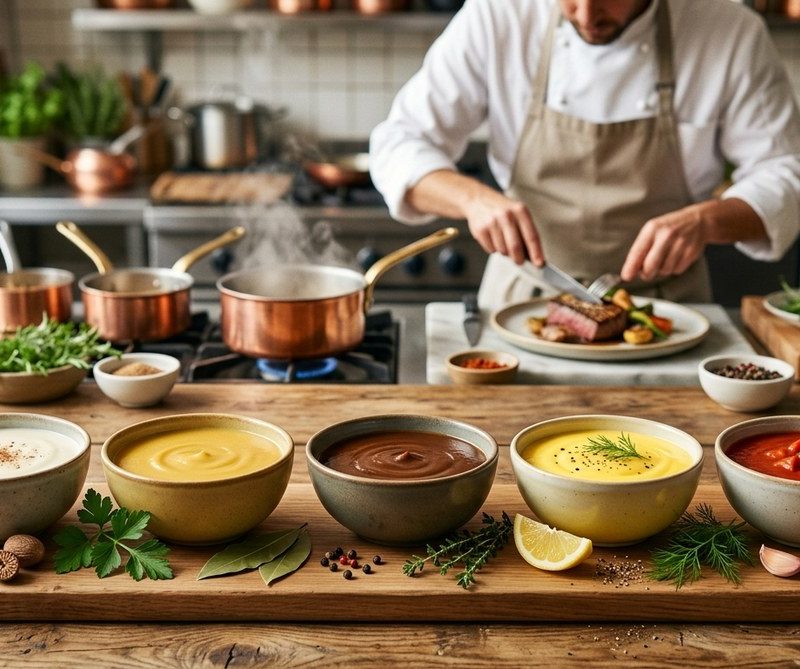
Every time you sit down at a restaurant and enjoy a silky pasta carbonara, a rich beef stew, or a perfectly poached egg draped in buttery hollandaise, you are tasting the legacy of French culinary tradition. Those dishes all start from the same place: a mother sauce. These five foundational sauces have been the backbone of Western cooking for nearly two centuries. Learning them is not about memorizing complex steps. It is about understanding a system that lets you build flavor with confidence. Once you know the five mother sauces, you can create dozens of variations without needing a recipe. You will see how a single technique can transform simple ingredients into something that tastes like it came from a professional kitchen.
The five mother sauces are béchamel, velouté, espagnole, tomate, and hollandaise. Each one starts with a specific base (milk, stock, or butter) and a thickening agent (roux or egg yolk). From these five foundations, chefs build hundreds of derivative sauces by adding herbs, cheese, wine, or cream. Master these, and you stop following recipes blindly. You start cooking with intention.
What Makes a Sauce a “Mother” Sauce?
The term comes from Auguste Escoffier, the French chef who codified modern cooking in the early 1900s. He classified sauces into two groups. Mother sauces are the primary recipes. From them, you make “small sauces” or derivative sauces by adding extra ingredients.
Each mother sauce has a specific structure. There is a liquid base (milk, stock, or butter). There is a thickener (usually a roux made from flour and fat). And there is a technique that binds them together. If you understand this framework, you can troubleshoot any sauce that breaks or curdles.
Think of mother sauces like primary colors. You mix them to create new shades. Béchamel plus cheese becomes Mornay sauce. Velouté plus cream becomes supreme sauce. The possibilities are endless, but the roots stay the same.
The Five Mother Sauces Explained
1. Béchamel: The Creamy Foundation
Béchamel is the sauce most home cooks already know, even if they do not realize it. It is milk thickened with a white roux (flour cooked in butter until it forms a paste). The result is a smooth, creamy sauce that tastes mild and rich.
How to make béchamel:
- Melt butter in a saucepan over medium heat.
- Whisk in an equal amount of all-purpose flour.
- Cook the mixture for about two minutes until it bubbles and smells slightly nutty.
- Slowly pour in warm milk while whisking constantly.
- Bring the sauce to a gentle simmer and let it cook for ten minutes.
- Season with salt, white pepper, and a pinch of nutmeg.
Common derivatives from béchamel:
- Mornay sauce (add grated Gruyère or Parmesan)
- Cheddar cheese sauce (add sharp cheddar and a dash of Worcestershire)
- Cream sauce (add heavy cream and a squeeze of lemon)
- Mustard sauce (stir in Dijon mustard)
Béchamel is the base for mac and cheese, lasagna, and many gratins. It is also the starting point for a classic croque monsieur.
2. Velouté: The Silky Stock Sauce
Velouté means “velvety” in French, and that is exactly what this sauce feels like. Instead of milk, you use a light stock. Chicken velouté uses chicken stock. Fish velouté uses fish stock. Veal velouté uses veal stock. The thickener is a blonde roux (flour cooked in butter until pale gold).
How to make velouté:
- Prepare a blonde roux with butter and flour.
- Whisk in warm stock slowly to avoid lumps.
- Simmer the sauce for 20 to 30 minutes until it reduces and thickens.
- Strain through a fine mesh sieve for a silky finish.
Common derivatives from velouté:
- Supreme sauce (add heavy cream and mushroom trimmings)
- Allemande sauce (add egg yolks and lemon juice)
- Poulette sauce (add mushrooms, shallots, and parsley)
- Normandy sauce (add heavy cream and egg yolks, used with fish)
Velouté is the hidden backbone of many cream-based soups and poultry dishes. It is lighter than béchamel but just as versatile.
3. Espagnole: The Rich Brown Foundation
Do not let the name confuse you. Espagnole has nothing to do with Spanish cuisine. It is a deep, dark brown sauce made from brown stock (usually veal or beef) and a brown roux (flour cooked in butter until it turns the color of peanut butter). The defining ingredient is tomato puree, which adds acidity and color.
How to make espagnole:
- Make a brown roux by cooking butter and flour until deeply golden.
- Add mirepoix (diced onion, carrot, and celery).
- Pour in brown stock and a small amount of tomato puree.
- Simmer for at least 45 minutes, skimming fat as it rises.
- Season with thyme, bay leaf, and cracked black pepper.
- Strain through a chinois or fine strainer.
Common derivatives from espagnole:
- Demi-glace (mix equal parts espagnole and brown stock, then reduce by half)
- Bordelaise sauce (add red wine, bone marrow, and shallots)
- Mushroom sauce (add sautéed mushrooms and a splash of sherry)
- Chasseur sauce (add mushrooms, shallots, white wine, and tarragon)
Espagnole is the workhorse of braised dishes. It gives body to stews, pot roasts, and classic French onion soup.
4. Tomate: The Rustic Tomato Sauce
The tomate mother sauce is not the same as Italian marinara. It is a much richer, heartier sauce made by thickening tomatoes with a roux and adding salt pork or bacon for depth. This sauce is the foundation for many Creole and Cajun dishes.
How to make tomate:
- Render diced salt pork or bacon in a pot.
- Remove the meat and make a roux with the rendered fat.
- Add crushed tomatoes, stock, and aromatics (garlic, thyme, bay leaf).
- Simmer for one hour until the sauce thickens.
- Season with salt and cayenne pepper.
Common derivatives from tomate:
- Creole sauce (add onions, bell peppers, celery, and okra)
- Spanish sauce (add chorizo and pimentón)
- Portuguese sauce (add piri piri and garlic)
- Hunter’s sauce (add mushrooms and white wine)
This sauce is less common in home kitchens today, but it is essential for understanding gumbo, jambalaya, and other stews that rely on a tomato base with real body.
5. Hollandaise: The Emulsified Luxury
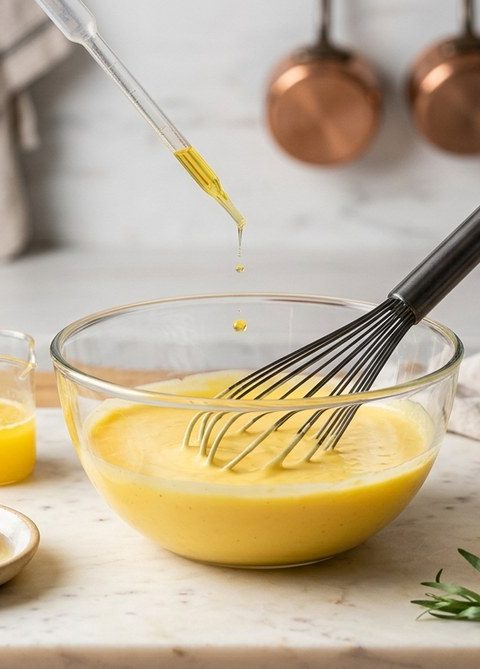
Hollandaise is the trickiest mother sauce because it does not use a roux. Instead, it relies on an emulsion of egg yolks and clarified butter, stabilized by acid (lemon juice or vinegar). The result is a thick, glossy, tangy sauce that is pure decadence.
How to make hollandaise:
- Whisk egg yolks with a tablespoon of cold water and a splash of lemon juice.
- Place the bowl over a pot of simmering water (double boiler method).
- Whisk constantly until the yolks thicken into a ribbon.
- Remove from heat and slowly drizzle in warm clarified butter while whisking.
- Season with salt and a pinch of cayenne.
- Keep the sauce warm, not hot, or it will break.
Common derivatives from hollandaise:
- Béarnaise sauce (replace lemon juice with tarragon vinegar and add fresh tarragon)
- Foyot sauce (add demi-glace to béarnaise)
- Choron sauce (add tomato puree to béarnaise)
- Maltaise sauce (add blood orange juice and zest)
Hollandaise is the star of eggs Benedict, asparagus with hollandaise, and many fish dishes. It requires patience, but the payoff is enormous.
Common Mistakes and How to Fix Them
| Mistake | Why It Happens | How to Fix It |
|---|---|---|
| Sauce is lumpy | Flour was added too fast to hot liquid | Strain through a sieve, or blend with an immersion blender |
| Sauce is too thin | Not enough roux, or not simmered long enough | Whisk in a beurre manié (equal parts soft butter and flour) |
| Sauce breaks or curdles | Heat was too high, or fat separated from liquid | Remove from heat, whisk in an ice cube, or add a splash of cold liquid |
| Hollandaise turns into scrambled eggs | Bowl got too hot, cooking the yolks | Start over with fresh yolks and keep the bowl above steam, not in it |
| Espagnole tastes bitter | Roux was cooked too dark | Add a splash of cream or stock to balance, or start fresh |
A Practical Process for Making Any Mother Sauce
Follow these steps every time. They work for all five sauces.
- Measure everything before you start. Sauces move fast. Have your liquid warm, your roux ready, and your whisk in hand.
- Cook the roux to the correct color. White for béchamel, blonde for velouté, brown for espagnole.
- Add liquid slowly. Pour in a thin stream while whisking. This prevents lumps.
- Simmer gently. Do not boil. Boiling can break the emulsion or scorch the milk.
- Season at the end. Salt, pepper, and acid should be adjusted after the sauce has reduced.
- Strain for perfection. A fine mesh sieve removes any errant lumps or cooked egg bits.
“A sauce is only as good as its base. If your stock is weak, your sauce will be weak. If your butter is burnt, your sauce will taste bitter. Respect the ingredients, and the sauce will respect you.” This advice from Chef Thomas Keller is worth remembering every time you stand over a saucepan.
How to Turn One Mother Sauce Into Many Dishes
The real power of the five mother sauces is not in the sauces themselves. It is in what you can do with them. Here are some practical ways to use them at home.
- Béchamel + shredded cheddar + mustard powder = homemade mac and cheese that beats any box.
- Velouté + sautéed mushrooms + a splash of sherry = a sauce for chicken or pork chops.
- Espagnole + red wine + shallots = bordelaise sauce for grilled steak.
- Tomate + okra + shrimp = a quick gumbo that tastes like it simmered all day.
- Hollandaise + tarragon + white wine vinegar = béarnaise for a perfect steak frites.
You can also combine techniques. For example, a classic lasagna uses béchamel in the layers and a tomate-based meat sauce. A French onion soup uses a velouté base enriched with cheese. Once you see the patterns, you start recognizing mother sauces on every menu.
Building Confidence Through Practice
The best way to learn these sauces is to make each one twice. The first time, follow the recipe exactly. The second time, try a variation. Swap the milk in béchamel for half and half. Use turkey stock instead of chicken for velouté. Add a pinch of smoked paprika to your espagnole. Every experiment teaches you something about how the sauce behaves.
If a sauce breaks, do not panic. You can almost always fix it. If it tastes flat, add a drop of lemon juice or a pinch of salt. If it is too thick, whisk in a little warm liquid. The more you cook, the more you develop instincts.
For a deeper look at how these sauces connect to travel and regional food traditions, consider reading about a week-long culinary journey through Tuscany where you will see béchamel and espagnole in action. Or check out how immigration transformed American cuisine to understand how these French techniques adapted to new ingredients.
Your Next Step in Sauce Mastery
You now have the foundation. The five mother sauces are not secrets reserved for culinary school graduates. They are tools that belong in every home kitchen. Start with béchamel tomorrow night. Make a simple cheese sauce for pasta. The next week, try velouté with roasted chicken. Build from there.
Each sauce you master unlocks a new set of recipes. You will stop searching for “how to make Alfredo sauce” and start knowing that you can make it from béchamel with Parmesan and garlic. That confidence changes the way you cook. It makes you faster, more creative, and more relaxed in the kitchen.
The beauty of this system is that it never stops giving. You can spend a lifetime exploring the variations. Every region, every chef, every family adds their own twist. But the five mothers remain constant. Learn them, and you have a map to the entire world of saucy, comforting, restaurant-quality food.