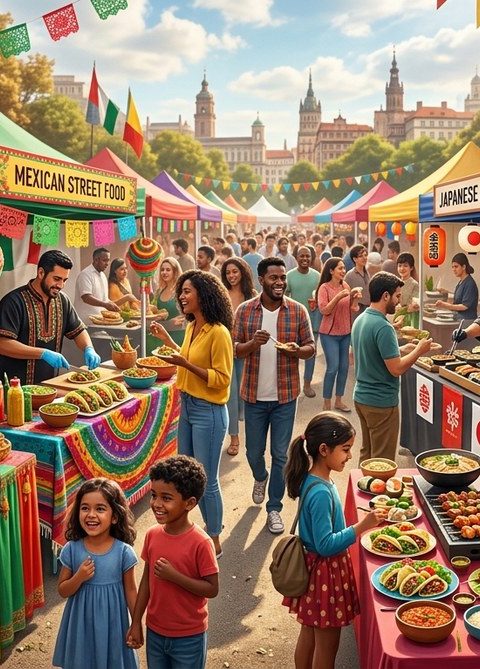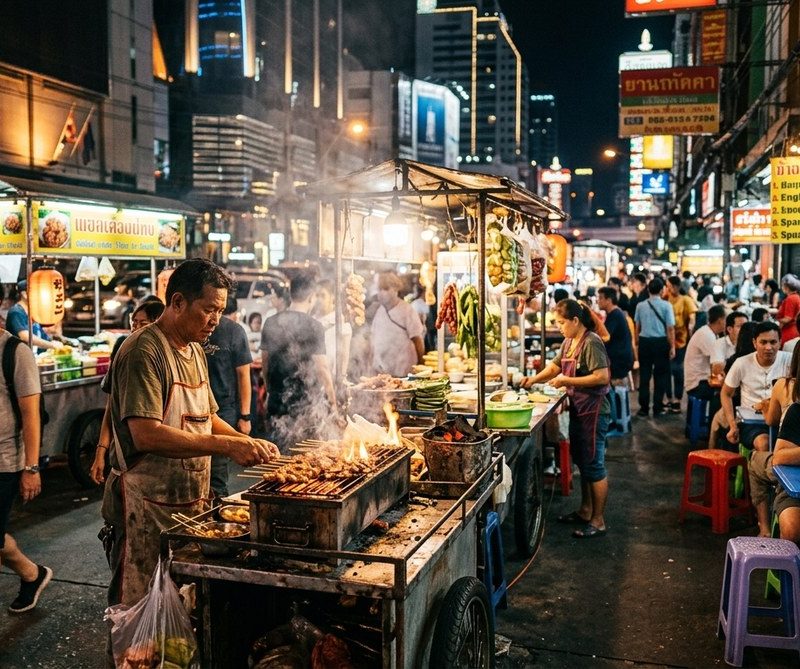
On a humid evening in Bangkok, the air fills with the scent of grilling pork and lemongrass. A crowd gathers around a cart where a woman folds thin crepes over spicy fillings. No one checks a menu. No one waits for a table. They eat standing, talking, laughing, their hands holding warm paper packets. This scene repeats in Mexico City, Marrakech, Mumbai, and New York. Street food is not just about convenience or low prices. It is the most honest expression of a city’s identity. It tells you who lives there, what they value, and how they have adapted over centuries. The history of street food culture is the history of urban life itself.
Street food culture history reveals how ancient vendors fed growing cities long before restaurants existed. From Roman thermopolia to Ottoman kebab carts, these mobile kitchens adapted to migration, industrialization, and globalization. Modern street food still reflects local ingredients, economic necessity, and cultural fusion. Understanding this history helps you eat smarter, travel deeper, and appreciate the vendors who keep culinary traditions alive.
The Ancient Roots of Eating on the Street
Street food is older than the fork. It is older than the restaurant. In ancient Greece, small fried fish were sold from portable grills in the marketplace. In Rome, the poor had no kitchens in their apartment blocks. They relied on thermopolia, small counter-service shops where hot food was kept in terra cotta pots embedded in marble counters. Archaeologists have found these counters preserved in Pompeii, complete with carbonized lentils still in the pots.
These early vendors solved a basic problem. Cities concentrated people, but not everyone had space or fuel to cook. A vendor with a charcoal brazier could feed dozens of families from a single street corner. This pattern repeated independently across cultures. In China, street vendors sold noodles and dumplings as early as the Tang dynasty. In Cairo, vendors hawked ful medames, a slow-cooked fava bean dish, from copper pots balanced on wooden yokes.
What made street food essential was its speed. A worker on a short lunch break could not wait for a fire to be built. The vendor kept the fire going all day. That efficiency has not changed in thousands of years.
How Migration Shaped Street Food Culture
The great movement of people across the globe transformed street food into what it is today. When workers left rural areas for factory cities, they brought their home cooking with them. But they had to adapt to new ingredients and new customers.
In the United States, German immigrants introduced the frankfurter in the 1860s. A sausage on a bun was portable, filling, and cheap. It became the hot dog, a staple of Coney Island and every baseball game since. Later, Mexican immigrants brought tacos, which evolved from a regional specialty into a national obsession. The taco truck, once a humble operation serving construction workers, now appears at weddings and food festivals.
This pattern appears everywhere. The banh mi sandwich in Vietnam combines a French baguette with Vietnamese pickled vegetables and cilantro. It is a direct result of French colonial rule. The currywurst in Berlin was invented in 1949 when a woman named Herta Heuwer mixed ketchup with Worcestershire sauce and poured it over grilled sausage. She served it from a cart to hungry postwar Germans rebuilding their city.
Street food culture history is really a story of migration and adaptation. Every cart is a living archive of who moved where and when.
The Industrial Revolution and the Rise of the Food Cart
Before factories, most people ate at home or at a tavern. The Industrial Revolution changed that. Workers needed cheap meals near their jobs. They had little time and less money. Street vendors filled the gap.
In London, vendors sold pea soup, eel pies, and baked potatoes from wheeled carts. The baked potato seller, often called a “tater man,” was a fixture outside factories and theaters. In New York, pushcart peddlers lined the streets of the Lower East Side, selling pickles, chestnuts, and knishes to immigrant families. The pushcart was a low-cost entry point for people who had no capital for a storefront.
This era also brought regulation. Cities worried about hygiene and traffic. In the late 1800s, London restricted where vendors could operate. New York required licenses. But the vendors adapted, finding new corners and new customers. The pushcart did not disappear. It evolved into the modern food truck.
The Night Market: A City’s Living Room
Across Asia, the night market became a central institution. In Taiwan, night markets emerged in the 1950s as farmers and factory workers sought evening entertainment and affordable food. Vendors set up stalls with bright lights, grills, and fryers. They served stinky tofu, oyster omelets, and grilled squid. The night market was not just for eating. It was for socializing, shopping, and people watching.
Today, night markets in Bangkok, Seoul, and Singapore draw tourists and locals alike. They preserve dishes that might disappear from restaurant menus. You can find grilled banana with coconut milk, crispy roti, and steaming bowls of noodles for less than the price of a coffee. The night market is the city’s living room, a place where strangers share tables and conversations.
For a deeper look at how to navigate these spaces like a pro, read our guide on how to navigate a traditional night market like a local food expert.
What Makes Street Food Different from Restaurant Food
Restaurants have fixed menus, fixed prices, and fixed hours. Street food is fluid. A vendor might change the menu based on what is fresh at the market that morning. Prices can be negotiable. Hours depend on weather, crowd size, and the vendor’s energy.
Here are the key differences between street food and restaurant dining:
- Cost: Street food is almost always cheaper because overhead is lower.
- Speed: Most street food is cooked to order in under five minutes.
- Seasonality: Vendors buy what is available locally, so the menu changes daily.
- Interaction: You watch your food being made. You can ask for adjustments.
- Location: Street food finds you. It sets up where people already are.
These differences are not flaws. They are features. Street food is adaptable by nature. When a city changes, street food changes with it.
Common Mistakes Travelers Make with Street Food
Even experienced travelers make errors when approaching street food. The table below shows common mistakes and how to avoid them.
| Mistake | Why It Happens | Better Approach |
|---|---|---|
| Eating at the busiest stall without watching first | Assumes popularity equals quality | Watch the vendor’s hygiene and ingredient handling for two minutes |
| Ordering the most familiar item | Fear of unknown flavors | Ask the vendor to recommend their specialty |
| Paying without asking the price | Language barrier or shyness | Confirm the price before ordering, even with hand gestures |
| Eating with utensils when hands are traditional | Cultural discomfort | Observe locals and follow their lead |
| Visiting only at peak lunch hour | Convenience | Go at off-peak times for better attention and fresher food |
“The best street food vendor is the one who treats cooking like a performance. Watch their hands. If they move with confidence and care, the food will be good.” — Chef and food writer Grace Young
Three Ways to Experience Street Food Culture Like a Local
You do not need to travel across the world to understand street food culture. You can start in your own city. But if you want the full experience, follow these steps.
-
Find the market that serves workers, not tourists. Look for a market near a bus terminal, train station, or industrial district. These markets feed people who need real food for long shifts. The prices will be lower and the quality higher.
-
Eat what is seasonal. Do not order the same dish in July that you ate in January. Ask what is fresh. In Mexico, that might mean tacos de canasta filled with huitlacoche in the rainy season. In Japan, it might mean grilled ayu sweetfish in summer.
-
Share with strangers. Street food is communal. Buy a few different items and offer a taste to the person next to you. They will likely return the favor. This is how you learn about dishes that never make it onto English language menus.
For a complete guide to one of the world’s best street food destinations, check out our 48 hour street food paradise guide to Bangkok.
The Vendors Who Keep Traditions Alive
Street food vendors are not just business owners. They are cultural custodians. Many learn their trade from parents or grandparents. They guard recipes that have no written form. The exact blend of spices in a bowl of khao soi in Chiang Mai might exist only in the memory of one family.
This knowledge is fragile. Urban development, rising rent, and health regulations can push vendors out of business. When a vendor closes, a recipe can disappear forever. That is why supporting street food is not just about getting a good meal. It is about preserving a living tradition.
In cities like Penang and Ho Chi Minh City, younger generations are returning to family stalls after working in offices. They bring new energy and social media skills. They photograph their grandmother’s noodles and share them with the world. This is how street food culture survives.
The Future of Street Food in 2026 and Beyond
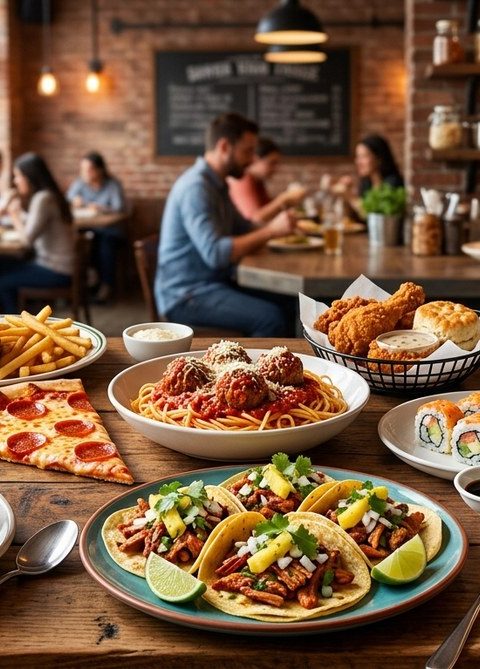
The street food scene is changing. In the United States, food trucks have become regulated, licensed, and sometimes expensive. But the spirit remains. New immigrant communities continue to introduce their foods. In Los Angeles, you can find Salvadoran pupusas, Filipino sisig, and Ethiopian sambusa from the same block.
Technology is also playing a role. Some vendors in Bangkok now accept digital payments. In Seoul, you can find night market stalls through apps. But the core experience has not changed. You still stand on a sidewalk, holding a warm container, watching the cook work.
The biggest challenge is the loss of public space. Cities are becoming more expensive. Sidewalks are being privatized. But street food has survived plagues, wars, and economic collapses. It will adapt again.
To understand how immigration continues to reshape what we eat, read about how immigration transformed American cuisine.
Street Food as a Mirror for Society
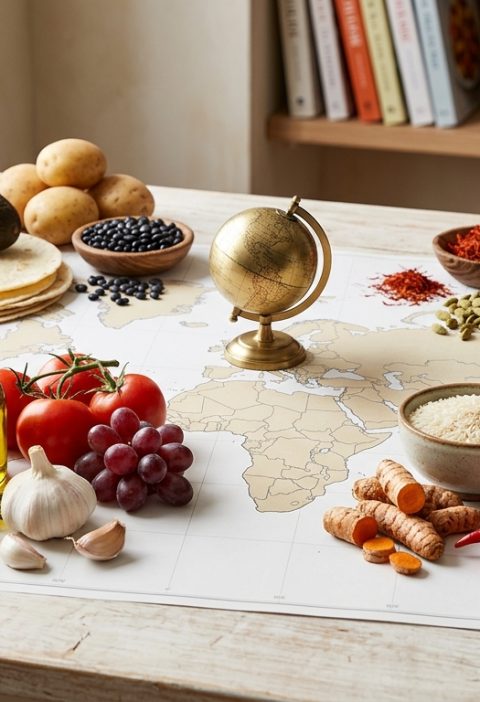
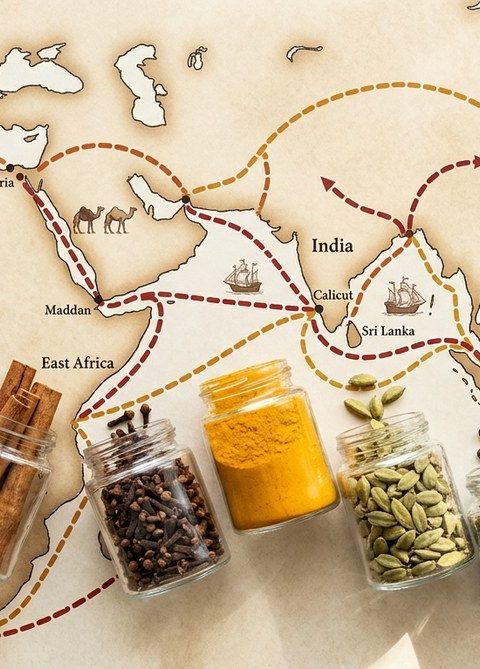
The next time you eat from a cart or a stall, pause for a moment. Look at the ingredients. Think about where they came from. The chili might have traveled from Africa to Asia via Portuguese traders. The noodle technique might have been brought by Chinese immigrants a hundred years ago. The vendor might be the third generation to sell that same dish.
Street food culture history is not a niche topic. It is urban history, economic history, and migration history all folded into a single bite. It shows how people solve the problem of feeding a city with limited resources. It shows how strangers become neighbors. It shows how a simple meal can carry the weight of centuries.
So find a vendor near you. Ask their name. Try something you cannot pronounce. Share it with someone. That is how you become part of the story.