Seoul is a city that feeds you around every corner. Steam rises from stainless steel pots, grills sizzle with marinated beef, and vendors call out in rhythmic chants. For a food lover, five days in Seoul is a gift. But with hundreds of stalls and endless alleyways, you need a plan. This itinerary walks you through the best street food and traditional markets, day by day. No filler, just the good stuff.
This 5-day Seoul street food itinerary balances iconic markets like Gwangjang and Namdaemun with hidden neighborhood stalls. You will taste tteokbokki, hotteok, bibimbap, and grilled pork belly while learning how to order like a local. Each day focuses on a different region and style of eating, from early morning pancake hunts to late-night skewers. Bring an appetite and comfortable shoes.
Day 1: Settle In with Gwangjang Market and Jongno
Landing in Seoul can feel like stepping into a different planet. Start your trip where the flavors are bold and the crowds are thick: Gwangjang Market. This indoor market has been running since 1905, and it remains the heart of Korean street food.
Morning: The Ultimate Bindaetteok
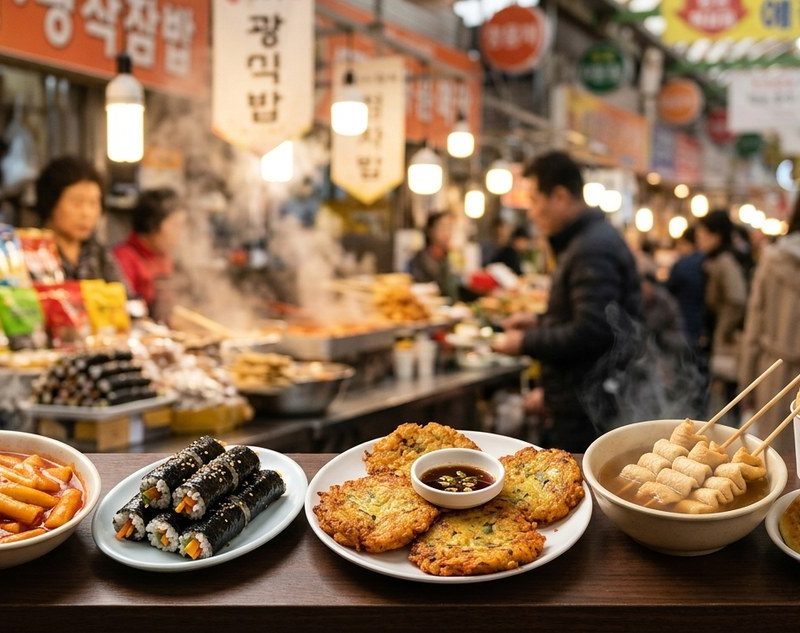
Head straight for the bindaetteok (mung bean pancake) stalls near the main entrance. Watch as vendors pour batter onto hot oiled griddles, then flip the crispy cakes. Order one fresh, sit on a plastic stool, and dip it in soy vinegar. A single pancake costs around 4,000 won and will fuel your morning.
Lunch: Mayak Kimbap and Tteokbokki
Follow your nose to the rows of gimbap counters. Look for “mayak kimbap” (addictive mini seaweed rice rolls). These bite-size rolls are stuffed with carrot, spinach, and pickled radish, then brushed with sesame oil. Grab a tray of spicy tteokbokki (chewy rice cakes in gochujang sauce) from the same vendor. The contrast of textures is perfect.
Afternoon Exploration
After Gwangjang, wander through the alleys of Insadong. Stop at a small stall selling hotteok (sweet filled pancake) for a 2,000 won snack. The brown sugar and seed filling oozes out with every bite.
For dinner, make your way to Jongno’s Pojangmacha (tented street food carts). These pop up around 6 p.m. and serve eomuk (fish cake skewers) in warm broth. Sit with locals, sip the broth, and order soju if you are feeling brave.
Day 2: Myeongdong’s Night Snacks and Shopping Streets
Myeongdong is famous for shopping, but the side streets are a street food paradise. This area caters to tourists, which means menus often have English and prices are fixed. Use it to sample dishes you may be nervous to try elsewhere.
Must-Try Stalls in Myeongdong
- Cheese corn dogs: Whole mozzarella sticks coated in batter and deep fried. Ask for half cheese half sausage.
- Grilled scallops: Large scallops cooked in a shell with butter and garlic. Usually 5,000 won for three.
- Stir-fried glass noodles (japchae): Vendors will hand you a cup of sweet potato noodles tossed with vegetables. Perfect for eating while walking.
Dinner: Korean Fried Chicken
Myeongdong has dozens of fried chicken chains, but the real find is the street version. Seek out a stall selling dakgangjeong (crispy chicken bites glazed in sweet and spicy sauce). Order a small box and eat it on the steps of Myeongdong Cathedral while watching the neon lights.
Late Night: Egg Bread (Gyeran-ppang)
Before heading back, grab a gyeran-ppang from a cart. It is a small sweet bread baked with a whole egg inside. The yolk stays runny, making for a warm, comforting nightcap.
Day 3: Namdaemun Market and the Hidden Eats of Hoehyeon
Namdaemun Market is older than Gwangjang but more chaotic in a good way. It sits right next to Hoehyeon Station and spills into dozens of narrow alleys. This is where Seoulites come for home-style food.
Breakfast: Galchi Jorim (Braised Hairtail)
No American breakfast here. Start your morning at a tiny restaurant inside the market that serves galchi jorim. The braised fish is salty and slightly sweet, served with rice and side dishes. It is not street food per se, but the market setting counts.
Midday: Hotteok with Seeds
The hotteok at Namdaemun is different from the one in Insadong. Here, vendors add sunflower seeds and pumpkin seeds to the filling. The crunch is addictive. Buy two.
Afternoon: Mandu (Korean Dumplings)
Find the king mandu stall near gate 5. These jumbo dumplings are steamed and then pan fried. Fillings vary, but the kimchi mandu is the star. Dip in soy sauce with a tiny bit of vinegar.
The Flower Pancake
A special Namdaemun item is the “flower pancake” (kkot-ppang). It is a scallion pancake shaped like a flower, deep fried and served with a dipping sauce. Crunchy, savory, and completely satisfying.
Day 4: Dongdaemun and the Late Night Food Alley
Dongdaemun is known for its fashion, but the food scene hums from dusk until dawn. Head there after 8 p.m. when the shopping crowds thin and the food stalls fire up.
Evening: Tteokbokki in a Broth
Unlike the thick saucy version you had on Day 1, Dongdaemun’s tteokbokki is served in a spicy anchovy broth with boiled eggs and fish cakes. The broth is drinkable. Vendors will refill it for free if you ask.
Midnight: Sundae (Korean Blood Sausage)
Don’t be shy. Sundae is a tubular sausage made with pig blood, glass noodles, and barley. Sliced and served with salt and pepper. If you love charcuterie, you will love this. Grab a skewer and dip it in a little salt.
After 1 a.m.: Grilled Pork Belly (Samgyeopsal)
Some stalls set up portable grills for samgyeopsal. You grill thick slices of pork belly at your table and wrap them in lettuce with ssamjang. This is a full meal, but the street setting keeps it casual. One serving costs about 12,000 won.
Day 5: Tongin Market and the Lunchbox Tradition
Tongin Market in the Seochon neighborhood offers a unique experience. You buy a brass ring of old Korean coins called yeopjeon, then walk through the market exchanging them for small portions of food.
How It Works
- Go to the office near the main entrance and buy a string of coins (around 10,000 won for 10 coins).
- Receive an empty tray called a doshirak.
- Walk through the market stalls and choose any dish you want. Each item costs 1 to 3 coins.
- Fill your tray, then sit in the communal dining area.
- Return the tray and take home the empty coins as a souvenir.
This is ideal for people who want to taste many things without committing to a full plate. You will sample japchae, kimchi pancakes, braised tofu, bulgogi, and more.
Afternoon Sweets
End your trip at a nearby cafe for sujeonggwa (cinnamon ginger punch) or sikhye (sweet rice drink). Both are served cold and cleanse your palate after five days of bold flavors.
Street Food Don’ts and Do’s: A Quick Reference
| Mistake (Don’t) | What to Do Instead | Why It Matters |
|---|---|---|
| Touching the food before paying | Point and ask “igeo juseyo” (give me this) | Vendors prefer you order first |
| Throwing trash in the streets | Hold onto it until you find a public bin | Few trash cans exist; fines are high |
| Skipping the side sauces | Use them sparingly at first | Some are very spicy (gochugaru) |
| Eating and walking in crowded stalls | Stand near the vendor and eat | It is expected; you free up space |
| Taking photos without asking | Smile and nod, or gesture to your phone | Most vendors are happy, but ask first |
“The best street food stall is the one with the longest line of local office workers. Do not follow the Instagram crowd. Follow the workers in suits.” – Jiyeon Park, Seoul food tour guide
From Market Meals to Global Comparisons
Seoul’s street food scene sits at a crossroads of tradition and convenience. If you love structured food tours, you might also enjoy how to navigate a traditional night market like a local food expert. For a totally different experience, check out the fifty hour Bangkok eating guide. Or if you prefer slower, farm-focused travel, the Tuscany culinary journey offers a different kind of rhythm.
A Final Word on Your Seoul Eating Adventure
No itinerary can capture every alley and every stall. This plan gives you the landmarks and the vocabulary to order with confidence. You will leave Seoul with a full stomach and a list of dishes you want to recreate at home. Print this guide, bring cash (most stalls do not take cards), and trust your nose. The best bites are often the ones you stumble upon by accident.