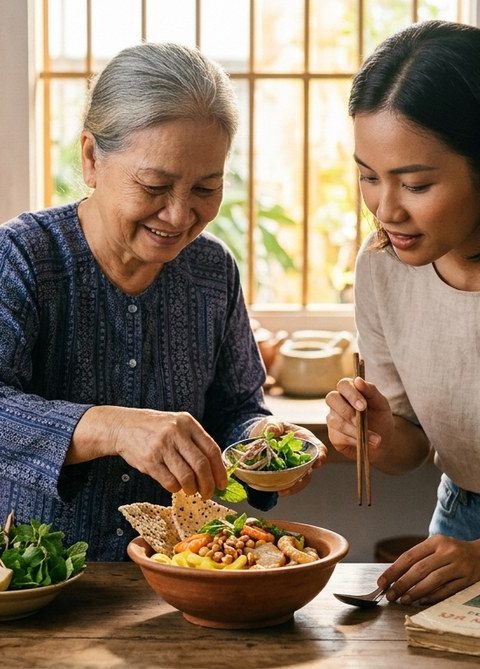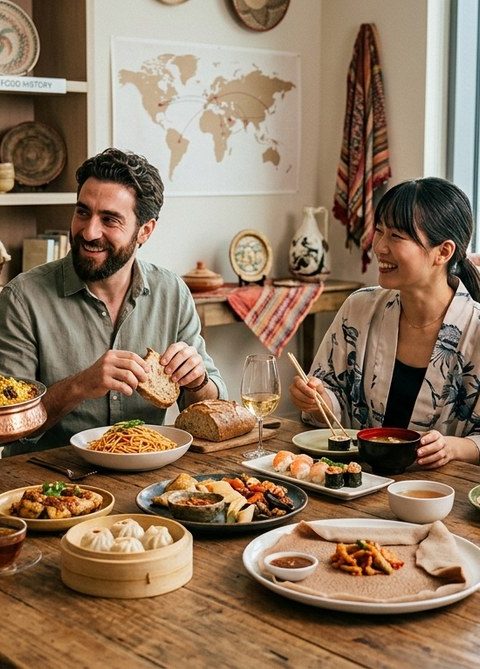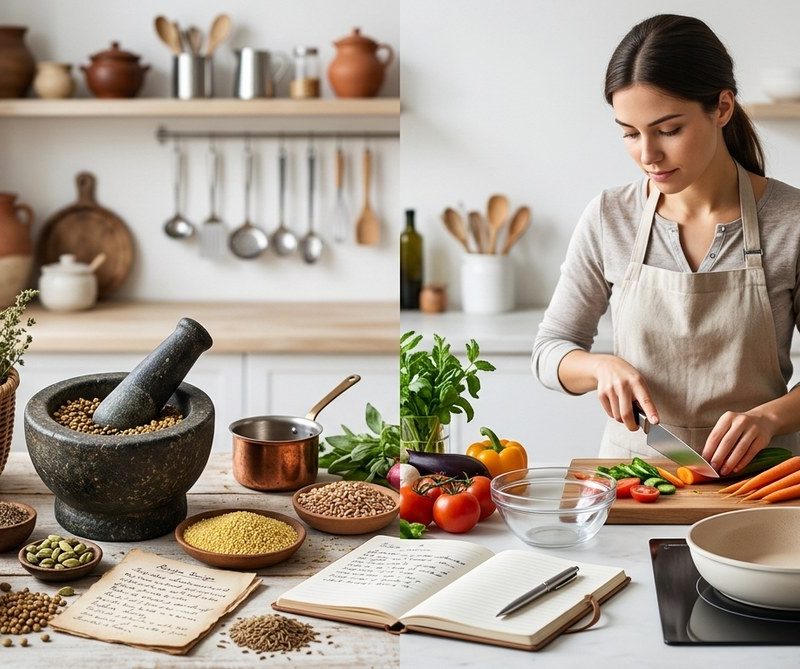
Your grandmother’s wooden spoon holds more wisdom than any fancy gadget you can buy online. The way she salted pasta water by feel, the patience she showed while a stew simmered for hours, the leftover bread she turned into breadcrumbs instead of throwing away. That kind of knowledge wasn’t written down in a cookbook. It was passed down through touch, memory, and tradition. And it still matters today.
Ancestral food traditions are not romantic relics. They are practical, time-tested solutions to everyday cooking problems. By studying how past cultures preserved food, built flavors without modern shortcuts, and wasted nothing, home cooks today can cook smarter, eat better, and save money. These five food history lessons will change how you approach your kitchen.
Why Ancient Methods Still Work in a Modern Kitchen
Industrial food systems have given us convenience, but they have also erased a lot of know-how. A hundred years ago, your great-great-grandparents knew how to ferment vegetables, how to judge meat doneness without a thermometer, and how to stretch a single chicken across three meals. Those skills are not outdated. They are survival tools that also deliver better flavor and nutrition.
Understanding food history helps you see cooking as a craft rather than a chore. It teaches you why certain techniques exist and how to adapt them for today’s ingredients. Let’s break down five specific lessons from ancestral traditions that any home cook can use right now.
Lesson 1: Fermentation Is Nature’s Refrigerator
Before electric refrigeration, people had to find ways to keep food alive. Fermentation was one of the most brilliant answers. Vegetables, dairy, and grains were transformed by beneficial bacteria into foods that not only lasted for months but also became more nutritious and digestible.
Consider sauerkraut. Cabbage shredded with salt and left to sit at room temperature for a few weeks. That is it. The salt draws out moisture, creates an anaerobic environment, and encourages lactic acid bacteria to flourish. The result is a tangy, crunchy side dish that stays edible for up to a year in a cool cellar.
Your modern fridge is great, but it does not add probiotics or deepen flavor. Fermentation does both.
Try this at home: Start with a small jar of sauerkraut. You only need cabbage, salt, and patience. After one week, taste it. After two, you will notice a bright acidity that bottled vinegar can never replicate.
Lesson 2: Whole-Animal Butchery Saves Money and Builds Flavor
Our ancestors did not buy boneless, skinless chicken breasts. They bought a whole chicken, and they used every part. The bones became stock. The liver became pate or a spread. The skin rendered into cracklings. Even the feet could be simmered for gelatin.
Today, we pay a premium for the most “convenient” cuts. But learning to break down a whole chicken or a pork shoulder yourself unlocks huge savings and richer meals. A whole chicken costs less per pound than breast fillets, and the carcass alone gives you stock for free.
Here are three ways to start applying whole-animal butchery in your own kitchen:
- Buy a whole chicken and practice cutting it into eight pieces. Watch a video first, then use your hands to feel the joints.
- After roasting, pull the bones from the carcass. Simmer them with onion, carrot, and celery for at least one hour. Strain and freeze the stock.
- Save chicken fat (schmaltz) from roasting. Use it to roast potatoes for a depth you cannot get from olive oil.
A single bird can give you dinner, lunch the next day, and a quart of stock. That is the kind of efficiency our grandparents understood.
Lesson 3: Seasonal Eating Is Not a Trend, It’s How We Survived
Before global shipping networks, you ate what grew near you in the current month. Strawberries in June. Tomatoes in August. Winter squash in November. That rhythm forced people to adapt their cooking to the natural cycles, which made meals more varied and exciting over the year.
Seasonal eating is not a marketing slogan from fancy restaurants. It is the original way of cooking. When you eat produce at its peak, you get better flavor, more nutrients, and lower prices. A tomato picked green and shipped from thousands of miles away will never taste like the one you buy at a farmers market in August.
Consider this table comparing modern convenience with ancestral wisdom:
| Modern Habit | Ancestral Alternative | Why It Works Better |
|---|---|---|
| Buying berries in December | Waiting for local berry season | Riper flavor, lower cost, less waste |
| Using pre-chopped garlic in a jar | Peeling and crushing fresh cloves | Stronger flavor, no chemical preservatives |
| Discarding broccoli stems | Peeling and cooking them | Zero waste, extra bulk and fiber |
| Throwing away pickle juice | Using it as a marinade base | Adds acidity and complexity to dressings and meats |
The pattern is simple: ancestral methods extract the most value from every ingredient. Modern shortcuts often trade quality for time, but the loss is bigger than you think.
Lesson 4: Slow Cooking Transforms Tough Cuts Into Gold
Our ancestors did not have ovens that preheat in five minutes. They had fire, clay pots, and time. Braises and stews were the backbone of daily cooking because they turned cheap, tough cuts of meat into tender, flavorful meals. Collagen from connective tissue breaks down into gelatin over low heat, creating a silky sauce that clings to every spoonful.
Today, we often reach for expensive steaks for quick weeknight dinners. But a slow-cooked chuck roast or a pork shoulder delivers more flavor at a fraction of the cost. The tradeoff is time, but most of that time is hands-off.
“The fire does ninety percent of the work. Your job is patient waiting.” – Old Italian peasant saying.
If you are new to slow cooking, start with a simple pot roast. Season a chuck roast with salt and pepper. Sear it in a heavy pot until deeply browned. Add onions, carrots, and enough broth to come halfway up the meat. Cover and cook at 300°F for two to three hours, or until fork-tender. The result is a meal that tastes like you spent all day in the kitchen, even if you only worked for twenty minutes.
Lesson 5: Preservation Techniques Build a Smarter Pantry
Before freezers, people relied on drying, salting, pickling, and curing to keep food safe. Those methods are still incredibly useful. A well-stocked pantry with homemade preserves, dried beans, and fermented vegetables means you can throw together a satisfying meal without a trip to the store.
Modern home cooks often overlook these skills because they seem old-fashioned. But consider this: dried beans cost a fraction of canned beans, and they taste better because you can season them yourself. A single jar of homemade pickles costs less than half what you would pay at the store, and you can control the salt and sugar.
A practical approach to building an ancestral-inspired pantry:
• Keep a jar of lacto-fermented vegetables (carrots, cabbage, cucumbers) in your fridge at all times.
• Learn to dry herbs and peppers from your garden or farmers market.
• Store a bag of dried heirloom beans and cook them in large batches on weekends.
• Cure your own bacon or salt pork once a month for an unbeatable flavor base.
Each of these skills adds layers of flavor to your cooking and saves you money over time. The initial effort is small, but the payoff lasts for months.
How to Start Learning From Food History Today
You do not need to move to a farm or give up your electric stove. Small shifts in mindset and technique can bring ancestral wisdom into your daily routine. Here are five simple steps to begin:
- Cook one entire meal per week using only ingredients that are in season in your region.
- Ferment a small batch of vegetables every month.
- Buy a whole chicken or a large piece of meat with bones, and use every part.
- Replace one convenience item (store-bought broth, canned beans, jarred pasta sauce) with a homemade version.
- Read one historical cookbook or food history article per month to deepen your understanding. We recommend starting with our guide on how immigration transformed American cuisine to see how global movements shaped what you eat.
These actions are not about nostalgia. They are about reclaiming competence. Every time you make broth from scraps, you save money and reduce waste. Every time you ferment a vegetable, you introduce beneficial bacteria to your gut. Every time you cook a whole animal, you honor the life that fed you.
The Kitchen as a Living Archive
Your kitchen is already a museum of human ingenuity. The mortar and pestle, the cast-iron skillet, the stone-ground cornmeal in your pantry. All of these are gifts from earlier generations who figured out how to survive and thrive without electricity or supermarkets.
When you learn why food history matters, you are not just collecting trivia. You are arming yourself with tools that make you a better cook, a smarter shopper, and a more connected eater. The next time you find yourself reaching for a shortcut, pause and ask: How would my great-grandmother have handled this? The answer might be surprising, and it will almost certainly be delicious.
Now go fill your kitchen with a little more history and a lot more flavor. Start with that sauerkraut. And when you are ready, try your hand at ancient grains decoded to explore another thread of food heritage. Your ancestors will thank you, and so will your taste buds.