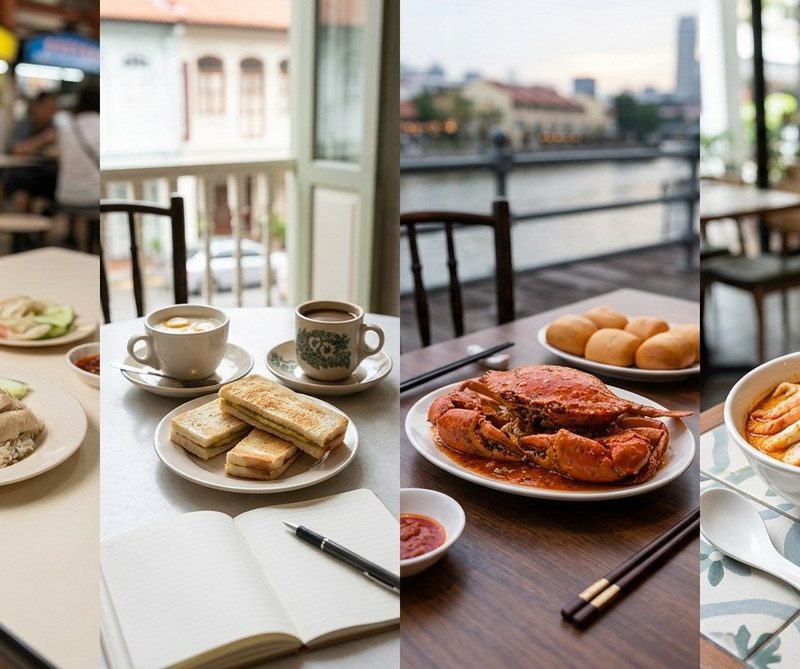
Singapore hits you with smells before you even clear customs. A mix of garlic, chilis, fried shallots, and something sweet you cannot name. If you only have 96 hours in this city, every meal matters. This is not one of those itineraries that tells you to eat at six places in a single afternoon. That is a recipe for a food coma, not a great trip. Instead, I mapped out a 4 days Singapore food itinerary that balances heavy hitters like chili crab with morning strolls through neighborhoods where the best dishes hide in plain sight. You will hit hawker centers, sit down for a few proper meals, and still have time to let your stomach rest between rounds. No gimmicks. Just good food, planned smart.
This 4-day Singapore food itinerary takes you through hawker centers, heritage neighborhoods, and seafood institutions without overloading your schedule. You will eat hainanese chicken rice, laksa, chili crab, kaya toast, and more across Chinatown, Little India, Kampong Glam, and Tiong Bahru. Each day focuses on a different part of the city so you taste the full range of Chinese, Malay, Indian, and Peranakan influences that make Singapore a world class food destination.
How This Food Itinerary Works
Singapore is small. That works in your favor. You can cross the island in under an hour by MRT, which means you can eat your way through three distinct culinary neighborhoods in a single day without feeling rushed. This itinerary groups meals by area so you spend less time traveling and more time eating.
A few ground rules before we start:
- Bring cash. Many hawker stalls do not take cards.
- Carry a tissue pack. Locals “chope” (reserve) tables by placing a pack on the seat. It looks strange but it is the rule.
- Go early or go late. Peak lunch hours (12:00 to 1:30 PM) mean long lines at famous stalls.
- Share portions. Food is rich. Splitting dishes lets you try more.
This plan assumes you arrive with an empty stomach and a sense of adventure. Let us get into it.
Day 1: Chinatown and Maxwell Food Centre
Your first day is about grounding yourself in Singapore’s most iconic dishes. Start in Chinatown, where the oldest hawker centers and heritage shophouses sit side by side.
Breakfast: Traditional Kopi and Kaya Toast
Skip the hotel buffet. Walk to Tong Ah Eating House on Keong Saik Road. Order a cup of kopi (coffee with condensed milk) and a set of kaya toast: charcoal grilled bread spread with coconut jam and cold butter. Dip the toast into soft boiled eggs seasoned with soy sauce and white pepper. This is the breakfast that built Singapore.
Late Morning: Maxwell Food Centre
A ten minute walk brings you to one of the city’s most famous hawker centers. Maxwell has over 100 stalls, but you are here for two things.
Tian Tian Hainanese Chicken Rice is the stall that Anthony Bourdain made famous. The rice is cooked in chicken fat and pandan leaves. The chicken is poached until silky. Get the regular portion, not the whole chicken, and add their chili sauce. The line moves fast.
A few stalls down, Zhen Zhen Porridge serves silky congee with century egg and pork. It is a quieter choice if the chicken rice line feels too long.
Lunch: A Hearty Bowl of Laksa
Take a short cab ride to 328 Katong Laksa on East Coast Road. This version uses thick bee hoon noodles cut into short pieces so you eat with a spoon only. The gravy is coconut rich and spicy, with cockles, prawns, and fish cake. Ask for extra sambal if you like heat.
Afternoon Walk: Explore the Shophouses
Walk off lunch along Joo Chiat Road. The colorful Peranakan shophouses make for good photos. Stop at Kim Choo Kueh Chang to try a steamed rice dumpling wrapped in pandan leaves. The savory version with pork and chestnut is the one to get.
Dinner: Chili Crab at Jumbo Seafood
You cannot leave Singapore without getting your hands dirty. Take the MRT to Clarke Quay and sit down at Jumbo Seafood. Order the chili crab with fried mantou buns for dipping. The sauce is sweet, spicy, and messy. Wear the bib. Use your hands. Do not skip the mantou.
Supper: Soy Sauce Chicken Rice
If you still have room, walk to Liao Fan Hawker Chan on Smith Street. This is the hawker stall that earned a Michelin star for its soy sauce chicken rice. The noodles are springy and the chicken is lacquered dark brown. Eat it standing up if you must.
Day 2: Little India and Kampong Glam
Day two is about spices, flatbreads, and the Malay Muslim flavors that define a huge part of Singapore’s food culture.
Breakfast: Roti Prata at a 24 Hour Shop
Head to Springleaf Prata Place at Jalan Besar. Watch the dough being slapped thin, folded, and fried on a hot griddle. Order a plain prata with fish curry on the side. If you feel ambitious, try the coin prata (small, crispy discs) or the cheese prata (stretchy and rich).
Late Morning: Tekka Centre
This is the largest wet market in Singapore and a food lover’s playground. The hawker section on the second floor serves some of the best Indian Muslim food in the city.
Allauddin’s Briyani sells mutton briyani that takes 45 minutes to cook. Order when you arrive, then walk around while it finishes. The rice is fragrant with ghee and rose water. The meat falls off the bone.
Famous Indian Rojak across the aisle serves a fried dough and tofu salad dressed in a thick, sweet peanut sauce. It is nothing like the fruit rojak you see elsewhere. Try it once.
Lunch: Fish Head Curry at Banana Leaf Apolo
Walk to Banana Leaf Apolo on Race Course Road. The fish head curry here is legendary. The tamarind based broth is sour and spicy. Use your hand to eat the rice like locals do. Pick the meat from the cheeks and collar. Those are the best parts.
Afternoon: Kampong Glam and Haji Lane
Take the MRT to Kampong Glam. Walk through the Sultan Mosque and browse Haji Lane’s boutiques. Stop at Zam Zam Restaurant on Arab Street for murtabak. This stall has been running since 1908. The beef murtabak comes stuffed with spiced minced meat, egg, and onion. Dip it in the curry sauce.
Dinner: Malay Nasi Padang at Hajjah Maimunah
A short cab ride brings you to Hajjah Maimunah on Jalan Pisang. Nasi Padang means you choose from a spread of dishes displayed behind glass. Point at what looks good. Get the beef rendang (coconut braised beef that melts in your mouth), the sambal goreng (tempeh and long beans in chili), and the ayam bakar (grilled chicken with kecap manis). Go easy on the sambal belacan. It is explosive.
Late Night: Teh Tarik at a Kopitiam
End the night at Geylang Serai Market. The teh tarik stall near the entrance makes pulled tea that is frothy, sweet, and comforting. Watch the pour: the drink is pulled between two cups to create foam.
Day 3: Tiong Bahru, Orchard Road, and Newton Circus
Day three mixes old school charm with upscale dining and ends at one of Singapore’s most famous hawker centers.
Breakfast: Tiong Bahru Market
The hawker center at Tiong Bahru Market is a morning institution. Jian Bo Shui Kueh serves steamed rice cakes topped with chai poh (preserved radish). They are soft, savory, and best eaten with their house made chili.
Tiong Bahru Hainanese Boneless Chicken Rice is another strong option if you missed it on day one.
Late Morning: Tiong Bahru Bakery
Walk off breakfast through the Tiong Bahru neighborhood. The 1930s art deco flats are worth a look. Stop at Tiong Bahru Bakery on Eng Hoon Street for a kouign amann. The caramelized pastry is buttery and flaky.
Lunch: Crystal Jade La Mian Xiao Long Bao
Take the MRT to Orchard Road and find Crystal Jade in the ION Orchard mall. Order the xiao long bao (soup dumplings) and the la mian (hand pulled noodles) in spicy broth. The dumplings have thin skins that hold hot broth. Bite carefully.
Afternoon: Ice Kachang at a Dessert Stall
Walk to Orchard Road’s Food Republic and order ice kachang. It is shaved ice with red beans, jelly, sweet corn, and evaporated milk. It sounds strange. It tastes like childhood.
Dinner: Newton Food Centre
You have seen it in movies. Newton Circus is chaotic, loud, and wonderful. Sit at any table and order from multiple stalls.
Hup Kee Fried Oyster Omelette makes the version with fresh oysters, egg, and starch. It is crispy on the edges and gooey in the middle.
Tiong Bahru Satay serves grilled skewers with a peanut sauce that has pineapple chunks in it. Order 10 sticks of beef and 10 of chicken.
Soon Yuan Dessert sells a mean bowl of bubur cha cha, a warm coconut dessert soup with sweet potato and taro.
| Dish | Stall | What to Look For |
|---|---|---|
| Fried oyster omelette | Hup Kee | Crispy edges, plump oysters |
| Satay | Tiong Bahru Satay | Charred edges, chunky peanut sauce |
| Sambal stingray | Any busy seafood stall | Grilled in banana leaf, spicy sambal |
| Popiah | Springland | Fresh spring roll with turnip filling |
| Chendol | Soon Yuan Dessert | Green jelly, coconut milk, gula melaka |
Day 4: East Coast, Bedok, and a Hawker Farewell
Your last day takes you to the east side of the island where locals actually live and eat. This is where you find the food that does not make guidebooks but should.
Breakfast: Chwee Kueh at Bedok Interchange
Take the MRT to Bedok. The Bedok Interchange Hawker Centre is a local favorite. Jian Bo Shui Kueh (yes, the same one from Tiong Bahru) has a stall here. Order chwee kueh: steamed rice flour cakes topped with salted radish and served with chili. Each piece is the size of a silver dollar. Eat them in two bites.
Late Morning: Katong Laksa Round Two
Head back to Katong for a compare and contrast session. Janggut Laksa on East Coast Road uses a thicker gravy than 328. Both are excellent. Pick your favorite.
Lunch: Peranakan Food at Guan Hoe Soon
This is one of Singapore’s oldest Peranakan restaurants. Guan Hoe Soon on Joo Chiat Terrace serves ayam buah keluak (chicken cooked with black nuts that taste like dark chocolate and mushroom), babi pongteh (pork belly in fermented soybean stew), and ngoh hiang (five spice pork rolls). The food is complex, sour, and deeply savory.
Afternoon: East Coast Park Seafood
Walk off lunch along East Coast Park. End at East Coast Lagoon Food Village. Find the stall selling BBQ stingray. The meat is wrapped in banana leaf and slathered in sambal. Squeeze lime over it and eat with your fingers.
Dinner: Hokkien Mee at Geylang
End your trip where Singapore’s food scene started: Geylang. Geylang Lor 29 Fried Hokkien Mee serves the gold standard version of this dish. Yellow noodles and bee hoon are wok fried with prawns, squid, pork belly, and egg. The broth is reduced into the noodles. The wok hei (breath of the wok) is unmistakable.
Order a lime juice with sugar and salt to cut through the richness. Eat every last strand.
When to Go and What to Bring
Singapore is hot year round. The best times to visit hawker centers are early morning and early evening before the dinner rush. Many stalls close by 9 PM. Check individual hours on Google Maps before walking.
- Water bottle. You will sweat. Stay hydrated.
- Hand sanitizer. Some hawker centers have shared washrooms.
- Light clothing. Shorts and t shirts are fine everywhere.
- Reusable bag. You might buy snacks to take home.
For a deeper look at how to handle unfamiliar ingredients and cooking methods abroad, check out our guide on 15 misunderstood cooking terms that are easier than you think. It covers terms like “blanch” and “render” that pop up in hawker cooking too.
How to Eat at a Hawker Centre Without Looking Lost
If you have never been to a hawker center, the process can feel chaotic. Here is the simple version:
- Walk through the center once to see all stalls before picking anything.
- Decide on your dishes and who will order what if you are in a group.
- Find a table first. Use a tissue pack to chope it.
- Order at the stall. Pay cash. They will give you a buzzer or call your number.
- Pick up your food. Collect your own utensils and chili from a central station.
- Eat. Return your tray when done.
“The best hawker meals come from stalls with short lines and older cooks. If a stall has a queue of office workers in uniform, that is a good sign. Trust the lunch crowd more than a Michelin sticker.” — A local food writer who wishes to remain anonymous
For more tips on navigating busy food markets, read our guide on how to navigate a traditional night market like a local food expert. The same principles apply during daytime hawker visits.
What to Drink With Your Meals
Pairing drinks with hawker food does not have to be complicated. Most stalls serve these options:
- Kopi (coffee with condensed milk) — best in the morning
- Teh tarik (pulled milk tea) — great with spicy food
- Barley water (barley boiled with pandan and rock sugar) — cooling and mild
- Sugar cane juice (freshly pressed, sometimes with lemon) — perfect with fried food
- Coconut water (young coconut, served cold) — rehydrating in the heat
Skip soft drinks. The local drinks are cheaper and taste better with the food.
A Final Look at the Full 4 Days
| Day | Area Focus | Key Meals |
|---|---|---|
| 1 | Chinatown | Chicken rice, laksa, chili crab |
| 2 | Little India / Kampong Glam | Roti prata, briyani, nasi padang |
| 3 | Tiong Bahru / Orchard | Soup dumplings, satay, fried oyster |
| 4 | East Coast / Geylang | Chwee kueh, peranakan, hokkien mee |
Your Next Food Trip Awaits
Four days in Singapore will not make you an expert on its food. But it will give you a real taste of why this tiny island draws travelers from around the world. The beauty of this 4 days Singapore food itinerary is that it leaves room for spontaneity. If you see a stall with a line of locals, join it. If a dish looks unfamiliar, ask the cook what it is. Singaporeans love talking about food. They will tell you their stories, their favorite stalls, and exactly how to eat what they just served you.
Pack light. Bring hunger. Come back for more.
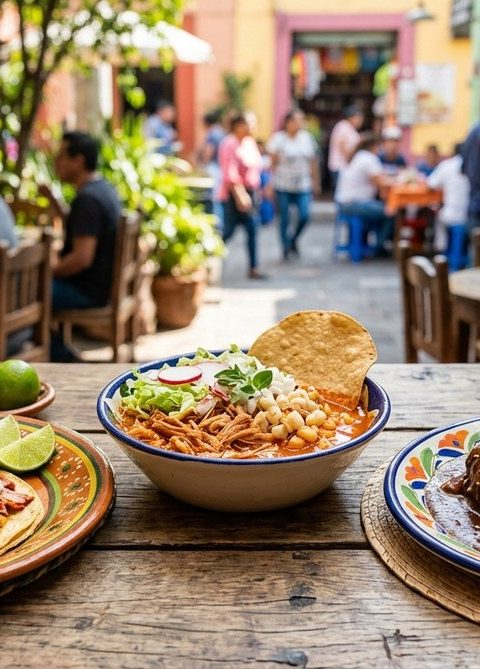
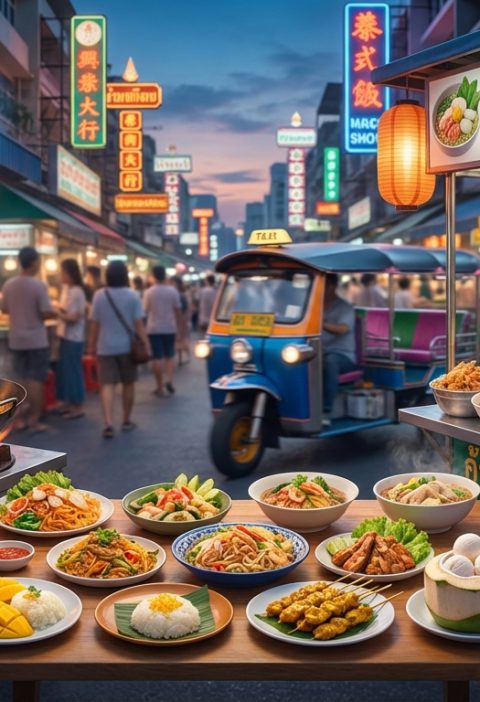
For more culinary travel inspiration, check out our 48 hours of street food paradise: your ultimate Bangkok eating guide or our complete oaxaca food trail: where to eat mole, tlayudas, and mezcal. If you want to understand how Singapore’s immigrant history shaped its food, read about how immigration transformed American cuisine: a delicious history for a parallel story of flavors crossing borders.