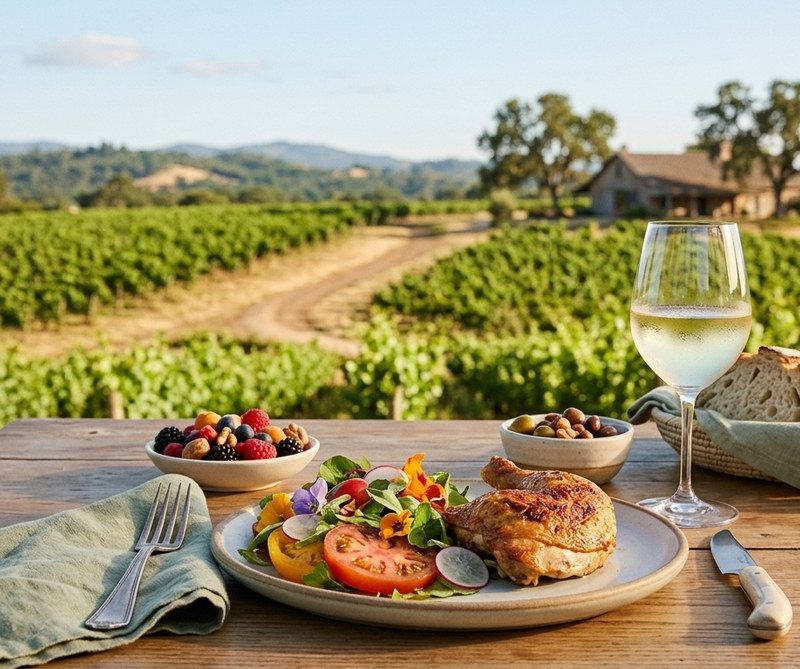
Napa Valley isn’t just about wine anymore. The region has become a culinary destination where chefs work directly with farmers, foragers bring wild ingredients to restaurant kitchens, and every meal tells a story about the land. This 5 days in Napa Valley itinerary focuses on the food experiences that make wine country unforgettable, from morning farmers markets to multi-course dinners under the stars.
This five-day Napa Valley itinerary balances wine tasting with farm-to-table dining experiences across both Napa and Sonoma counties. You’ll visit local farms, attend cooking demonstrations, dine at acclaimed restaurants, and learn how [seasonal ingredients](https://www.who.int/health-topics/food-safety) shape wine country cuisine. The schedule allows for spontaneous discoveries while ensuring reservations at sought-after establishments that require advance booking.
Day One: Arrival and Yountville’s Culinary Scene
Start your journey in Yountville, a small town with an outsized culinary reputation. The concentration of Michelin-starred restaurants here rivals any major city.
Arrive by midday and check into your accommodation. Yountville offers everything from boutique hotels to luxury resorts, all within walking distance of restaurants.
For lunch, visit Bouchon Bakery. The pastries here demonstrate proper French technique applied to California ingredients. Try the bacon and gruyere quiche or the seasonal fruit tart.
Spend the afternoon walking through town. Stop at specialty food shops and note what’s in season. Local produce drives every menu in wine country.
Reserve dinner at a restaurant that sources from its own garden or nearby farms. Many establishments in Yountville maintain relationships with specific ranchers and growers. Ask your server about ingredient origins. The staff can usually tell you which farm provided the lettuce and when it was picked.
After dinner, walk off your meal through the town’s lit pathways. Yountville becomes peaceful after dark, a contrast to the busy tasting rooms during the day.
Day Two: Farmers Markets and Cooking Demonstrations
Tuesday and Friday mornings bring the Napa Farmers Market to downtown Napa. Saturday mornings feature markets in St. Helena and other towns. Plan your second day around whichever market aligns with your schedule.
Arrive when the market opens. Early morning gives you first pick of produce and a chance to talk with farmers before crowds arrive.
Look for these seasonal highlights:
- Spring: fava beans, asparagus, strawberries, fresh herbs
- Summer: heirloom tomatoes, stone fruits, peppers, squash blossoms
- Fall: persimmons, pomegranates, winter squash, wild mushrooms
- Winter: citrus, root vegetables, brassicas, dried beans
Buy ingredients for a picnic lunch. Many vendors sell prepared foods like fresh bread, cheese, and cured meats.
After the market, attend a cooking class or demonstration. Several culinary schools and restaurants offer sessions where chefs show their techniques. The Culinary Institute of America at Greystone hosts public demonstrations on weekends. You’ll learn methods that work in home kitchens, not just professional settings.
For dinner, choose a restaurant known for whole-animal butchery or house-made charcuterie. These establishments take farm-to-table seriously, using every part of locally raised animals. Similar to how a week-long culinary journey through Tuscany emphasizes traditional techniques, wine country chefs honor ingredients through careful preparation.
Day Three: Sonoma County Farm Visits
Cross into Sonoma County for a different perspective on wine country food. Sonoma feels more agricultural, less polished than Napa. That rawness translates to incredible ingredients.
Book a farm tour that includes hands-on activities. Several farms welcome visitors for seasonal tasks like harvesting vegetables, collecting eggs, or learning about soil health. These experiences cost between $50 and $150 per person and last two to four hours.
What you’ll learn during farm visits:
| Activity | Season | What You’ll Understand |
|---|---|---|
| Planting seedlings | Spring | How timing affects flavor development |
| Harvesting tomatoes | Summer | Why heirloom varieties taste different |
| Digging potatoes | Fall | How soil composition changes texture |
| Pruning fruit trees | Winter | The connection between pruning and fruit quality |
Pack the picnic ingredients you bought at the farmers market. Many farms have designated picnic areas with valley views.
For dinner, head to Healdsburg. This town serves as Sonoma’s culinary hub. Restaurants here often feature more rustic preparations than Napa counterparts. Think wood-fired cooking, whole grilled fish, and vegetables treated as main courses rather than sides.
One restaurant worth noting: SingleThread. This three-Michelin-star establishment operates its own farm and changes its menu based on what’s ready to harvest. Reservations open exactly 60 days in advance and fill within hours. If you secure a table, expect a meal that defines modern farm-to-table cuisine.
Day Four: Wine Pairing Education and Foraging
Spend your fourth day learning how wine and food interact. Many wineries offer food pairing experiences beyond standard cheese plates.
Look for wineries that:
- Employ a full-time chef who creates pairings
- Source ingredients from specific local farms
- Explain why certain flavors work together
- Offer seated tastings rather than bar service
- Limit group sizes to ensure personal attention
The best pairings surprise you. A crisp sauvignon blanc might pair with fried chicken. A bold cabernet could complement dark chocolate with sea salt. These combinations work because of acid, tannin, and fat interactions.
“Wine pairing isn’t about rules. It’s about understanding how components interact. Fat needs acid. Tannin softens with protein. Sweetness balances salt. Once you grasp these principles, you can pair anything.” (Wine educator and sommelier)
In the afternoon, join a foraging tour if available. Local guides lead walks through oak woodlands and along creek beds, identifying edible plants. You might find miner’s lettuce, wild fennel, bay laurel, or seasonal mushrooms. These ingredients appear on wine country menus but rarely in supermarkets. Learning to identify them connects you to the landscape in a tangible way, much like foraging for wild edibles does in other regions.
For your final dinner, choose a restaurant with a chef’s counter or kitchen table. Watching cooks work teaches you more than any cookbook. Notice their movements, how they taste constantly, and how they adjust seasoning throughout service.
Day Five: Olive Oil Tasting and Departure Meals
Your last day should move at a slower pace. Visit an olive oil producer for a tasting. California olive oil rivals anything from Europe, and wine country produces some of the state’s best.
Olive oil tasting follows a similar format to wine tasting. You’ll sample different varieties, learning to identify peppery notes, fruity characteristics, and bitter finishes. Good olive oil should make you cough slightly. That peppery sensation comes from fresh polyphenols.
Buy a bottle of oil you love. It will remind you of the trip every time you cook.
For lunch, return to a restaurant you enjoyed earlier in the week. Trying the same place twice lets you notice details you missed the first time. Order different dishes to expand your understanding of the chef’s style.
Before leaving wine country, stop at a specialty food shop. Stock up on:
- Local honey varieties
- Artisan vinegars
- Dried herbs and spice blends
- Preserved lemons or other pickles
- Handmade pasta or polenta
These ingredients extend your trip into your home kitchen.
Planning Your Wine Country Food Journey
Successful food-focused travel requires advance work. Here’s how to prepare for your 5 days in Napa Valley itinerary.
Reservations timeline:
- Book accommodations 3-4 months ahead for peak season (May through October)
- Make dinner reservations 60-90 days in advance for top restaurants
- Reserve cooking classes and farm tours 2-4 weeks ahead
- Schedule wine pairings 1-2 weeks before your visit
- Check farmers market schedules the week of your trip
Budget considerations:
Fine dining in wine country costs $100-300 per person for dinner without wine. Cooking classes run $75-200. Farm tours range from $50-150. Wine tastings with food pairings cost $75-150 per person.
You can reduce costs by:
- Eating lunch at casual spots and splurging on dinner
- Visiting wineries that don’t charge tasting fees
- Shopping at farmers markets for breakfast ingredients
- Choosing mid-week travel when some restaurants offer prix fixe menus
Seasonal timing matters:
Spring brings tender vegetables and lamb. Summer offers peak produce but also peak crowds. Fall features harvest activities and cooler weather. Winter means citrus, truffles, and easier reservations.
Transportation notes:
Rent a car. Public transportation doesn’t serve most wineries and farms. Designate a driver or hire a service if you plan serious wine tasting. Many visitors alternate who drives each day.
Common Mistakes and How to Avoid Them
Even experienced travelers make errors when planning wine country trips. Here are the most frequent problems and their solutions.
| Mistake | Why It Happens | Better Approach |
|---|---|---|
| Booking too many tastings | Trying to visit every famous winery | Limit to 2-3 wineries per day, focus on food experiences |
| Skipping Sonoma | Assuming Napa has everything | Split time between both counties for variety |
| Not making reservations | Underestimating demand | Book restaurants immediately after securing accommodations |
| Overpacking the schedule | Fear of missing out | Leave half-days open for spontaneous discoveries |
| Ignoring lunch | Saving appetite for dinner | Lunch spots often offer better value and easier seating |
Another common error: treating wine country like an amusement park. You can’t see everything in five days. Choose experiences that match your interests rather than checking boxes.
If you love cooking, prioritize classes and farm visits. If you prefer dining out, book multiple tasting menus. If you want to understand wine deeply, focus on educational tastings rather than quantity.
What Makes Wine Country Food Special
The farm-to-table movement started in California wine country decades ago. Alice Waters opened Chez Panisse in Berkeley in 1971, establishing principles that spread through the region. Chefs began visiting farms, learning about growing seasons, and building menus around what was ripe.
That philosophy now defines wine country cuisine. Restaurants here don’t just buy local ingredients. They collaborate with farmers on what to plant. They preserve summer produce for winter menus. They compost scraps and return nutrients to the soil.
This closed-loop system creates flavors you can’t replicate elsewhere. A tomato picked that morning and served that evening tastes completely different from one shipped across the country. Eggs from chickens that eat kitchen scraps and forage in pastures have deep orange yolks and rich flavor.
Why do we eat what we eat becomes obvious in wine country. Geography determines everything. The Mediterranean climate allows year-round growing. Volcanic soil adds minerality to vegetables. Coastal fog keeps temperatures moderate. These factors combine to create ideal conditions for both grapes and produce.
Making the Most of Every Meal
Your 5 days in Napa Valley itinerary should teach you something at every meal. Here’s how to stay engaged rather than just consuming food.
At farmers markets:
Ask vendors about growing practices. Learn which crops need the most water. Discover why some varieties taste better than supermarket versions. Request preparation suggestions.
During cooking classes:
Take notes on techniques rather than recipes. Ask why the chef makes certain choices. Request clarification when something doesn’t make sense. Practice knife skills if offered.
At restaurants:
Read the full menu before ordering. Notice which ingredients appear in multiple dishes. Ask servers about preparations you don’t recognize. Request half portions if you want to try more dishes.
During wine pairings:
Taste the food before sipping wine. Then taste the wine alone. Finally, taste them together and notice what changes. Ask the presenter why specific pairings work.
On farm visits:
Touch the soil. Smell the herbs. Taste vegetables raw in the field. Ask farmers about their biggest challenges. Learn what they’re excited to plant next season.
These active approaches transform meals from passive consumption into education. You’ll return home with knowledge that changes how you cook and eat.
Your Wine Country Adventure Awaits
Five days gives you enough time to understand wine country’s culinary culture without rushing. You’ll eat exceptionally well, learn new techniques, and gain appreciation for the work behind every meal.
The best part? You don’t need to be a chef or wine expert to enjoy this itinerary. Curiosity matters more than expertise. Ask questions. Try unfamiliar ingredients. Pay attention to flavors and textures. The region rewards engagement with unforgettable experiences.
Pack comfortable shoes for walking through vineyards and markets. Bring layers since wine country weather changes throughout the day. Leave room in your luggage for the specialty foods you’ll want to take home.
Most importantly, slow down. Wine country operates on a different pace than daily life. Meals last hours. Conversations with farmers and winemakers meander. Sunsets over vineyards demand your full attention. Let yourself settle into that rhythm. The food tastes better when you’re not rushing to the next thing.