You are sitting at a table in a busy restaurant. The server hands you a menu. You open it and suddenly feel lost. Words like “sous vide,” “mirepoix,” and “gremolata” jump off the page. Prices seem random. You have no idea what to order. This feeling is common. But it does not have to be your reality. Learning how to read a restaurant menu like a pro changes everything. It saves you money. It helps you find the best dishes. And it makes dining out more fun.
Reading a menu like a pro means looking past the fancy language. Focus on preparation methods, ingredient sourcing, and price placement. Look for dishes that highlight seasonal or local ingredients. Avoid the most expensive item and the cheapest one. Ask your server smart questions about cooking techniques and portion sizes. Trust your instincts, but use these clues to make a confident choice.
Start With the Structure
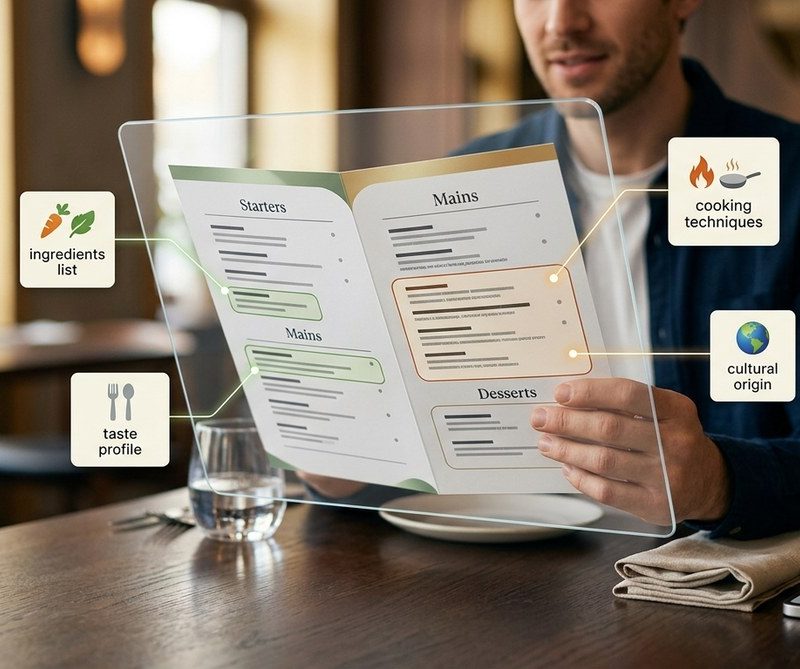
A menu is not random. It is a carefully designed tool. Restaurants use layout, typography, and pricing to guide your choices. Understanding this structure is the first step.
Most menus follow a predictable order. Appetizers come first. Then salads, entrees, sides, and desserts. But look closer. The items at the top and bottom of each section are often the highest margin dishes for the restaurant. The middle items tend to be better values.
Restaurants also use a technique called “anchoring.” They place a very expensive item on the menu to make everything else seem reasonable. A $60 steak makes a $35 pasta dish look like a deal. Do not fall for it. Ignore the anchor item entirely.
Six Steps to Decode Any Menu
Follow this numbered process every time you sit down to order.
-
Scan for keywords. Look for words like “roasted,” “grilled,” “braised,” or “seared.” These methods usually mean more flavor. Avoid items described as “crispy,” “crunchy,” or “golden” unless you know what you are getting. Those words often mask frozen or pre-made ingredients.
-
Check the price placement. Most expensive items are listed first or last in a section. The best values sit in the middle. Also look at the price column. If all prices are similar, the restaurant is trying to make you focus on the dish description instead of cost.
-
Identify the hero ingredient. Every dish has one main ingredient. It is usually listed first in the description. If the menu says “Pan-seared salmon with lemon butter sauce and roasted asparagus,” the salmon is the star. Everything else is support.
-
Look for seasonal or local cues. Menus that change often or highlight local farms are usually better. Words like “heirloom,” “pasture-raised,” or “line-caught” signal quality. If a menu does not mention sourcing, the ingredients are likely standard distributor items.
-
Ask about specials. Daily specials are often the freshest items. Chefs use them to showcase seasonal ingredients or test new recipes. But always ask the price. Specials sometimes do not have prices listed, and that can lead to surprises.
-
Consider the sides. Some restaurants list sides separately. Others include them in the entree price. Look for phrases like “served with,” “accompanied by,” or “comes with.” If the sides are vague, ask your server what is included before you order.
What to Scan for on Any Menu
Use this bulleted list as a mental checklist when you first open the menu.
- Preparation method words (roasted, grilled, braised, seared, poached)
- Sourcing language (local, seasonal, farm, pasture, wild, line-caught)
- Price range and placement (middle items are usually the best value)
- Specials board or insert (often freshest, but ask the price)
- Allergen or dietary notes (gluten-free, vegan, nut-free)
- Chef’s recommendations or house specialties
- Side dish descriptions and whether they are included
Common Menu Tricks and How to Avoid Them
Restaurants use several techniques to increase spending. Here is a table that shows what to watch for and how to respond.
| Menu Tactic | What It Looks Like | How to Avoid It |
|---|---|---|
| Price anchoring | One very expensive item that makes others seem cheap | Ignore it entirely. Focus on middle-priced items. |
| Vague descriptions | “Crispy chicken” or “Golden fish fillet” | Ask how the item is cooked and what the sauce is. |
| No prices on specials | Server recites specials without cost | Always ask “How much is that?” before ordering. |
| Upsells and add-ons | “Would you like to add truffle fries for $4?” | Decide if the add-on adds real value. Often it does not. |
| Appetizer-as-entree pricing | Small plates priced near entree cost | Check portion size. Ask if it is meant to share. |
| “Market price” listings | Seen on fish and steak items | Ask the current price before you order. |
Expert Advice From a Former Server
“I worked in restaurants for seven years. The biggest secret I can share is this: ask your server what they would order if they were paying. Not what is the most popular dish. Not what the chef recommends. Ask what they personally would eat. You will get an honest answer because servers know which dishes are made fresh and which ones sit under a heat lamp.”
This tip works because servers see what gets sent back to the kitchen. They know which plates come out cold. They know which sauces are house-made and which come from a bag. A good server will steer you toward the best meal.
How to Handle Different Menu Styles
Not all menus are the same. Here is how to adapt your approach.
Traditional printed menus. These are the most common. Use the six-step process above. Take your time. Most restaurants expect you to look at the menu for a few minutes before ordering.
Digital or QR code menus. These can be harder to scan. Zoom in on the descriptions. Look for the same keywords. If the menu is on a phone screen, take a screenshot and read it in full before deciding.
Seasonal or rotating menus. These change often. That is usually a good sign. It means the chef works with fresh ingredients. Ask the server what is new this week or what just came in.
Tasting menus or prix fixe. These are set price menus with multiple courses. They are common at upscale restaurants. Before you commit, ask about substitutions. Some restaurants allow swaps. Others do not. Also ask about portion sizes. A seven-course tasting menu might leave you hungry if the portions are tiny.
Mistakes Even Seasoned Diners Make
Here are three common errors and how to fix them.
Ordering the most expensive item. Many people think the highest price means the best quality. That is not always true. Restaurants often mark up premium items heavily. A $50 steak might cost the restaurant $15. A $30 pasta dish might cost $8 to make. The pasta could be just as good.
Ignoring the appetizers. Appetizers are often the most creative part of the menu. Chefs use them to experiment with flavors. If you only order an entree, you might miss the best food in the house. Consider ordering two or three appetizers instead of one main dish.
Not asking questions. Some diners feel embarrassed to ask about the menu. Do not be. A good server wants you to enjoy your meal. Ask about cooking methods, ingredient sources, and portion sizes. The more you know, the better your choice will be.
Putting It All Together at the Table
You have the tools. Now use them.
When the menu arrives, start with a scan. Look for the keywords and price patterns. Identify the anchor item and ignore it. Find the middle-priced dishes. Check for seasonal or local language. Then ask your server one or two specific questions. Do not be afraid to say “What would you eat tonight?” The answer will guide you.
Remember that you are in control. The menu is a tool for the restaurant, but it is also information for you. Use it to make a smart choice. And if you are still unsure, go with something simple. A well-executed classic dish often beats a complicated mess.
Becoming a Confident Menu Reader
The more you practice these techniques, the easier they become. Soon you will spot menu tricks without thinking. You will know which dishes are worth the price and which ones to skip. You will walk into any restaurant with confidence.
This skill is useful everywhere. At a neighborhood diner, a fancy steakhouse, or a trendy new spot in your city. It even helps when you are traveling. If you are planning a trip and want to try local food, the same rules apply. Check out our guide on how to navigate a traditional night market like a local food expert for more tips on ordering in unfamiliar settings.
Next time you go out to eat, take a breath. Open the menu. Use the steps you learned here. Trust your instincts. And enjoy the meal. That is what reading a menu like a pro is really about.