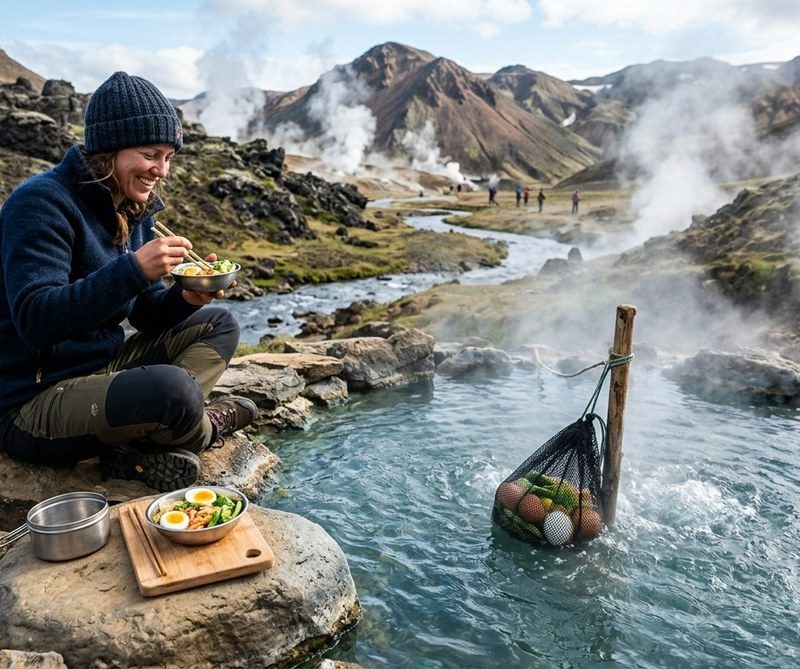
The ground beneath your feet can boil an egg. That is not a metaphor. In geothermal regions around the world, people have been using the earth’s natural heat to prepare meals for centuries. Instead of firing up a stove, they lower baskets of vegetables into steaming vents or bury clay-wrapped fish in hot volcanic sand. It is one of the oldest cooking methods on the planet, and it is experiencing a serious comeback among travelers who want dinner and a show.
Cooking in hot springs is not a gimmick. It is a legitimate technique that relies on the same principles as a slow cooker or a steam oven. The heat is steady, moist, and even. The only difference is that your heat source is a hole in the ground instead of a kitchen appliance. Before you toss a packet of instant noodles into a bubbling pool, there are a few things you need to know.
Geothermal cooking works best when you match the food to the temperature zone. Direct immersion in boiling water is for eggs and corn. Steam vents handle vegetables and seafood gently. Hot sand and mud are ideal for slow roasting root vegetables and meats. Always test the temperature with a thermometer first, and never cook in acidic pools that could leach heavy metals into your meal.
How Geothermal Cooking Actually Works
The science is straightforward. Magma heats underground water reservoirs. That water can reach temperatures well above the boiling point. When it rises to the surface through fissures, it creates hot springs, steam vents, and mud pots. The temperature of these features varies wildly. Some pools sit at a pleasant 100 degrees Fahrenheit. Others can exceed 212 degrees Fahrenheit and will scald skin in seconds.
The key to successful geothermal cooking is finding the right spot. You need water or steam that is hot enough to cook your food but not so aggressive that it turns everything to mush. Locals in places like Iceland, Japan, and New Zealand have been doing this for generations. They know exactly which vents are for boiling eggs and which are for steaming bread.
The Three Main Cooking Zones
- Boiling water pools (over 212°F): Best for eggs, corn on the cob, and small potatoes. The water is actively bubbling. Cooking times are similar to boiling on a stovetop.
- Steam vents (fumaroles): These release superheated steam. Perfect for vegetables, dumplings, and seafood. The steam cooks gently and retains moisture.
- Hot sand and mud (180 to 200°F): Dig a hole, wrap your food in leaves or foil, bury it, and wait. This method works for root vegetables, whole fish, and even bread.
What to Cook and What to Skip
Not every ingredient handles geothermal heat well. Delicate items like leafy greens can turn to slime in seconds. Tough cuts of meat need hours and may never reach a safe internal temperature if the heat source is inconsistent.
| Ingredient | Best Method | Approximate Time | Common Mistake |
|---|---|---|---|
| Eggs | Boiling pool | 5 to 7 minutes | Dropping them in too fast (they crack) |
| Corn on the cob | Boiling pool | 10 to 15 minutes | Leaving it too long (mushy kernels) |
| Potatoes | Hot sand burial | 45 to 60 minutes | Not wrapping them tightly (ash gets inside) |
| Fish fillets | Steam vent | 15 to 20 minutes | Using thin fillets (they overcook) |
| Carrots and beets | Steam vent | 20 to 30 minutes | Cutting them too small (they fall apart) |
| Chicken or pork | Hot sand burial | 2 to 4 hours | Not checking internal temp (food safety risk) |
A Step by Step Plan for Your First Geothermal Meal
If you are standing next to a hot spring with a bag of groceries, here is exactly what to do.
-
Check the temperature. Use a kitchen thermometer or a probe. If the water is above 140 degrees Fahrenheit, it is hot enough to cook. If it is bubbling aggressively, treat it like boiling water. If it is steaming, treat it like a steamer basket. Do not guess.
-
Prepare your food at home base. Wash and cut everything before you approach the hot spring. You do not want to be handling raw chicken near a steaming vent. Season your ingredients and wrap them in foil, cheesecloth, or banana leaves. For steam vents, a metal steamer basket on a stick works well.
-
Secure your food in the heat source. Use a mesh bag, a string, or a long handled strainer. Never drop food directly into a pool unless you are certain it is safe to retrieve. Some pools are deep and have scalding hot walls. Tie your bag to a rock or a stake on the edge.
-
Set a timer and watch closely. Geothermal heat can be unpredictable. Check your food every five minutes at first. Write down what works so you can repeat it. Take notes on the temperature and the cooking time.
-
Retrieve and cool down. Use tongs or a long handled spoon. Rinse off any sand or mud with clean drinking water. Let the food rest for a minute before eating. The internal temperature can continue to rise.
“The biggest mistake people make is treating a hot spring like a slow cooker. You cannot just drop food in and walk away for an hour. You need to monitor it constantly, especially the first time. I always recommend starting with eggs because they are cheap and they give you a clear visual cue.” Chef Yuki Tanaka, geothermal cooking guide in Beppu, Japan
Where to Try Geothermal Cooking in 2026
Several destinations have turned geothermal cooking into a proper culinary experience. You do not need to be a survivalist or a daredevil. These places have safe, designated cooking areas with clear signage and sometimes even rental equipment.
Beppu, Japan
Beppu is the geothermal cooking capital of the world. The city has more than 2,000 hot springs. The local technique is called “jigoku-mushi,” which translates to “hell steaming.” You can visit a dedicated steaming facility where vents are built into the ground. You place your food in a basket, lower it into the steam, and wait. The facility provides baskets and timers. The most popular items are sweet potatoes, corn, and seafood. Beppu also has public foot baths where you can soak while your lunch cooks.
Iceland
Icelandic bakers have perfected the art of geothermal rye bread. They bury a sealed pot of dough in hot sand near a spring and leave it for 24 hours. The result is a dark, dense, slightly sweet loaf that is served with butter and smoked fish. Several farms near the Golden Circle offer geothermal bread baking experiences. You can also cook eggs in the boiling mud pots at Hverir, though you need to be extremely careful with the acidic steam.
Rotorua, New Zealand
The Maori people have been cooking in the thermal regions of Rotorua for centuries. They use woven flax baskets to lower food into the pools. Modern visitors can join a guided geothermal cooking tour that includes a hangi meal. The hangi is a traditional earth oven where food is placed on hot stones and covered with leaves and soil. It is not exactly a hot spring, but it uses the same principle of geothermal heat.
Savusavu, Fiji
On the island of Vanua Levu, locals cook in the hot springs along the coast. They wrap cassava, fish, and taro in banana leaves and submerge them in the pools. The water is brackish and slightly salty, which adds flavor. Visitors can join a village tour that includes a cooking demonstration and a meal on the beach.
Safety Rules for Cooking in Hot Springs
Geothermal areas are not theme parks. They are active geological features with real dangers. The ground can be unstable. Pools can suddenly change temperature. Steam can cause third degree burns in seconds.
- Never cook in a pool that smells like sulfur. The sulfur gas is toxic in high concentrations. If you smell rotten eggs, move upwind.
- Do not use plastic containers. Heat can cause them to leach chemicals or melt. Stick to metal, foil, or natural fibers.
- Keep your face away from the steam. The steam is often hotter than the water. Inhaling it can burn your lungs.
- Bring clean water for rinsing. Geothermal water can contain minerals, bacteria, and heavy metals. Do not drink it. Do not let it touch your eyes.
- Respect local rules. Some hot springs are sacred. Others are protected habitats. Do not cook in a pool that is used for bathing or drinking.
Why Geothermal Cooking Matters for Adventurous Eaters
This is not just about novelty. Cooking in hot springs connects you to a culinary tradition that predates modern stoves by thousands of years. It teaches you to work with the landscape instead of against it. When you eat an egg that was boiled by the earth, you taste the place. The mineral content of the water, the type of rock, the steam temperature, all of it affects the final dish. You cannot replicate that in a kitchen.
If you are planning a trip to a geothermal destination, take a small bag of ingredients with you. Corn, eggs, and sweet potatoes are forgiving and easy to transport. Try the local method first, then experiment. Keep a journal of times and temperatures. You will get better with each attempt.
For more ideas on how to turn a destination into a culinary adventure, read about a week long culinary journey through Tuscany or plan a 48 hour street food tour of Bangkok. If you want to push the boundaries even further, check out how to cook without a stove using geothermal and solar heat.
Let the Earth Do the Cooking
The next time you visit a national park with thermal features, look past the tourist boardwalks. Ask a ranger if there is a designated cooking area. Pack a few eggs and a roll of foil. Find a steam vent that is not too aggressive and lower your lunch into the ground. You will be following a tradition that humans have used for thousands of years. And you will never look at a hot spring the same way again.