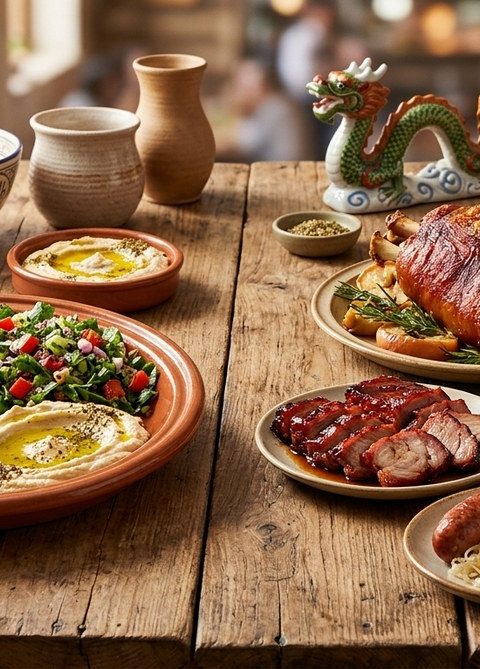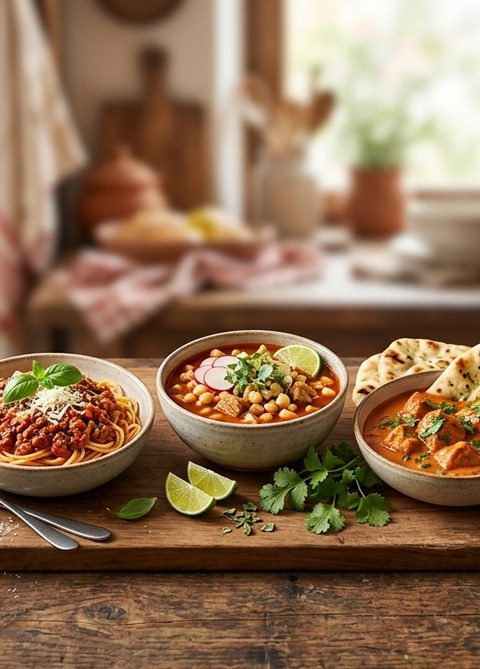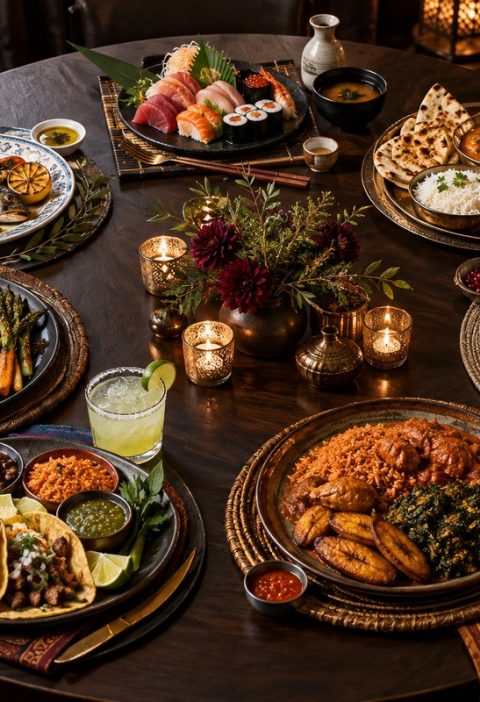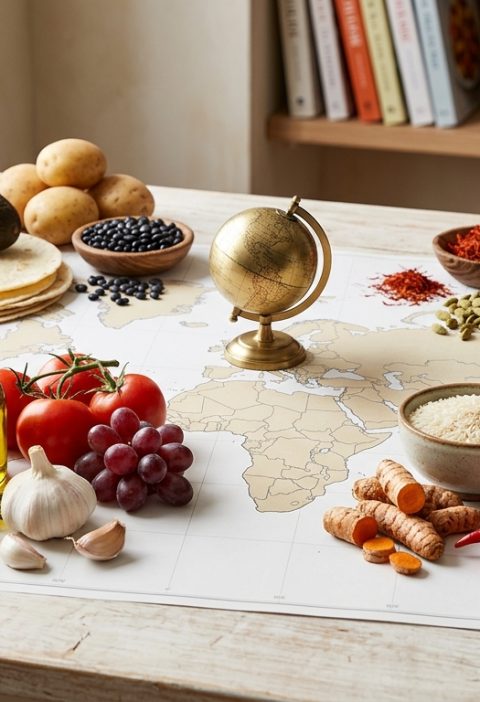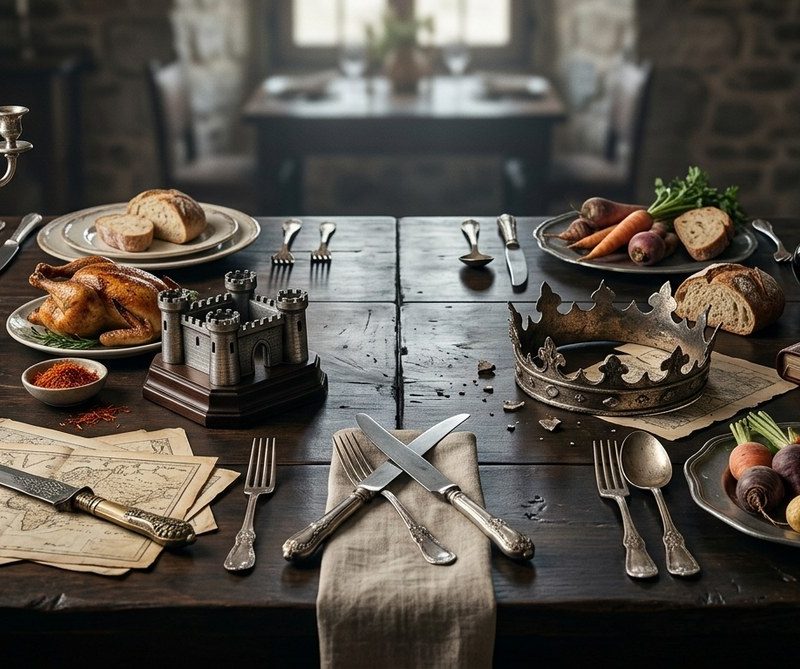
The dinner table looks peaceful. White linen. Polished silverware. Plates arranged just so. But look closer. Who decided what goes on those plates? Who gets the largest portion of meat? Who is told to wait until everyone else has eaten? These small rules are echoes of a much larger story. For thousands of years, the history of food and power has been written not in treaties or battle plans, but in bread, salt, and wine. The simple act of eating has always been one of the most effective tools for control, status, and rebellion. From the first grain taxes in ancient Mesopotamia to the colonial spice monopolies that redrew world maps, food has never been just about nourishment. It has been a weapon, a currency, and a stage for social performance.
The dinner table is a mirror reflecting society’s power structures. Throughout history, controlling food supply, dictating dining etiquette, and restricting ingredients have been primary methods for rulers to maintain authority. Understanding this history of food and power helps us see modern meals in a new light, revealing that every bite carries the weight of centuries of cultural negotiation and conflict.
The First Power Meal: Bread and Circuses in Ancient Rome
The Roman Empire understood the link between food and control better than most. The philosopher Juvenal coined the phrase “bread and circuses” to describe how Roman emperors kept the population docile. Give the people free grain and spectacular entertainment, and they will not question your rule.
The annona, the Roman grain dole, was not charity. It was a political transaction. By distributing wheat to hundreds of thousands of citizens, the emperor positioned himself as the ultimate provider. Miss a distribution, and riots could break out. The Roman government even employed grain inspectors called frumentarii to track supply and prevent hoarding. Control the grain, and you control the city.
But power was also displayed through excess. The Roman convivium, or dinner party, was a performance of status. Wealthy hosts served exotic dishes like dormice in honey or flamingo tongues to show off their reach across the empire. Guests were seated by rank. The closer you sat to the host, the more important you were. This seating arrangement is a direct ancestor of modern corporate dinners and state banquets.
Feudal Feasts: How the Fork Became a Status Symbol
During the Middle Ages, the dinner table became a map of the feudal system. In a medieval castle, the lord sat on a raised dais, literally looking down on his household. He ate from fine metal plates while servants and lower-ranking guests gnawed on trenchers, slabs of stale bread used as plates.
Spices were the ultimate status symbol. Pepper, cinnamon, and cloves were worth more than gold. A lord who could afford to heavily season his meat was displaying immense wealth. The history of food and power in this era is written in the spice trade, a global network controlled by a handful of powerful city-states and later colonial empires.
The fork, when it arrived in Italy from Byzantium, was seen as decadent and suspicious. Church leaders condemned it as an affront to God. Only the very wealthy and daring used one. Today, we see the fork as a basic tool. In the 11th century, it was a political statement.
Colonial Tables: Sugar, Slavery, and the Global Kitchen
No chapter in the history of food and power is darker than the colonial era. Sugar is the perfect example. Once a rare luxury, sugar became a global commodity through the brutal labor of enslaved Africans on Caribbean plantations. The sugar that sweetened the tea of English aristocrats was soaked in violence.
Colonial powers also controlled what colonized people could grow. The British, for example, forced Indian farmers to grow opium and indigo instead of food crops. This created famines and dependency. The dinner table in the colonial home was a display of empire. The roast beef, the potatoes, the tea, all of these foods were tied to a global system of extraction.
This legacy is still with us. Many of the ingredients we consider “traditional” in American cooking, like molasses, rum, and coffee, are products of that colonial history. To understand why we eat what we eat, we have to look at who held the power to shape our pantries.
The Modern Dinner Table: Class, Etiquette, and Rebellion
In the 19th and 20th centuries, the battlefield shifted from the farm to the dining room. Etiquette books became bestsellers. They taught the rising middle class how to eat like the upper class. Which fork to use. How to hold a wine glass. When to start eating. These rules were a way to exclude people. If you did not know the right way to eat, you were marked as an outsider.
During the Great Depression, the dinner table became a site of survival. Families stretched meals with cheap fillers like potatoes and bread. The federal government distributed surplus cheese and canned goods. The power dynamic was clear: the government provided, and the people depended.
In more recent decades, food has become a tool of rebellion. The counterculture movements of the 1960s rejected processed food and embraced organic farming and communal meals. Today, movements like farm-to-table and food sovereignty are challenges to industrial agriculture. When you choose to buy from a local farmer, you are making a political choice.
How to Recognize Power Dynamics at Any Table
You do not have to be a historian to see the history of food and power playing out in your own life. Here are three ways to spot it:
- Watch the serving order. Who is served first at a family dinner? The father? The guest of honor? The eldest? This order reflects the hierarchy of the group.
- Notice the portions. Who gets the largest piece of meat or the first slice of cake? In many cultures, the largest portion is given to the person with the highest status.
- Listen to the rules. Are you told not to start eating until everyone is served? Are elbows on the table forbidden? These rules are not arbitrary. They are social codes that maintain order and respect.
A History of Controlling What Goes on Your Plate
The following table shows a few key moments when food was used as a tool of power.
| Era | Method of Control | Example |
|---|---|---|
| Ancient Egypt | Grain taxation and storage | Pharaohs controlled the grain supply to prevent rebellion. |
| Medieval Europe | Sumptuary laws | Laws dictated what foods commoners could eat (e.g., no swans or peacocks). |
| Colonial Americas | Monoculture farming | Colonizers forced cash crops like tobacco and sugar over food diversity. |
| 20th Century USA | Food advertising | Corporations shaped “ideal” meals (like breakfast cereal) to sell products. |
| Modern Day | Subsidies and policy | Government subsidies make corn and soy cheap, shaping the entire food system. |
“Tell me what you eat, and I will tell you who you are.” This famous line from the French gastronome Jean Anthelme Brillat-Savarin is often quoted as a celebration of taste. But it is also a statement about power. What you eat reveals your class, your region, your religion, and your access to resources. It reveals the systems that feed you.
The Kitchen as a Site of Resistance
Not all power dynamics are imposed from above. People have always used food to push back. During the Civil Rights Movement, the Greensboro sit-ins began at a lunch counter. The simple act of sitting down and ordering food was a direct challenge to segregation.
Enslaved people in the American South used food as a form of quiet rebellion. They stole food from the master’s kitchen. They created new cuisines from scraps, like chitlins and hoppin’ john. They passed down recipes as a way to preserve culture and identity. The kitchen became a sanctuary where enslaved people had some small measure of control.
Today, community gardens and food cooperatives are modern forms of resistance. They challenge corporate control over food by creating local, democratic alternatives. When you grow your own tomatoes, you are stepping outside the system, even if just for a season.
The Tools of the Powerful: A Practical Look
If you want to understand how power works through food, look at these common tactics used throughout history.
- Rationing and distribution. Controlling how much food people get and when.
- Taxation and tariffs. Making certain foods expensive or cheap to influence consumption.
- Etiquette and ritual. Creating rules that separate the powerful from the powerless.
- Advertising and branding. Telling people what is desirable and what is not.
- Land ownership and control. Deciding who can grow food and how.
Each of these tools is still in use today. The only difference is how they are dressed up.
Why Your Grandmother’s Recipe Book Matters
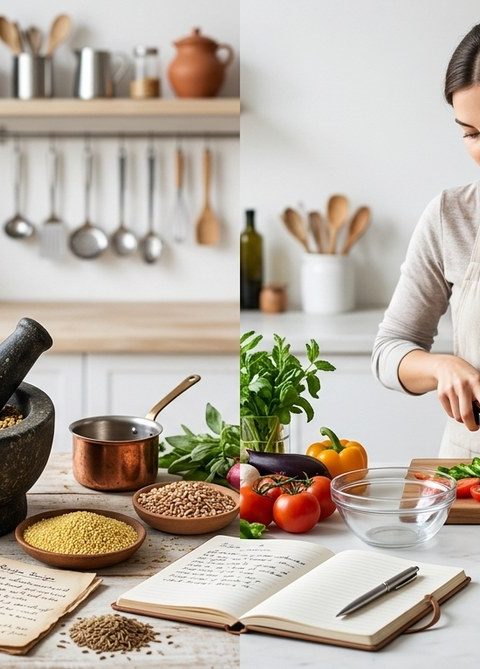
This might sound strange, but your grandmother’s recipe book is a document of power. It records what ingredients were available to her, which were affordable, and which were considered special. It shows the influence of immigration, war, and economic change on her cooking.
A recipe for Depression-era potato soup tells a story of scarcity. A recipe for a fancy Jell-O salad tells a story of post-war prosperity and the rise of processed food. These recipes are not just instructions. They are artifacts of a family’s history within larger systems of power.
To learn more about how these traditions travel, check out our guide on how immigration transformed American cuisine: a delicious history. You can also read about sacred foods and feast days to see how religious authority shapes what we eat.
The Dinner Table Is Still a Battlefield
The next time you sit down for a meal, take a moment to look around. Who cooked the food? Who bought the ingredients? Who decided what would be served? These questions may seem small, but they connect you to a history that is thousands of years old.
The history of food and power is not just something that happened in ancient Rome or colonial India. It is happening right now, in your kitchen, at your table. Every meal is a negotiation. Every bite is a choice. Understanding this history does not mean you have to stop enjoying your food. It means you can enjoy it with a deeper awareness of the forces that brought it to your plate.
For a deeper look at how these forces play out in a specific region, read about the spice trade routes that changed world history. And if you want to see how modern travelers engage with food cultures, our guide on how to navigate a traditional night market like a local food expert shows how even street food is shaped by economics and control.
Seeing the Bigger Picture on Your Plate
The dinner table is a classroom. It teaches us about our place in the world. It shows us who has power and who does not. It reflects the history of our families, our nations, and our global economy.
The next time you gather with friends or family, try this. Notice the small rituals. Ask about the food. Share a story about where a recipe came from. By doing this, you are not just eating. You are participating in a conversation that has been going on for centuries. You are part of the history of food and power. And the more you understand it, the more you can make choices that are thoughtful, intentional, and even a little rebellious.