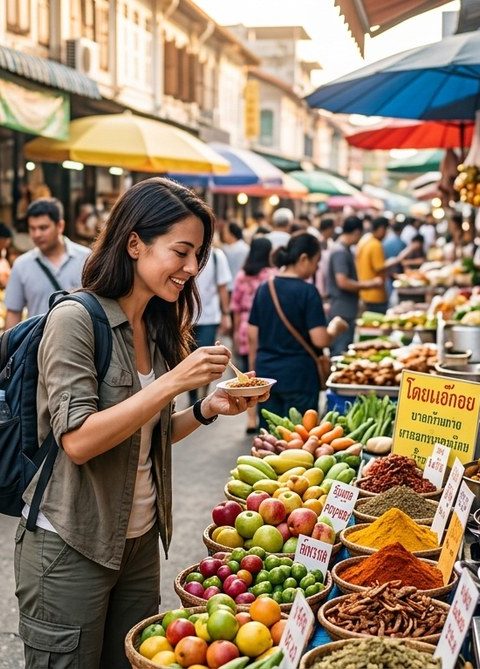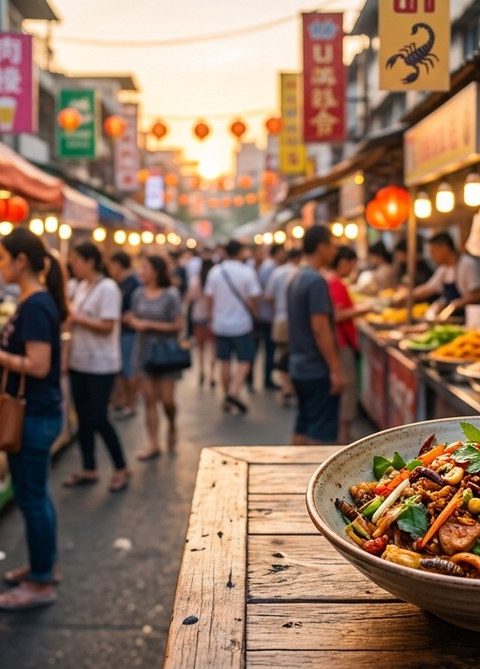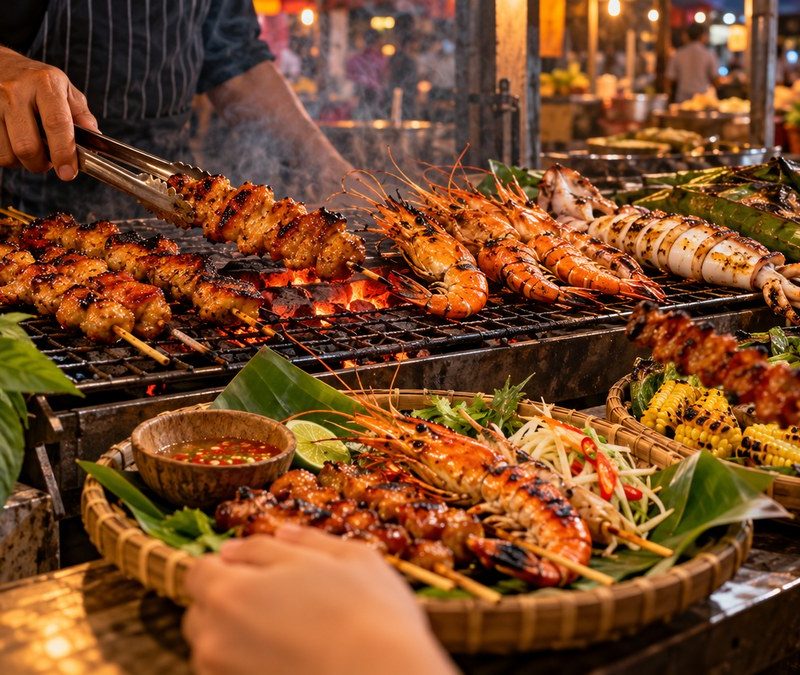
The smell of charcoal smoke and lemongrass hits you before you even see the stall. A wok flames up, and within seconds, noodles are dancing in a glossy swirl of soy and chili. This is the nightly theater of Southeast Asia’s street food scene. For a traveler, it can feel overwhelming. Hundreds of stalls, unknown ingredients, and a language barrier that turns ordering into a guessing game. But the reward is worth it. A bowl of pho from a Hanoi sidewalk, a skewer of satay from a Bangkok alley, a plate of char kway teow from a Penang hawker center. These meals are the soul of the region.
This guide teaches you how to navigate any night market or street stall with confidence. You will learn the three rules for picking a safe stall, the five essential phrases to order like a local, and a simple method for trying new foods without getting sick. By the end, you will have the skills to eat your way through any city in Southeast Asia.
How to Spot the Best Street Stall
Not all stalls are equal. Locals know which ones are worth your time. You can learn to spot them too. Look for three things: the crowd, the fire, and the turnover.
A stall surrounded by locals is a good sign. If you see families, workers, and elderly folks eating there, you have found a winner. Avoid places that cater only to tourists. The menus will be in English, and the prices will be higher.
Watch the cook. A good street vendor works with speed and confidence. They manage multiple orders at once. Their wok is always hot. If the cook looks bored or the food sits under a heat lamp, move on.
Check the turnover. A stall that sells out of ingredients early in the night is doing something right. The best stalls in Bangkok and Ho Chi Minh City close by 8 p.m. because they run out of food. That is the ultimate sign of quality.
The Three Golden Rules for Eating Safely
Many travelers worry about getting sick. The truth is that street food is often safer than restaurant food. The ingredients are fresh because the vendor buys them daily. The cooking temperature is high. But you still need to be smart.
- Follow the heat. Only eat food that is cooked fresh in front of you. Avoid anything that has been sitting out. If the food is not steaming, skip it. Grilled meats, stir-fried noodles, and soups are your safest bets.
- Watch the water. Do not drink tap water. Avoid ice unless you see it being cut from a sealed bag. Stick to bottled drinks, hot tea, or canned sodas. In Thailand, ask for nam plao (bottled water).
- Trust your nose. Your sense of smell is a powerful tool. If a stall smells sour or off, walk away. The air around a good stall should smell like garlic, chili, and smoke. If it smells like old oil or fish, trust your instincts.
Essential Phrases for Ordering with Confidence
You do not need to be fluent. A few words will change how vendors treat you. They will smile and often give you a better portion. Here are five phrases that work across the region.
- “Mai phet” (Thai) means “not spicy.” Use this if you have a low tolerance for heat. Vendors will adjust the chili level for you.
- “Khong phet” (Thai) means “no spicy.” This is for when you want zero heat.
- “Bao nhieu” (Vietnamese) means “how much.” Always ask the price before ordering. It prevents confusion.
- “Mot cai” (Vietnamese) means “one of those.” Point at what you want and say this. It is the easiest way to order.
- “Sedap” (Malay/Indonesian) means “delicious.” Say this after your meal. The vendor will appreciate it.
“The best advice I ever received was to eat where the taxi drivers eat. They know the city better than any guidebook. If a stall is packed with drivers at 2 a.m., that is where you want to be.” — A long-time street food vendor in Penang.
A Simple Process for Trying New Foods
Eating street food is an adventure. But you do not have to try everything at once. Use this process to build your confidence.
- Start with one new dish per day. On your first day, stick to foods that look familiar. Grilled meats, fried rice, or noodle soups. On day two, try something you cannot identify. Ask the vendor what it is. Most will be happy to explain.
- Share with a friend. Order three or four different dishes and split them. This lets you taste more without getting full. It also reduces the risk if you try something you do not like.
- Eat early. The best time to visit a night market is right when it opens, around 5 p.m. The food is freshest, the crowds are smaller, and the vendors are less rushed. You will get better service and better food.
What to Order in Each Country
Each country has its own street food icons. Here is a quick guide to the dishes you should look for.
| Country | Must Try Dish | What to Look For |
|---|---|---|
| Thailand | Pad Thai or Som Tam | A stall with a large, flat griddle and a line of locals. |
| Vietnam | Pho or Banh Mi | A steaming pot of broth for pho. A cart with a glass case for banh mi. |
| Malaysia | Char Kway Teow or Satay | A wok over a screaming hot flame. Skewers of meat over charcoal. |
| Indonesia | Nasi Goreng or Sate | A massive wok full of fried rice. A smoky grill with peanut sauce. |
| Philippines | Lechon or Isaw | A whole roasted pig on a spit. Grilled chicken intestines on a stick. |
Common Mistakes and How to Avoid Them
Even experienced travelers make mistakes. Here is a table of common errors and the simple fixes.
| Mistake | Why It Happens | The Fix |
|---|---|---|
| Ordering too much | The portions are smaller than you expect, so you over order. | Start with two dishes. You can always order more. |
| Eating at a tourist stall | You follow the crowd of tourists. | Walk one street away from the main square. The food is better and cheaper. |
| Not carrying cash | Many stalls do not take cards. | Always carry small bills. Break large notes at a convenience store first. |
| Forgetting to say “no spice” | You assume the food will be mild. | Ask about spice level before ordering. Use the phrases above. |
| Eating at the wrong time | You go too late and the food is old. | Eat at peak hours. 6 p.m. to 8 p.m. is the sweet spot. |
How to Navigate a Night Market Like a Pro
Night markets can be chaotic. The noise, the smells, and the crowds can overwhelm anyone. But there is a method to the madness.
First, do a lap. Walk the entire market before you buy anything. See what is available. Note which stalls have the longest lines. This helps you plan your meal.
Second, look for the smoke. The stalls with the most smoke are usually the best. Smoke means high heat, which means fresh cooking. Grilled meat and stir-fried noodles produce the most smoke.
Third, find the seating. Some stalls have shared tables. Others expect you to eat standing up. In Thailand and Vietnam, you will often sit on a tiny plastic stool. Embrace it. The smaller the stool, the better the food.
If you want a deeper look at how to handle these environments, read our guide on how to navigate a traditional night market like a local food expert. It covers everything from bargaining to finding the hidden stalls.
What to Drink with Your Street Food
The right drink can make a meal better. Southeast Asia has a rich drink culture that pairs perfectly with street food.
- Thai iced tea (cha yen). Sweet, creamy, and strong. It cuts through the heat of spicy food. You will find it at every Thai market.
- Sugar cane juice. Vendors press fresh sugar cane through a roller. The juice is sweet and refreshing. It is a great palate cleanser between dishes.
- Coconut water. Sold fresh from a chilled coconut. It is hydrating and mild. Perfect for a hot day.
- Beer. A cold local beer like Singha (Thailand), Bia Saigon (Vietnam), or Bintang (Indonesia) is a classic pairing. It is cheap and widely available.
Avoid drinks with ice unless you are certain the ice is made from filtered water. Stick to bottled or canned options to be safe.
How to Handle Dietary Restrictions
If you have allergies or dietary needs, street food can be tricky. But it is not impossible. Here is how to manage.
- Vegetarian. In Thailand, say “gin jay” (I am vegetarian). In Vietnam, say “toi an chay” (I eat vegetarian). In Malaysia and Indonesia, look for stalls that serve sayur (vegetables). Many Buddhist stalls are vegetarian friendly.
- Gluten free. Rice noodles and rice paper are naturally gluten free. Avoid soy sauce, which often contains wheat. Ask for “nam tuong” (fish sauce) instead.
- Nut allergy. This is the hardest one. Many Thai and Indonesian dishes use peanuts. Carry a translation card that explains your allergy. Show it to the vendor before ordering.
For a broader look at how different cultures handle food restrictions, check out our article on why do some cultures avoid pork while others celebrate it. It provides context for the food choices you will see.
The Best Times and Places to Eat
Timing matters. Each country has its own rhythm.
- Thailand. Night markets start around 5 p.m. and go until midnight. The best time for grilled meats is early evening. For noodle soups, go later, around 9 p.m.
- Vietnam. Breakfast is a big deal. Pho is a morning dish. Lunch is for bun cha and com tam. Dinner is for banh xeo and grilled meats. Night markets in Hanoi and Ho Chi Minh City are best from 6 p.m. to 9 p.m.
- Malaysia. Hawker centers are open all day. The best time for char kway teow is lunch. For satay, go at dinner. The Penang night market is legendary. Visit on a weekend for the full experience.
- Indonesia. Street food is most active in the evening. Look for kaki lima (street carts) around 6 p.m. The best satay is found near mosques after Friday prayers.
Your First Night Market: A Step by Step Plan
Let us put it all together. Here is a plan for your first night market visit.
- Arrive at 6 p.m. The market is just getting busy. The food is fresh.
- Walk the entire market once. Do not buy anything yet.
- Pick three stalls with long lines of locals. Note what they are cooking.
- Order one dish from each stall. Use the phrases you learned.
- Find a shared table. Sit down and eat.
- Drink a local beer or a sugar cane juice.
- If you are still hungry, go back to the stall with the longest line and order another dish.
- Pay with small bills. Say thank you in the local language.
This method works in Bangkok, Hanoi, Penang, and everywhere in between. It is simple, repeatable, and it always leads to a good meal.
Why Fire Roasted Food Is the Star
Fire roasted street food deserves special attention. The open flame gives meat a char that you cannot get from a pan. It adds a smoky depth that defines so many Southeast Asian dishes.
Think of Thai grilled pork skewers (moo ping). The vendor fans the coals to keep them hot. The fat drips onto the fire, creating a burst of smoke that flavors the meat. The result is a crispy, smoky, juicy skewer that costs less than a dollar.
In Vietnam, you will find grilled rice paper (banh trang nuong). Vendors toast rice paper over a charcoal grill and top it with dried shrimp, quail egg, and chili sauce. It is crunchy, savory, and addictive.
If you want to try making this at home, our guide on how to cook without a stove covers alternative heat sources. But nothing beats eating it fresh off the coals.
Your Journey Starts Tonight
You now have the tools to eat your way through Southeast Asia. You know how to spot a good stall, what to order, and how to stay safe. The next step is simple. Go to a night market. Walk the aisles. Follow the smoke. Trust the locals. Order something you cannot pronounce. Sit on a tiny stool and eat.
The best meals in Southeast Asia are not in fancy restaurants. They are on the street, cooked over fire, served with a smile, and eaten with your hands. That is the real taste of the region. Go find it.