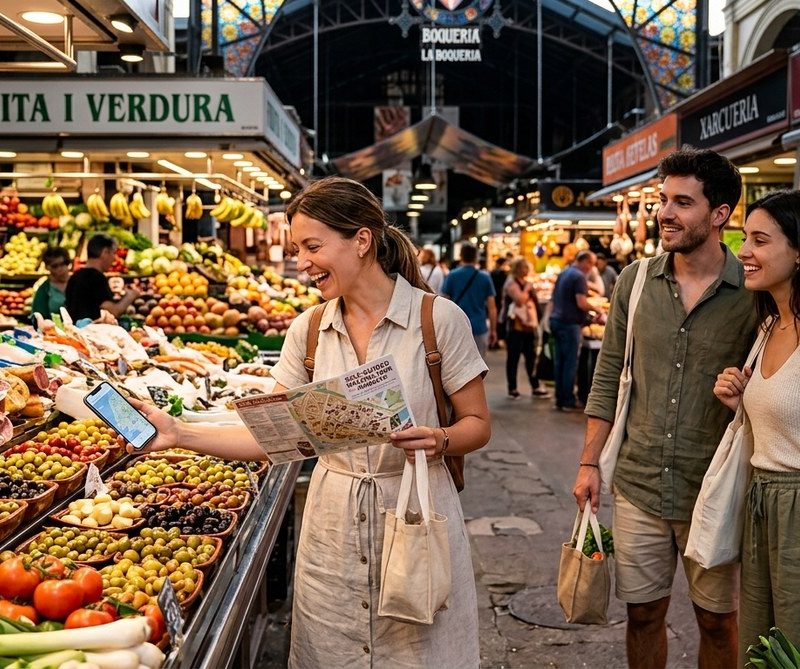
Barcelona is a city that begs to be eaten, not just seen. The best way to understand its rhythm is to wander from one market to the next, tasting as you go. A self-guided walking tour of Barcelona’s food markets gives you total control. You stop when you want. You eat what calls to you. You linger at a stall selling jamon iberico or fresh-pressed juice without a guide checking their watch. This is your adventure, and it starts here.
A self-guided walking tour of Barcelona’s best food markets lets you move at your own pace while sampling authentic Catalan flavors. This route connects five iconic markets from La Boqueria to Mercat de la Llibertat. You will learn what to order, when to go, and how to navigate each space like a local. No tour bus required.
Building your market route
A good self-guided tour needs a logical path. Barcelona’s markets are spread across the city, but many sit within walking distance of each other if you plan well. Start in the heart of the old city and work your way outward. Here is a route that covers the essentials without backtracking.
Your five-stop market route:
- La Boqueria (Las Ramblas) – the most famous market in Barcelona
- Mercat de Santa Caterina (Born neighborhood) – a colorful gem with a mosaic roof
- Mercat de la Barceloneta (near the beach) – a local favorite for seafood
- Mercat de Sant Antoni (Eixample) – recently renovated and beloved by residents
- Mercat de la Llibertat (Gracia) – a neighborhood market with a village feel
This route takes about four to five hours if you stop for bites at each location. You can stretch it into a full day by adding lunch at one of the market bars.
La Boqueria: the essential first stop
You cannot visit Barcelona without walking through La Boqueria. It sits right off Las Ramblas, so it is easy to find. The market has been feeding the city since the 13th century, when vendors sold meat outside the city walls. Today it holds over 200 stalls.
Do not just walk the central aisle. That is where the tourists go. Veer off into the side corridors. You will find smaller stalls selling wild mushrooms, dried herbs, and local cheeses. Many visitors miss the seafood section at the back, where vendors shuck oysters and grill sardines on the spot.
What to eat at La Boqueria:
- A cone of jamon iberico from a charcuterie stall
- Freshly squeezed orange juice (standards are high here)
- Pimientos de Padron (small green peppers fried in olive oil)
- A seafood platter at Bar Pinotxo (arrive before noon to get a seat)
Expert advice from a local food writer: “Do not buy the pre-packaged sangria at the front stalls. Instead, buy a bottle of cava from a proper wine vendor and ask them to open it for you. Drink it while you walk. That is how locals do it.”
Mercat de Santa Caterina: a feast for the eyes
From La Boqueria, walk ten minutes east through the Gothic Quarter to reach Mercat de Santa Caterina. The market’s most striking feature is its undulating mosaic roof, designed by architects Miralles and Tagliabue. It uses 67 different colors of ceramic tile.
This market feels less frantic than La Boqueria. The crowd is smaller, and the pace is slower. It is a great place to sit down for a proper meal. The market building also houses a small museum underneath, where you can see Roman ruins and medieval walls uncovered during construction.
What to eat at Santa Caterina:
- A plate of patatas bravas at La Barra de Santa Caterina
- Fresh fruit from the produce stalls (try the cherimoya if it is in season)
- A slice of coca de llardons (a Catalan pastry with pork crackling)
Mercat de la Barceloneta: seafood by the sea
Head southeast toward the waterfront. The walk from Santa Caterina to Barceloneta takes about fifteen minutes through narrow streets lined with tapas bars. Mercat de la Barceloneta sits just a block from the beach.
This market was rebuilt in 2007, but it keeps a neighborhood feel. The fish stalls are the main attraction. You will see whole turbot on ice, piles of clams, and octopus tentacles arranged like flowers. The market has several casual bars where you can order grilled fish and a cold beer.
What to eat at Barceloneta:
- Grilled sardines with a squeeze of lemon
- A plate of navajas (razor clams) cooked in garlic and parsley
- A glass of vermouth from a local producer
Many travelers skip this market because it is a bit off the main tourist path. That is exactly why you should go. The prices are lower, and the quality is outstanding.
Mercat de Sant Antoni: a local revival
From Barceloneta, take the metro or a twenty-minute walk northwest to Sant Antoni. This market reopened in 2018 after a major renovation that cost over 80 million euros. The building is a stunning iron structure from 1882.
Sant Antoni has a different energy than the other markets. It feels more like a community hub. On Sunday mornings, the streets around the market fill with a flea market selling books, coins, and vintage clothing. The food market itself has wide aisles, clean counters, and a modern food hall upstairs.
What to eat at Sant Antoni:
- A bocadillo (sandwich) with Spanish tortilla and aioli
- Canelons (Catalan-style cannelloni) from the prepared food counter
- A cup of crema catalana from the dessert stall
Mercat de la Llibertat: the Gracia neighborhood gem
Finish your tour in the Gracia neighborhood. Walk north from Sant Antoni for about twenty-five minutes, or take a short metro ride. Mercat de la Llibertat sits in the heart of Gracia, a neighborhood that feels like a small town within the big city.
This market opened in 1888 and has a charming modernist facade. The selection is smaller than La Boqueria, but the quality is just as high. Locals come here for their daily shopping. The market has a lovely terrace where you can sit with a coffee and watch the neighborhood go by.
What to eat at Mercat de la Llibertat:
- A selection of Spanish cheeses from Formatgeria La Llavors
- Empanadas from the Argentine stall
- A slice of torta de aceite (a sweet olive oil cake)
Timing your market visits
Markets in Barcelona follow a schedule that can catch visitors off guard. Most are open Monday through Saturday from around 8:00 AM to 8:30 PM. Sunday hours are limited or nonexistent. La Boqueria is the exception, with some stalls open on Sunday for the tourist crowd.
| Market | Best time to visit | Why |
|---|---|---|
| La Boqueria | 9:00 AM to 11:00 AM | Before the crowds arrive, stalls are fully stocked |
| Santa Caterina | 11:30 AM to 1:00 PM | Quiet enough to sit for lunch |
| Barceloneta | 12:00 PM to 2:00 PM | Peak seafood freshness, grill bars are firing up |
| Sant Antoni | 3:00 PM to 5:00 PM | Afternoon lull, easy to browse |
| La Llibertat | 5:30 PM to 7:00 PM | Late afternoon energy, perfect for a final snack |
Practical tips for your self-guided tour
A self-guided tour works best when you come prepared. Here are the things that matter most.
- Bring cash. Many small stalls do not accept cards, especially for small purchases.
- Carry a reusable bag. Markets in Barcelona charge for plastic bags, and you will end up buying more than you expect.
- Learn a few Catalan words. “Si us plau” (please) and “Gracies” (thank you) go a long way with vendors.
- Do not eat breakfast. Seriously. You will sample enough food at each market to make a full meal.
- Wear comfortable shoes. The total walking distance for this route is about four miles.
How to navigate like a local
The key to enjoying Barcelona’s markets is to slow down. Americans tend to walk through a market like a grocery store, grabbing what they need and moving on. Locals treat the market as a social space. They chat with the fishmonger. They taste a slice of cheese before buying. They sit at the bar and order one drink at a time.
Common mistakes to avoid:
- Taking photos without asking. Some vendors do not like it, especially at meat and fish stalls.
- Touching the produce. Let the vendor handle it for you.
- Ordering paella at a market bar. It is almost always a frozen disc reheated for tourists. Order something fresh instead.
- Going too late. Many stalls close by 2:00 PM for the afternoon break, especially on Saturdays.
Making it a full day
If you want to stretch this tour into a full day of eating, add a detour through the Born neighborhood between Santa Caterina and Barceloneta. This area has some of the best tapas bars in the city. Stop for a glass of cava and a plate of anchovies at a bar on Carrer de la Princesa. Then continue to the market.
For travelers who enjoy planning their own food adventures, Barcelona’s markets offer a template that works in other cities too. You can apply the same approach to a self-guided food tour in Marrakech or a market crawl through Tokyo. The principle is the same: move at your own pace, eat what looks good, and let the city guide you.
Your market tour checklist
- [ ] Map out your route the night before
- [ ] Withdraw cash from an ATM (avoid the ones inside the market, fees are higher)
- [ ] Wear layers. Markets can be cold in the morning and hot by midday.
- [ ] Bring a water bottle. The tap water in Barcelona is safe and good.
- [ ] Download a map offline. Cell service can be spotty inside the larger markets.
- [ ] Leave space in your luggage for market finds. Dried mushrooms, saffron, and local olive oil make excellent souvenirs.
Making the most of your independence
The beauty of a self-guided tour is the freedom to change your mind. If you fall in love with a particular stall at La Boqueria, stay for another round of oysters. If the walk to Sant Antoni feels too long, skip it and spend more time at Barceloneta. There are no wrong choices.
Barcelona’s food markets are living museums of Catalan culture. They show you how the city eats, shops, and socializes. By walking this route on your own terms, you get a deeper connection to the food and the people who produce it. That is something no group tour can replicate.
Grab your map, put on your walking shoes, and head out the door. The best food markets in Barcelona are waiting for you.