Pork sits at the center of one of the world’s most fascinating food divides. In parts of East Asia and Europe, roast pork, bacon, and ham are beloved staples. In the Middle East and North Africa, the same meat is strictly avoided, often viewed with distrust or disgust. What causes such a split? The answer weaves together religion, geography, history, and even parasite biology. This article unpacks why some cultures avoid pork while others celebrate it, helping you understand the deeper forces that shape what ends up on our plates.
Pork avoidance is rooted in two major religions (Judaism and Islam) that prohibit it, along with practical concerns about trichinosis and pig farming in hot climates. Celebration of pork comes from cultures where pigs were easy to raise, cold climates reduced disease risk, and religious restrictions never took hold. Understanding these origins helps us appreciate the diversity of global food customs without judgment.
Religion: The Strongest Force Behind Pork Taboos
The most widespread bans on pork come from Judaism and Islam. In Judaism, the Torah forbids eating pigs because they do not chew the cud, even though they have split hooves (Leviticus 11:7-8). This places pigs outside the category of kosher animals. Observant Jews keep this rule as part of a broader system of dietary laws called kashrut.
Islam extends a similar prohibition. The Quran explicitly calls pork “unclean” or “impure” in several verses, including Surah Al-Baqarah 2:173. Observant Muslims avoid not only pork meat but also any product derived from pigs, such as gelatin, lard, or enzymes used in processed foods. The prohibition is considered absolute, with no exceptions for small amounts or special occasions.
Christianity, by contrast, largely lifted the Old Testament dietary restrictions. In the New Testament, Jesus declared all foods clean (Mark 7:19), and the Apostle Paul taught that dietary rules were no longer binding on believers. As a result, Christian-majority cultures in Europe and the Americas have historically embraced pork. However, some Christian denominations, such as Seventh-day Adventists, maintain a pork-free diet based on their interpretation of scripture.
Beyond the three Abrahamic faiths, Hinduism generally avoids pork as well, though for different reasons. Many Hindus follow vegetarian or lacto-vegetarian diets, and pigs are associated with uncleanliness in daily life. But the strongest religious bans remain in Judaism and Islam, and they affect the daily lives of over 1.8 billion Muslims and 15 million Jews worldwide.
Geography and Climate: A Hidden Factor
Religious texts alone do not explain pork avoidance. Ancient peoples observed that pigs do not thrive in hot, dry climates without access to water and shade. In the Middle East and North Africa, pigs compete with humans for scarce resources and are prone to diseases that spread more easily in warm temperatures. The biblical phrase “you shall not boil a kid in its mother’s milk” appears in the same context as pig prohibitions, suggesting that early communities recognized practical dangers.
Modern science confirms that pigs can carry trichinella, a roundworm that causes trichinosis. Undercooked pork was a major health risk before refrigeration and modern farming. In the ancient world, people may have noticed that illness followed pork consumption in certain conditions. This empirical observation eventually became codified into religious law, making the taboo permanent and unquestionable.
In contrast, Northern European climates were cooler and wetter, ideal for raising pigs in forests. Pork could be preserved through salting and smoking, becoming a reliable winter food. This historical advantage helped pork become central to cuisines in Germany, Poland, and Scandinavia. Even today, Germany leads Europe in pork consumption, with dishes like schnitzel and bratwurst.
Why Some Cultures Celebrate Pork Passionately
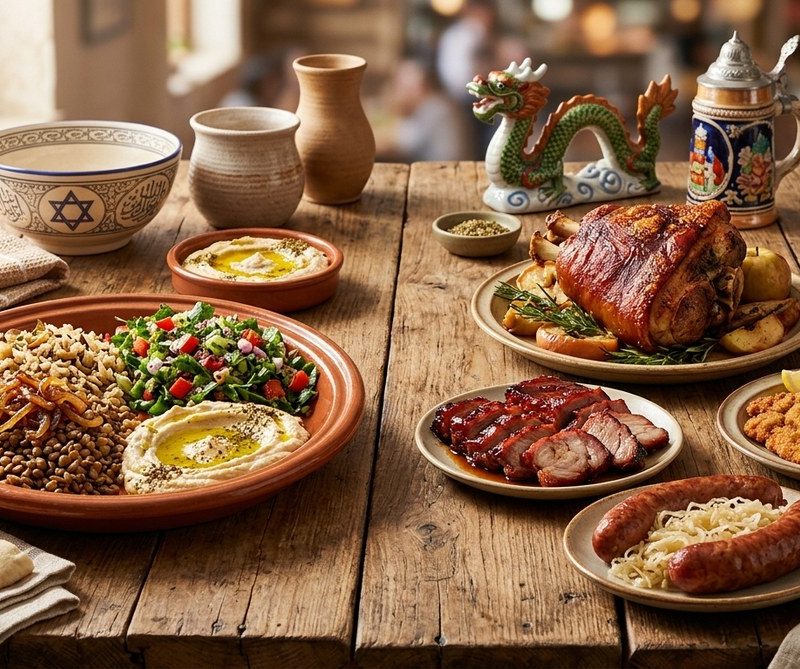
While some cultures avoid pork, others cannot imagine a meal without it. China consumes more pork than any other country; char siu, twice-cooked pork, and braised pork belly are national treasures. The Philippines celebrates lechon, a whole roasted pig, at fiestas and family gatherings. Spain produces jamón ibérico, an acclaimed cured ham, and Portugal’s pastéis de bacalhau may get attention, but pork dishes like carne de porco à alentejana are equally cherished.
The cultural embrace of pork often aligns with historical abundance and the absence of a religious ban. In many Asian and European societies, pigs were domesticated early and provided a reliable source of fat and protein. Pork lard was used for cooking, making food more flavorful and calorie-dense, a critical advantage in labor-intensive agrarian societies.
Let’s look at a practical comparison of how these cultural differences play out.
| Factor | Pork-Avoiding Cultures | Pork-Celebrating Cultures |
|---|---|---|
| Primary religion | Islam, Judaism, (some Hinduism) | Christianity, Buddhism (flexible), folk religions |
| Climate | Hot, arid, prone to parasites | Cool, temperate, or high humidity |
| Historical preservation | Drying, salting less common | Curing, smoking, refrigeration |
| Social status of pig | Considered unclean, avoided | Considered valuable livestock |
| Typical uses | Replaced by lamb, goat, or chicken | Roasts, sausages, hams, lard |
How Pork Avoidance Shaped Entire Cuisines
The absence of pork forced cooks in affected regions to innovate with other ingredients. Here are three ways pork avoidance influenced culinary traditions:
-
Development of alternate fats and seasonings: In Jewish and Muslim cuisines, olive oil, butter, and clarified butter (ghee) became essential fats for frying and baking. Spices like cumin, coriander, and turmeric compensated for the missing richness of pork. Dishes such as hummus and falafel owe their texture to chickpeas rather than pork fat.
-
Specialization in lamb and goat dishes: Lamb, goat, and beef take center stage where pork is forbidden. Moroccan tagines, Turkish kebabs, and Middle Eastern kofta rely on these meats. In Jewish cuisine, brisket and roast chicken are holiday staples. These traditions are just as rich and complex as any pork-centric cuisine.
-
Creation of dairy-based cuisine: Without pork, milk, cheese, and yogurt became more prominent. In vegetarian-friendly Hindu communities, dairy products like paneer and ghee are foundational. In the Middle East, labneh and yogurt sauces pair with grilled meats, offering tang and creaminess that replace the fat from pork.
Common Misconceptions About Pork Taboos
- The taboo is only about health. While trichinosis was a valid concern, religious texts treat pork as spiritually unclean, not just physically dangerous.
- All Muslims avoid pork strictly. Most do, but some secular or culturally Muslim individuals may eat it. The rule is central, but practice varies.
- Pork is banned in all of Asia. Actually, East and Southeast Asia are huge pork consumers. The ban is mostly Middle Eastern and North African.
- The Jewish prohibition is the same as the Islamic one. They are similar but not identical. Jewish dietary laws also forbid mixing meat and dairy, and kosher slaughter methods differ from halal.
- Christianity completely embraces pork. True for mainstream denominations, but some Christian groups (like Adventists) do avoid it. It is not universal.
“The prohibition of pork in Judaism and Islam is not arbitrary; it reflects a broader concern for holiness and purity that pervades daily life. By setting apart what can be eaten, these traditions create a constant reminder of devotion.” — Dr. Reza Aslan, scholar of religious studies
What Can We Learn From This Cultural Divide?
Understanding why some cultures avoid pork while others celebrate it teaches us that food is never just about nutrition. Every bite carries history, belief, and identity. When you travel or dine with people from different backgrounds, a little knowledge goes a long way.
If you are hosting a dinner for friends with varying dietary restrictions, consider these three steps:
- Ask politely about any dietary needs before planning the menu. Most people are happy to share.
- Offer at least one pork-free main dish, even if you love bacon. It shows respect and avoids awkwardness.
- Learn about other traditions, such as halal or kosher requirements, to avoid cross-contamination of utensils or pans.
For travelers, knowing local taboos can prevent unintentional offense. In Malaysia or Indonesia, ordering a pork dish in a Muslim area may be seen as disrespectful. In Israel, kosher restaurants will not serve pork at all. On the other hand, in the Philippines or Vietnam, refusing pork at a family celebration might be puzzling to your hosts. The key is awareness and respect.
If you are curious how immigration has shaped American food culture, including the rise of pork in some communities and its decline in others, you might find our article on how immigration transformed American cuisine enlightening.
For a broader view of how geography influences what people eat, check out why do we eat what we eat? The fascinating geography behind regional ingredients.
And if you want to go deeper into the symbolism of food in religious ceremonies, our piece on sacred foods and feast days covers the role of pork in various traditions.
Pork’s Place at the Global Table
Pork remains one of the most consumed meats worldwide, yet its acceptance is far from universal. The divide is not random. It stems from ancient laws, practical observations, and climate conditions that shaped entire cuisines. Understanding this helps us see that no single food culture is “right” or “wrong.” Instead, each reflects a unique story of survival, faith, and adaptation.
Next time you see a menu with both pork ribs and lamb chops, think about the centuries of history behind that simple choice. Respect the stories of those who grew up without pork, and celebrate the ingenuity of those who built incredible food traditions without it. And if you ever want to try cooking with ingredients that honor these traditions, consider using lamb or chickpeas for a change. You might discover new flavors that broaden your culinary horizons. After all, the best way to understand a culture is to taste its food.