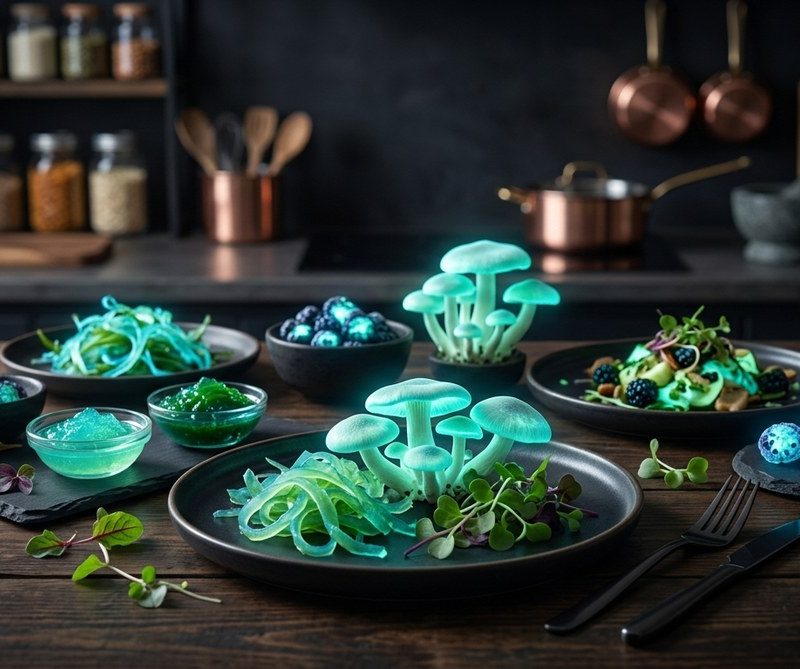
A plate of ramen that glows under blacklight. A cocktail that shimmers with an otherworldly blue. A birthday cake that seems to pulse with light. These images pop up on social media and make you stop scrolling. You might want to try them. You might also wonder: is glow in the dark food safe?
The answer is more complicated than a simple yes or no. Some glowing foods come from nature. Others are made with chemicals that have no business in your body. And a few are the result of industrial processes that sound alarming but are actually harmless. Let’s sort through the science together.
Glow in the dark food safety depends entirely on how the glow is created. Natural bioluminescent ingredients like certain mushrooms and jellyfish are generally safe to eat. Most novelty glowing foods use blacklight reactive ingredients that are approved by the FDA. Irradiated food does not actually glow. A diet of only glowing foods would be dangerous, but occasional treats are fine.
Where the Glow Comes From
There are three main ways food can appear to glow. Each one has a very different safety profile.
Bioluminescence is the natural production of light by living organisms. Fireflies do it. Some deep sea fish do it. And a handful of edible species do it too. The glowing honey mushroom (Armillaria mellea) is edible when cooked. Certain types of jellyfish are bioluminescent and are eaten in parts of Asia. These foods are safe because the light comes from natural chemical reactions inside the organism.
Fluorescence is different. A fluorescent substance absorbs light at one wavelength and emits it at another. This is what happens when you shine a blacklight on tonic water. The quinine in tonic water glows bright blue under UV light. Quinine is safe in small amounts. Many other fluorescent compounds are used in food coloring and are approved by the FDA.
Phosphorescence is the third category. These substances absorb light and release it slowly over time. This is what you see in glow in the dark toys. Most phosphorescent pigments are not approved for food use. They contain materials like zinc sulfide or strontium aluminate. These are not meant to be eaten.
The Truth About Irradiated Food
A common myth says that irradiated food glows in the dark. This is not true. Food irradiation uses ionizing radiation to kill bacteria and extend shelf life. It does not make food radioactive. It does not make food glow.
The FDA has approved irradiation for several foods including:
- Spices and dried herbs
- Fresh produce like strawberries and lettuce
- Poultry and red meat
- Eggs
Irradiated food is safe to eat. It does not glow. If you see a product labeled as irradiated, you are not getting a glowing meal. You are getting food that has been treated to reduce the risk of foodborne illness.
What Happens If You Only Eat Glowing Foods?
This is the question behind the curiosity. Could someone survive on a diet of bioluminescent mushrooms and fluorescent cocktails? The short answer is no. Here is why.
- Limited variety. The number of naturally bioluminescent edible species is very small. You would run out of options fast.
- Nutritional gaps. Glowing mushrooms and jellyfish do not provide complete nutrition. You would miss out on essential vitamins, minerals, and macronutrients.
- Chemical load. Artificially glowing foods often rely on additives that are safe in small amounts but could cause problems in large quantities. Eating them every meal would be risky.
- Cost and availability. These foods are not common in grocery stores. You would spend a lot of money and time hunting them down.
A diet of only glowing foods would lead to malnutrition and potential toxicity. It is not a sustainable way to eat.
How to Safely Enjoy Glow in the Dark Food
If you want to try glow in the dark food for a party or a special event, there are safe ways to do it. Here is a step by step process.
| Step | What to Do | Common Mistake to Avoid |
|---|---|---|
| 1 | Use tonic water as a base for drinks or gelatin. It glows blue under blacklight. | Do not use fluorescent paints or craft glows. They are not food safe. |
| 2 | Add edible glitter made from mica or titanium dioxide. These reflect light and create a shimmer. | Do not use craft glitter. It is made of plastic and can cause injury. |
| 3 | Use blacklight reactive ingredients like riboflavin (vitamin B2) which glows yellow. | Do not assume all glowing powders are edible. Check the label. |
| 4 | Cook bioluminescent mushrooms thoroughly. Heat destroys the glow but makes them safe. | Do not eat raw glowing mushrooms. Some are toxic. |
| 5 | Serve under a blacklight in a dim room for the best effect. | Do not leave blacklights on for hours. They can cause eye strain. |
What the Experts Say
“The safest way to enjoy glow in the dark food is to use ingredients that are already part of your diet. Tonic water, vitamin B2, and certain edible flowers all fluoresce under blacklight. There is no need to buy mysterious powders from unverified sellers.” – Dr. Lisa Chen, food scientist at the University of California
This advice is worth following. Stick with ingredients you recognize. Avoid anything that says “not for human consumption” on the label.
Common Glowing Ingredients and Their Safety
Here is a breakdown of ingredients you might encounter.
- Quinine (in tonic water): Safe in small amounts. FDA approved.
- Riboflavin (vitamin B2): Safe and nutritious. Naturally fluorescent.
- Chlorophyll: Safe. Found in leafy greens. Glows red under blacklight.
- Turmeric: Safe. Glows yellow under blacklight.
- Mica powder: Safe when labeled as food grade. Used in edible glitter.
- Titanium dioxide: Banned in some countries but still legal in the US. Use sparingly.
- Zinc sulfide: Not safe. Used in toys and novelty items. Do not eat.
- Strontium aluminate: Not safe. Used in glow sticks and emergency signs. Do not eat.
The Psychological Allure of Glowing Food
Why are we so drawn to food that glows? Part of it is novelty. We eat with our eyes first, and a glowing plate is unexpected. Part of it is the connection to nature. Bioluminescence reminds us of fireflies and glowing waves at the beach. And part of it is the thrill of something that feels a little bit forbidden.
But that thrill should not override common sense. If you would not eat a glow stick, do not eat a powder that claims to make food glow unless it is clearly labeled as food grade.
A Balanced Perspective
Glow in the dark food is a fun gimmick for a birthday party or a Halloween gathering. It is not a health food. It is not a sustainable diet. And it is not something you should seek out from unregulated sources.
If you are curious, start with tonic water and a blacklight. Make a gelatin dessert. Add some edible glitter. See how it looks. Enjoy the experience. Then eat a normal meal afterward.
What to Do Next
If you want to learn more about unusual food experiences, check out our guide on 7 bizarre delicacies that will test your culinary courage. It covers other foods that push the boundaries of what we consider normal.
For those interested in the science of food, our article on what makes a sauce a mother sauce explains the foundations of French cooking in a way that makes sense.
And if you are planning a trip around food, our 48 hours of street food paradise in Bangkok guide will help you navigate one of the world’s best food cities.
The Final Word on Glow in the Dark Food Safety
Glow in the dark food is safe when you use the right ingredients. Stick with tonic water, riboflavin, and food grade glitter. Avoid mystery powders and craft supplies. Enjoy the novelty in moderation. And remember that a balanced diet of normal, colorful foods is always the healthier choice.
Next time you see a glowing cocktail on social media, you will know exactly what to look for. And you will know what to avoid. That is the power of understanding the science behind the spectacle.