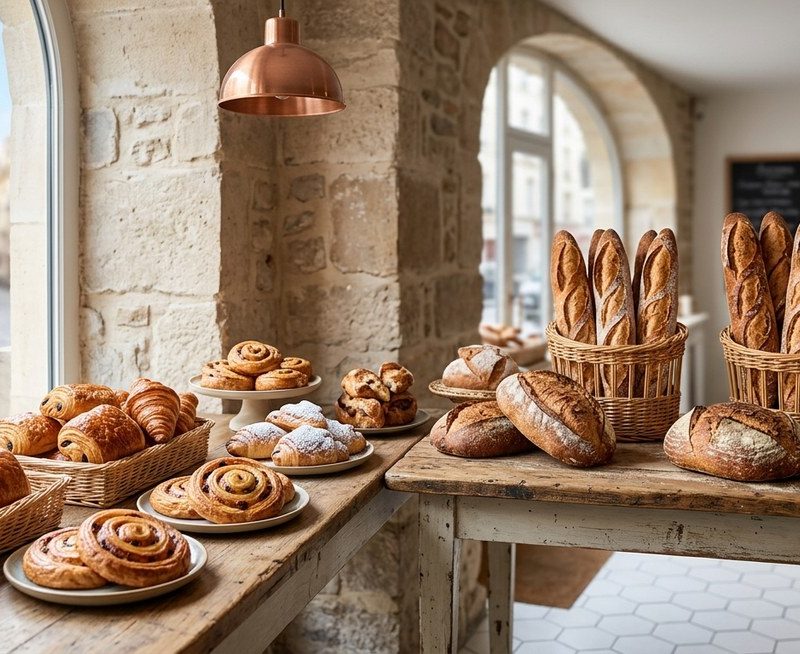
Walking into a Parisian bakery at 7 a.m. changes everything you thought you knew about breakfast. The smell of butter folding into laminated dough. The sound of baguettes sliding into paper sleeves. The sight of golden croissants stacked in perfect pyramids. This is not a museum visit or a photo opportunity. This is how Paris actually eats.
A successful Paris bakery crawl requires strategic timing, neighborhood selection, and understanding French bakery culture. Start with morning viennoiseries in the Marais, continue with midday specialty pastries in Saint-Germain, and finish with evening bread purchases near your accommodation. Plan for three to five stops across different arrondissements to experience authentic variety without overwhelming your palate or schedule.
Why Paris Bakeries Operate on Their Own Schedule
French bakeries follow rhythms that tourists often miss. Most boulangeries bake twice daily. The first batch emerges between 6 and 7 a.m. The second appears around 4 p.m.
Understanding these cycles transforms your crawl from random stops into strategic eating.
Morning pastries taste different at 7:30 a.m. versus 11 a.m. The croissants lose their shell crispness. The pain au chocolat gets soft. The chaussons aux pommes dry out.
Afternoon bread service matters even more. Parisians buy their dinner baguettes between 5 and 7 p.m. Show up at 3 p.m. and you’ll see yesterday’s loaves. Arrive at 5 p.m. and you’ll witness the real Paris.
Sundays shift everything earlier. Many bakeries close by 1 p.m. Some never open at all. Plan your Sunday crawl for morning hours only.
Building Your Bakery Crawl Route
Geographic clustering saves time but limits variety. Spreading stops across arrondissements shows you different baking styles and neighborhood cultures.
Here’s how to structure a full day crawl:
- Start in a residential neighborhood where locals shop (10th, 11th, or 20th arrondissement)
- Move to a historic bakery district (Marais or Saint-Germain)
- Add a specialty stop known for one particular item
- Include a modern bakery pushing traditional boundaries
- End near your hotel for easy bread transport
Each stop serves a different purpose. The residential bakery shows you daily Parisian life. The historic location provides context and tradition. The specialty shop delivers that one perfect item. The modern bakery demonstrates where French baking heads next.
Transit time between stops should not exceed 20 minutes. Longer gaps kill momentum and appetite.
“The best bakery crawl respects your stomach’s capacity and your feet’s endurance. Three exceptional stops beat seven mediocre ones every time.” — Professional food tour guide
What to Order at Each Stop
Pacing your consumption requires discipline. You cannot eat everything at every bakery.
Assign each stop a category:
- Stop 1: Viennoiseries only (croissant, pain au chocolat, pain aux raisins)
- Stop 2: Specialty tarts or chaussons
- Stop 3: Sandwich or savory item for lunch
- Stop 4: Afternoon pastry (éclair, religieuse, Paris-Brest)
- Stop 5: Bread purchase for dinner
This structure prevents sugar overload and maintains palate freshness.
Share items whenever possible. One croissant split between two people allows you to try more varieties. French pastries contain enough butter that half portions satisfy completely.
Avoid ordering coffee at bakeries unless they have proper espresso equipment. Most boulangeries serve mediocre coffee. Save your caffeine stops for dedicated cafés between bakery visits.
Timing Your Crawl for Maximum Freshness
The temperature of your pastry matters as much as its quality. Croissants should feel warm but not hot. Bread should have cooled enough to slice cleanly but retain internal moisture.
| Time Window | Best Items | Why It Matters |
|---|---|---|
| 7:00-8:30 a.m. | Croissants, pain au chocolat | First batch, maximum flakiness |
| 10:00-11:00 a.m. | Fruit tarts, éclairs | Fresh cream fillings just added |
| 12:30-1:30 p.m. | Savory tarts, sandwiches | Lunch service peak |
| 4:00-5:00 p.m. | Bread, baguettes | Second baking cycle |
| 5:30-7:00 p.m. | Any remaining items | Last chance before closing |
Avoid the dead zone between 2 and 4 p.m. Nothing fresh emerges during this window. Many smaller bakeries close entirely for these hours.
Weather affects timing too. Rain drives everyone indoors simultaneously. Sunny Saturdays create lines at popular spots. Adjust your schedule to hit famous bakeries during off-peak windows.
Common Mistakes That Ruin Bakery Crawls
Tourists make predictable errors that diminish their experience.
Mistake 1: Starting too late. Beginning your crawl at 10 a.m. means you miss the best croissants. Those golden beauties you see in windows at 11? They’ve been sitting for hours.
Mistake 2: Buying too much too early. That bag of pastries from your first stop will get crushed by stop three. Purchase only what you’ll eat immediately. Exception: bread for dinner, which you buy last.
Mistake 3: Following Instagram instead of locals. The bakery with 50,000 tagged photos might be good. But the one with a line of elderly French women at 7:15 a.m. is definitely good.
Mistake 4: Ignoring neighborhood context. Tourist-heavy areas charge more and bake less carefully. The same croissant costs €1.30 in the 11th arrondissement and €2.50 near Notre-Dame. Quality often inverts with price.
Mistake 5: Skipping the bread. Tourists obsess over pastries and ignore the baguettes. French bakers take bread more seriously than sweets. A perfect baguette represents higher skill than a pretty tart.
Reading a French Bakery Like a Local
Visual cues reveal quality before you taste anything.
Look at the croissants first. They should show distinct layers when torn. The interior should be honeycomb-like, not dense. The exterior should have dark caramelization spots, not uniform tan color.
Check the baguettes next. Proper scoring creates sharp ears along the cuts. The crust should crack audibly when squeezed gently. Pale baguettes indicate underbaking. Uniformly dark ones suggest old dough.
Watch how staff handles products. Do they use tongs or bare hands? Do they wrap items individually or pile them together? These details signal professionalism.
Notice who shops there. A bakery full of locals at 7:30 a.m. passes the most important test. Empty shops at prime hours fail regardless of awards or press coverage.
Price signals matter less than you think. Expensive does not automatically mean better. But suspiciously cheap suggests shortcuts with ingredients.
Essential Vocabulary for Ordering
You need exactly seven French phrases to navigate any bakery successfully.
“Bonjour” when entering. Always. Non-negotiable.
“Un croissant, s’il vous plaît” gets you a croissant. Replace “croissant” with any item name.
“C’est tout” means that’s all. Use it after listing your items.
“Pour manger ici” means eating here. “À emporter” means to go. Most people take items to go.
“Quelle heure pour le pain?” asks when fresh bread arrives. Useful for timing afternoon visits.
“Merci, bonne journée” when leaving. Basic courtesy that locals appreciate.
“Puis-je prendre une photo?” requests permission for photos. Some bakeries prohibit photography.
Point at items if pronunciation fails. Bakery staff expect tourists and accommodate accordingly. But attempting French, even poorly, changes the interaction completely.
Adapting Your Crawl to Different Travel Styles
Solo travelers move fastest and taste most broadly. You can hit five stops in four hours without coordinating with others. Buy single items, eat immediately, move on.
Couples should split everything. One croissant, one pain au chocolat, one chausson aux pommes divided between two people. This doubles variety while halving consumption.
Families with children need different pacing. Kids tire of bakeries after two stops. Plan one excellent morning bakery, then switch activities. Return for one afternoon bread stop. Forcing children through five bakeries creates misery for everyone.
Groups of four or more should assign each person a different item at each stop. Everyone tastes everything through sharing. This strategy works brilliantly but requires coordination and trust.
Budget travelers can still execute excellent crawls. Skip the famous Instagram bakeries. Focus on neighborhood spots in outer arrondissements. Quality remains high, prices drop 30 to 40 percent. Similar to how you might approach a week-long culinary journey through Tuscany, prioritizing authentic local experiences over tourist traps delivers better value and more memorable meals.
Seasonal Considerations for Your Crawl
January through March brings galette des rois. Every bakery competes for the best version. This almond cream filled puff pastry appears only during Epiphany season.
Spring introduces strawberry tarts. French strawberries peak in May. Tarts made with Spanish or imported berries taste noticeably different.
Summer challenges bakeries. Heat affects laminated dough. Croissants made in July never quite match October versions. Cream fillings require extra care in warm weather.
Fall brings apple season. Chaussons aux pommes taste best September through November when French apples arrive fresh.
December means bûche de Noël everywhere. These Christmas logs range from simple to spectacular. Reserve special versions weeks in advance.
Weather impacts more than seasons. Rainy days create perfect croissant conditions. Low humidity helps achieve maximum flakiness. Hot, humid days make lamination difficult.
Extending Your Crawl Beyond Pastries
French bakeries sell more than sweet items. The savory offerings deserve equal attention.
Quiche Lorraine appears in most bakeries by 11 a.m. Proper versions use thick bacon, real cream, and nutmeg. Tourist versions substitute ham and milk.
Croque monsieur from bakeries beats café versions. The bread comes from the same oven as the baguettes. This matters more than fancy cheese.
Pizza slices sold at bakeries confuse Americans. They’re thick, bready, and nothing like Italian pizza. Think of them as flavored focaccia. Adjust expectations accordingly.
Sandwiches represent serious business. A jambon-beurre (ham and butter on baguette) contains only three ingredients. Each must be perfect. This simplicity reveals quality instantly.
Savory tarts change daily based on market availability. Tomato tart in summer. Leek tart in winter. Mushroom tart in fall. These seasonal rotations show a bakery’s commitment to ingredients.
Documenting Your Crawl Without Annoying Everyone
Photos inside bakeries require permission. Many owners prohibit photography to protect recipes and techniques. Always ask first.
Exterior shots cause no problems. Capture the storefront, the window displays, the neighborhood context. These photos provide memory triggers without invading space.
Take notes instead of relying on photos. Write down what you tasted, what worked, what disappointed. These notes prove more valuable than 50 croissant photos that all look identical.
Save receipts. They show prices, dates, and exact items purchased. This documentation helps when recommending spots to friends.
Geotag your favorites immediately. Parisian streets confuse even locals. That amazing bakery you found becomes impossible to relocate without precise coordinates.
Share your finds selectively. Posting every bakery location on social media contributes to overtourism. Tell friends directly. Write detailed reviews. But consider whether broadcasting your discovery helps or harms the bakery’s local character.
Making Your Crawl Part of a Larger Food Journey
A bakery crawl fits naturally into broader culinary exploration. Morning bakeries fuel market visits. Afternoon bread purchases prepare you for evening picnics.
Combine your crawl with cheese shopping. Buy bread at 5 p.m., cheese at 6 p.m., wine at 6:30 p.m. Picnic in Luxembourg Gardens at 7 p.m. This sequence creates the perfect Parisian evening.
Use bakery stops as navigation anchors. Plan other activities around bakery locations. Need to visit the Picasso Museum? Schedule a Marais bakery before or after. This integration makes the crawl feel natural rather than forced.
Consider how other food-focused travel experiences build similar rhythms. Just as 48 hours of street food in Bangkok requires strategic timing and neighborhood selection, your Paris bakery crawl benefits from understanding local patterns and peak hours.
Rest between intense eating days. A full bakery crawl followed by a ten-course tasting menu creates diminishing returns. Alternate heavy food days with lighter activities. Your palate and digestion will thank you.
Bringing Paris Baking Knowledge Home
The real value of a bakery crawl extends beyond the trip itself. You’re training your palate to recognize quality.
Notice how proper croissants feel. The weight, the texture, the butter content. This sensory memory helps you evaluate bakeries anywhere.
Observe techniques through bakery windows. Watch how bakers score bread. See how they shape baguettes. Notice their timing and movements. These observations inform your own baking attempts.
Collect business cards from exceptional bakeries. Many ship products internationally or share recipes. Some offer classes for serious enthusiasts.
Document ingredient ratios when possible. French bakers often discuss their formulas openly. A baker who mentions using 82% butter in croissants gives you a benchmark for comparison.
Understand that replicating these results at home requires practice and often different ingredients. French flour behaves differently than American flour. French butter contains less water. But knowing what’s possible motivates improvement.
Your Crawl Becomes Your Story
The best Paris bakery crawl becomes the trip you remember years later. Not the Eiffel Tower. Not the Louvre. The warm croissant eaten on a bench in the Marais at 7:45 on a Tuesday morning.
Plan thoughtfully but stay flexible. The bakery you researched might be closed for vacation. The random shop you stumbled into might serve the best pain aux raisins you’ve ever tasted.
Trust your senses over your itinerary. If a bakery smells wrong, skip it. If a neighborhood feels right, linger there.
Eat slowly. Taste completely. Notice everything. This attention transforms consumption into experience.
And remember that Parisians do this casually, daily, without fanfare. Your special crawl represents their normal Tuesday. That perspective keeps the experience grounded and authentic.
The bakeries will still be there tomorrow. The techniques have survived centuries. Your job is simply to show up at the right time, order confidently, and taste carefully. Everything else takes care of itself.