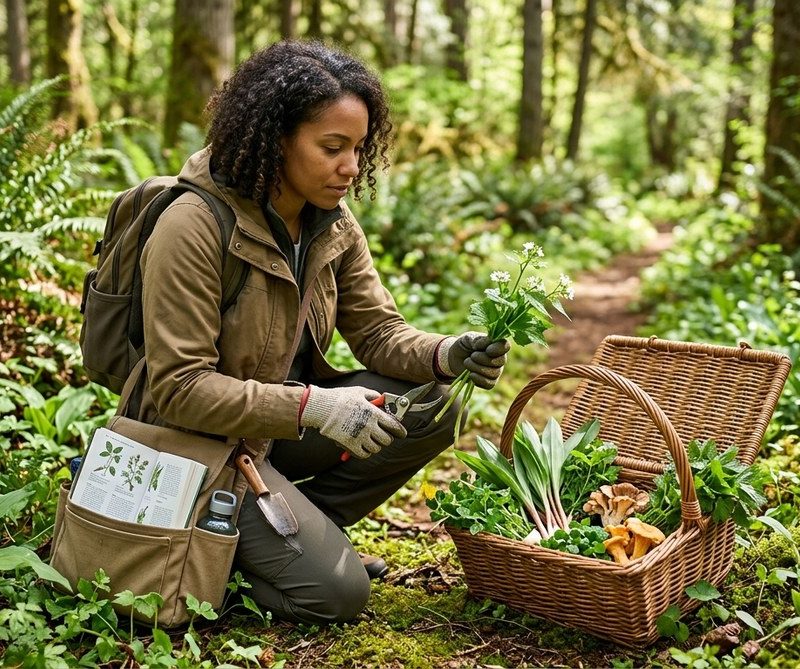
Walking through a forest or meadow, you’re surrounded by food. Most people see only trees and weeds. A forager sees salad greens, medicinal herbs, and ingredients that rival anything at the farmers market.
Foraging for wild edibles connects you directly to your food source. It builds self-reliance, saves money, and introduces flavors you won’t find in any grocery store. But eating the wrong plant can make you seriously ill or worse. The difference between a delicious meal and a dangerous mistake often comes down to a single leaf characteristic or growth pattern.
Foraging for wild edibles requires positive plant identification, understanding seasonal availability, and following sustainable harvesting practices. Start with easily recognizable plants like dandelions and chickweed, always cross-reference multiple field guides, and never eat anything unless you’re 100% certain of its identity. Proper preparation methods and knowledge of toxic lookalikes are essential for safe consumption of wild foods.
Understanding What Makes a Plant Safely Edible
Not every plant in nature wants to be eaten. Some defend themselves with toxins, irritating oils, or compounds that cause digestive distress. Your job as a forager is to learn which plants are safe, which parts are edible, and when they’re best harvested.
Edibility isn’t always obvious. Many toxic plants look similar to edible ones. Wild carrot (Queen Anne’s lace) resembles poison hemlock so closely that experienced foragers sometimes struggle to tell them apart at certain growth stages. One smells like carrots when you crush the leaves. The other can kill you.
The concept of “edible” also includes preparation requirements. Some plants are perfectly safe when cooked but toxic raw. Others are edible only at certain life stages. Pokeweed shoots are a traditional spring green in the South, but the mature plant and berries contain dangerous compounds.
“The rule of foraging is simple but absolute: if you’re not 100% certain of a plant’s identity, don’t eat it. 99% sure means you’re taking a gamble with your health.” – Expert forager and author Samuel Thayer
Building Your Identification Skills From the Ground Up
Learning to identify plants accurately takes time and practice. You’re training your eye to notice details most people overlook: leaf arrangement, stem characteristics, root structure, and subtle differences in flower shape.
Start with plants that have no dangerous lookalikes. These beginner-friendly species give you confidence while you develop observation skills.
Safe starter plants for new foragers:
- Dandelions (entire plant is edible, no toxic lookalikes)
- Chickweed (mild flavor, grows in lawns and gardens)
- Plantain (common in disturbed soil, distinctive parallel leaf veins)
- Wood sorrel (small clover-like leaves with lemony taste)
- Purslane (succulent leaves, omega-3 rich)
Each plant has a combination of features that, taken together, confirm its identity. You’re looking for a match across multiple characteristics, not just one or two traits.
The Five-Point Identification Method
Professional foragers use a systematic approach to verify plant identity. This method reduces the risk of mistaking one species for another.
-
Examine the leaves. Note their shape, edge pattern (smooth, toothed, or lobed), arrangement on the stem (opposite, alternate, or whorled), and texture. Check both sides.
-
Inspect the stem. Look at color, whether it’s round or square in cross-section, hollow or solid, smooth or hairy. Note any distinctive markings or patterns.
-
Check the roots. Carefully expose the root system without fully uprooting the plant. Some species have characteristic taproots, fibrous roots, or bulbs.
-
Observe flowers and seeds. These features are often the most diagnostic. Count petals, note flower arrangement, and examine seed structures.
-
Use all your senses. Crush a leaf and smell it. Many plant families have distinctive scents. Note the habitat where the plant grows. Context matters.
Avoiding the Most Common Foraging Mistakes
New foragers make predictable errors. Understanding these pitfalls helps you avoid them.
| Common Mistake | Why It’s Dangerous | How to Avoid It |
|---|---|---|
| Relying on a single field guide | Regional variations and similar species may not be covered | Cross-reference at least three sources before consuming |
| Trusting plant identification apps alone | Technology fails, especially with poor lighting or young plants | Use apps as a starting point, verify with physical guides |
| Assuming all parts are edible | Roots, leaves, and berries of the same plant may have different toxicity | Research which specific parts are safe and at what stage |
| Harvesting near roads or treated areas | Plants absorb pesticides, herbicides, and heavy metals | Forage at least 50 feet from roads, avoid lawns and agricultural edges |
| Eating large quantities of a new plant | Even edible plants can cause reactions in some people | Try a small amount first, wait 24 hours before eating more |
The “universal edibility test” you may have heard about is not reliable for wild plants. It was designed for survival situations with no other options, not for recreational foraging. Many toxic plants will pass the initial skin and lip tests but still make you sick when swallowed.
Seasonal Timing and Where to Find Wild Edibles
Plants follow predictable cycles. Knowing when and where to look dramatically improves your success rate.
Spring brings tender greens and shoots. This is prime foraging season for leafy plants like dandelion, chickweed, and wild garlic. Plants are putting energy into new growth, making leaves less bitter than they’ll be later in the season.
Summer shifts focus to berries, flowers, and some roots. Elderflowers, wild strawberries, and blackberries ripen at different times depending on your location. Some greens become too tough or bitter to eat, but others like purslane thrive in hot weather.
Fall offers nuts, seeds, and roots. Acorns, hickory nuts, and wild tubers are at their peak. Many roots become sweeter after the first frost as plants convert starches to sugars.
Winter foraging requires more knowledge but remains possible in most climates. Evergreen plants, certain roots, and winter berries provide options when other foods are dormant.
Habitat Patterns That Lead to Food
Different plants prefer different environments. Learning these patterns helps you know where to look.
Forest edges and clearings support sun-loving plants like blackberries and wild roses. The transition zone between woods and open areas often has the highest plant diversity.
Disturbed soil near trails, old foundations, or turned earth attracts pioneer species. These are often edible plants like lamb’s quarters, chickweed, and dandelions that colonize bare ground.
Wetlands and stream banks host moisture-loving species. Watercress, cattails, and wild mint thrive where their roots stay wet.
Open meadows and prairies contain grasses, flowers, and deep-rooted plants adapted to full sun and periodic drought.
Essential Tools and Resources for Foragers
You don’t need much equipment to start foraging, but a few items make the process safer and more efficient.
A good field guide specific to your region is your most important tool. National guides are useful but miss local species and regional variations. Look for guides with clear photographs or detailed illustrations showing plants at different life stages. Some foragers carry multiple guides to cross-reference uncertain identifications.
A small knife or scissors lets you harvest cleanly without damaging the plant. Ripping or tearing creates entry points for disease and stresses the plant unnecessarily.
Cloth bags or baskets allow airflow and prevent delicate plants from getting crushed or sweaty. Plastic bags turn leafy greens into mush within minutes.
A hand lens or magnifying glass reveals tiny details that distinguish similar species. Flower structures, leaf hairs, and other minute features become visible at 10x magnification.
A notebook and camera document your finds. Take photos from multiple angles, including close-ups of distinctive features. Note the date, location, and habitat. This record becomes invaluable as you learn.
Harvesting Practices That Protect Wild Populations
Sustainable foraging ensures plants remain abundant for future seasons. You’re not the only creature depending on these food sources. Birds, insects, and mammals also rely on wild plants.
The one-third rule guides ethical harvesting. Take no more than one-third of the available plants in any area. This leaves enough for wildlife and allows the population to regenerate.
Avoid harvesting rare or threatened species entirely. Some plants that were once common have become scarce due to habitat loss and over-collection. Check your state’s list of protected plants before foraging.
Harvest in a way that allows regrowth. For leafy greens, cut leaves rather than pulling the entire plant. For roots, take only what you’ll use and fill in the hole afterward.
Spread your impact across multiple sites rather than depleting one area. If you visit the same locations regularly, rotate your harvesting spots to give areas time to recover.
Collect seeds from plants you harvest and scatter them in suitable habitat. This active replanting helps maintain populations, especially for annual species.
Preparing and Cooking Your Wild Harvest
Getting plants home safely is just the beginning. Proper cleaning and preparation are essential.
Wash everything thoroughly. Wild plants grow in dirt, host insects, and may have been visited by animals. Soak leafy greens in cold water, agitate gently, and repeat until no sediment remains.
Remove any parts you’re not certain about. If you’ve identified a plant but aren’t sure about every component, stick to the parts you know are safe.
Many wild edibles taste better cooked than raw. Cooking also neutralizes mild irritants and makes nutrients more available. Blanching bitter greens in boiling water for one to two minutes removes harsh flavors.
Start with small portions when trying a new plant. Even confirmed edible species can cause digestive upset in some people, especially when eaten in large quantities.
Preserving Your Foraged Foods
Wild edibles often appear in abundance for short periods. Preservation extends their availability.
Drying works well for herbs, mushrooms, and some greens. Hang bundles in a warm, dry location with good airflow, or use a dehydrator at low temperatures.
Freezing preserves texture and nutrients better than drying for many plants. Blanch greens briefly before freezing to maintain color and quality.
Pickling transforms foraged foods into condiments and side dishes. Wild garlic, ramps, and various shoots take well to vinegar brines.
Making pesto or herb pastes with foraged greens and nuts creates a concentrated flavor base you can freeze in ice cube trays.
Safety Protocols You Cannot Skip
Some rules in foraging are absolute. Breaking them risks your health or life.
Never eat anything you cannot identify with complete certainty. This bears repeating because it’s the most commonly violated rule. Uncertainty means don’t eat it.
Be aware of toxic lookalikes for every plant you harvest. Know what the dangerous species look like and how to distinguish them from edible relatives.
Understand that allergies and sensitivities exist for wild foods just as they do for cultivated ones. Someone can be allergic to dandelions or react badly to wild garlic.
Respect private property and get permission before foraging on land you don’t own. Trespassing charges aside, you don’t know what chemicals or treatments may have been applied.
Check local regulations about foraging in public spaces. Some parks prohibit plant collection. Others allow personal use but not commercial harvesting.
Avoid foraging near industrial sites, busy roads, railroad tracks, or agricultural fields where pesticides are used. Plants absorb contaminants from soil and air.
Learning From Experience and Local Experts
Books and websites provide foundation knowledge, but nothing replaces hands-on learning with experienced foragers.
Join foraging groups or take guided walks led by local experts. Many nature centers, botanical gardens, and outdoor education programs offer seasonal foraging classes. You’ll learn regional species, see plants in their natural habitat, and ask questions specific to your area.
Practice identification year-round, even when you’re not harvesting. Observing plants through complete growth cycles builds recognition skills. You’ll notice how the same species looks different in spring versus fall.
Make mistakes with non-edible identifications first. Challenge yourself to identify common plants like oaks, maples, and non-edible wildflowers. This practice sharpens your observation skills without risk.
Connect with online foraging communities, but verify information independently. Regional Facebook groups and forums can be helpful, but double-check any identification or preparation advice with trusted sources.
Consider that understanding why we eat what we eat adds depth to your foraging practice, connecting wild foods to broader culinary traditions.
Expanding Beyond the Basics
Once you’re comfortable with common, easy-to-identify plants, you can gradually expand your repertoire.
Study plant families rather than just individual species. Members of the mint family, for example, share characteristics like square stems and opposite leaves. Learning family traits helps you recognize new plants more easily.
Focus on one new species each season. Thoroughly research it, find it in multiple locations, observe it through different growth stages, and try various preparation methods.
Learn about medicinal uses alongside edible ones. Many wild plants have traditional therapeutic applications. Understanding these uses deepens your knowledge and appreciation.
Document your own foraging experiences. Keep notes on when plants appear, where you found them, how they tasted, and which preparation methods worked best. This personal field guide becomes more valuable than any published book for your specific area.
From Forest Floor to Dinner Table
Foraging for wild edibles transforms how you see the world around you. That walk through the park becomes a treasure hunt. The “weeds” in your yard reveal themselves as nutritious greens and flavorful herbs.
Start small, learn thoroughly, and never compromise on safety. Your first successful harvest of wild greens, prepared and eaten with confidence, will taste better than anything you’ve bought. That flavor comes not just from the plant itself but from the knowledge, skill, and connection to place that foraging requires.
The woods and fields are waiting. Take your field guide, trust your training, and remember that certainty always comes before consumption.