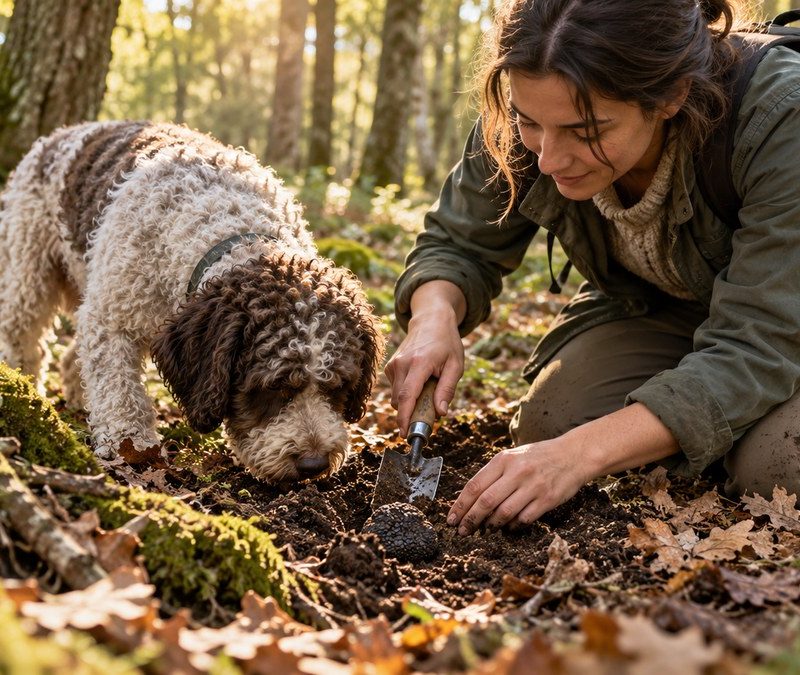
The earthy aroma hits you first. It smells like damp soil, roasted nuts, and something almost sweet. Then you see the dog scratching at the base of an oak tree. You kneel down, brush aside the leaf litter, and there it is. A black, knobby lump the size of a golf ball. A truffle. Finding one in the wild feels like uncovering buried treasure, and the best part is that you can eat it.
Foraging for truffles is one of the most rewarding culinary adventures you can try. These underground fungi are prized by chefs around the world for their intense, complex flavor. While professional truffle hunters guard their spots with secrecy, the basic process of how to hunt for truffles is something any motivated beginner can learn. This guide will walk you through everything you need to know to start your own truffle hunting journey.
Successful truffle hunting requires three things: the right location (oak or hazelnut trees in well-drained soil), a trained animal partner (usually a dog), and the knowledge to harvest without damaging the fungus. Start by finding public lands with known truffle species, work with a trained dog, and always get permission before digging. The reward is a fresh, aromatic ingredient that transforms any dish.
Understanding the truffle and its habitat
Truffles are the fruiting bodies of fungi that grow in a symbiotic relationship with tree roots. They are not mushrooms that pop up above ground. They stay hidden beneath the soil, sometimes just an inch deep, sometimes a foot down. The most common truffle species in North America include the Oregon black truffle, the Pecan truffle found in the southern states, and the European imports like the Perigord black truffle that have been introduced to some regions.
Truffles grow in specific conditions. They need well-drained, alkaline soil with a pH around 7.5 to 8.5. Look for oak, hazelnut, beech, or pine trees. The ground should be loose and crumbly, not compacted clay. In the United States, prime truffle habitat exists in Oregon, California, North Carolina, and parts of the Pacific Northwest. Some areas in Texas and the Southeast also produce native truffle species.
The best time to search depends on the species. Winter truffles (November through February) are the most aromatic. Spring and summer truffles exist but have a milder flavor. If you are serious about learning how to hunt for truffles, plan your trips for late fall and winter when the ground is cool and damp.
The essential tools for truffle hunting
You do not need expensive gear to start. Here is what you should bring on your first hunt:
- A trained truffle dog or a pig (dogs are easier to manage and less likely to eat the truffle)
- A small digging tool like a hand trowel or a purpose-made truffle iron
- A basket or mesh bag to carry your harvest
- A GPS device or phone with mapping apps to mark productive spots
- A notebook to record tree types, soil conditions, and dates
Your most important tool is your animal partner. Pigs have a natural instinct to find truffles, but they also want to eat them. Dogs are more controllable and easier to train. Breeds like Lagotto Romagnolo, Border Collies, and even mixed-breed rescue dogs can learn to locate truffles by scent. If you do not have a trained dog, consider joining a local truffle hunting group or hiring a guide for your first few outings.
Step by step: How to hunt for truffles in the wild
Follow these steps on your first truffle hunting trip. Each step builds on the last, so take your time.
-
Scout the right location. Look for mature oak or hazelnut trees in well-drained soil. Check for signs of animal activity like scratched-up ground or disturbed leaf litter. Squirrels and deer often dig for truffles too.
-
Check the ground conditions. The soil should be moist but not muddy. Press your hand into the ground. If it feels hard and dry, truffles are unlikely to be active. If it is soft and slightly damp, you are in a good zone.
-
Bring your dog to the base of the tree. Let the animal sniff around the root zone. Do not pull the dog away if it seems interested. A trained dog will pause, sniff, and then start scratching when it detects a truffle.
-
Watch for the scratch. When your dog begins to paw at the ground, that is your cue. Gently move the dog aside and use your trowel to dig a small hole. Work slowly to avoid damaging the truffle.
-
Harvest with care. Once you expose the truffle, lift it out by hand. Brush off loose dirt. Do not wash it in the field. Place it in your basket or mesh bag.
-
Fill the hole back in. This is important. Cover the hole with soil and leaf litter. This protects the mycelium network so more truffles can grow in future seasons.
-
Mark the spot. Use your GPS or phone to save the location. Note the tree species and the date. Return to the same tree in following years, as truffles often reappear in the same root zone.
Common mistakes beginners make
Avoid these errors to save time and frustration.
| Mistake | Why it hurts your hunt | What to do instead |
|---|---|---|
| Digging without a dog | You will disturb the soil and miss truffles | Always let the animal locate the exact spot first |
| Harvesting unripe truffles | They have little flavor and will not ripen off the tree | Wait until the truffle is firm and aromatic before digging |
| Using a pig without a handler | Pigs will eat the truffle before you can retrieve it | Stick with dogs unless you have experience managing pigs |
| Trespassing on private land | You risk fines or legal trouble | Always get written permission or hunt on public land |
| Washing truffles in the field | Moisture causes them to rot quickly | Brush off dirt and store them in a paper bag |
How to train your own truffle dog
If you want to take truffle hunting seriously, training your own dog is the most cost effective long-term strategy. Start with a dog that has a strong prey drive and loves to use its nose. Many breeds work well, but the key is consistency.
Begin by associating the smell of truffle oil or a real truffle with a reward. Hide a small piece of truffle under a cup and let your dog sniff it out. When the dog finds it, give a high-value treat like cheese or chicken. Gradually increase the difficulty by burying the truffle in soil or leaf litter. After a few weeks, take the dog to a known truffle tree and let it practice in the field.
Most dogs pick up the skill within two to three months of regular practice. The bond you build during training also makes the hunt more enjoyable for both of you. If you are interested in other types of foraging, our guide on foraging for wild edibles covers essential techniques for safe culinary exploration.
What to do with your truffle harvest
Fresh truffles are perishable. Use them within five to seven days for the best flavor. Store them in a sealed container in the refrigerator with a paper towel to absorb moisture. Change the paper towel every day.
Do not wash truffles until you are ready to use them. Brush off any remaining dirt with a soft brush. Slice them thinly or grate them over pasta, risotto, or scrambled eggs. The heat releases the aroma, so add truffles at the end of cooking. You can also infuse butter, oil, or honey with truffle shavings for a longer-lasting flavor.
If you find more than you can use, consider drying or freezing them. Slice truffles thinly and dry them in a dehydrator at low heat. Frozen truffles lose some texture but retain flavor for several months.
The legal side of truffle hunting
Before you head out, understand the laws in your area. National forests in the United States often allow foraging for personal use, but rules vary by state and even by forest district. Some public lands require a permit. Others prohibit digging entirely to protect the ecosystem.
Private land is a different story. You must have explicit permission from the landowner. Trespassing to hunt truffles is illegal and can result in fines. If you find a promising patch of oaks on private property, ask the owner if you can hunt there. Many landowners are happy to let you forage in exchange for a share of the harvest.
If you are traveling to hunt truffles, research local regulations ahead of time. For example, a week-long culinary journey through Tuscany might include a guided truffle hunt with a licensed professional, which is the safest way to experience the tradition abroad.
When to call in a professional
Truffle hunting can be frustrating at first. You might spend several trips finding nothing. That is normal. If you have tried multiple times without success, consider hiring a guide. Professional truffle hunters know the local terrain, the seasonal patterns, and the best trees to target. They can also introduce you to the nuances of different truffle species.
A guided hunt usually costs between $100 and $300 per person for a half-day outing. You will learn more in one guided trip than you would in a season of solo hunting. Many guides also offer training for your dog if you bring one.
Building your truffle hunting knowledge over time
Truffle hunting is a skill that improves with practice. Keep a journal of every trip. Record the weather, the tree species, the soil conditions, and whether you found anything. Over time, patterns will emerge. You will learn which slopes face the right direction, which trees produce reliably, and when the season peaks in your area.
Join online forums or local mycological societies. Other hunters often share tips about new areas (without giving away exact spots). You can also attend truffle festivals and workshops to taste different varieties and learn from experts.
If you enjoy the culinary side of foraging, you might also appreciate learning about how to navigate a traditional night market for a completely different food adventure.
Truffle hunting as a lifelong pursuit
The first truffle you find will feel like a miracle. The second one will feel like confirmation that you have learned something real. By your third season, you will start to recognize the subtle signs that indicate a productive tree. That is when truffle hunting becomes more than a hobby. It becomes a connection to the land and a source of incredible food.
Start small. Find one good tree. Work with a trained dog. Be patient. The forest rewards those who pay attention. When you finally bring home a basket of fresh truffles and shave them over a plate of pasta, you will understand why people have been hunting these fungi for centuries. The flavor is unlike anything you can buy in a store. And you earned it with your own hands.