Deglazing sounds like one of those fancy chef terms, right? Something you need a culinary degree to attempt. But the truth is much simpler. Deglazing is the secret weapon that turns a boring, stuck-on mess in your pan into the most flavorful sauce you have ever made. It is the bridge between cooking a simple steak and creating a restaurant-quality pan sauce. Let’s break down this essential technique so you can start using it tonight.
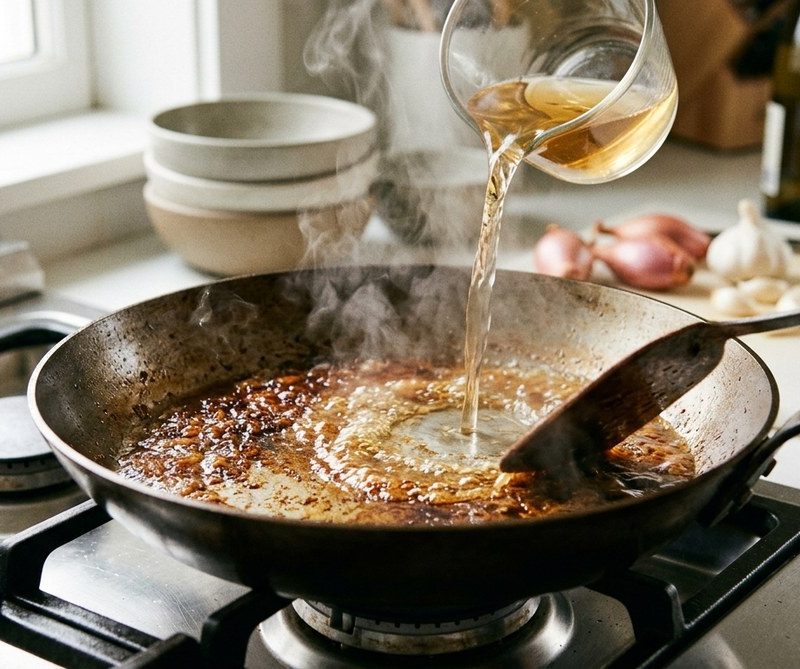
Deglazing means adding liquid to a hot pan after cooking meat or vegetables to lift the browned bits (called fond) off the bottom. These bits are packed with concentrated flavor. Swirling in wine, broth, or even water transforms them into a delicious sauce. This simple step takes 60 seconds but adds incredible depth to your meals. It is the easiest way to impress your family or dinner guests with very little effort.
So, What Does Deglaze Mean, Exactly?
Let’s get the dictionary definition out of the way. To deglaze is to add a liquid to a hot pan to loosen and dissolve the browned food particles that are stuck to the bottom after cooking.
Those browned bits? They are called “fond” (a French word for “base” or “foundation”). They are pure flavor gold.
Most people wash these bits down the drain. Chefs turn them into magic.
The term itself comes from the French word “déglacer,” which literally means “to unglaze” or “to remove the glaze.” When you cook meat at high heat, the natural sugars and proteins create a glossy, sticky layer on the pan. Deglazing is the act of dissolving that layer to reclaim every ounce of taste.
Why Bother Deglazing? (The Flavor Payoff)
If you have ever wondered why restaurant food tastes so much deeper than your own cooking, deglazing is often the missing step.
- Flavor explosion: Fond is intensely savory. It is packed with umami and caramelized goodness that no seasoning blend can replicate.
- Zero waste: You paid for that chicken or steak. Why leave half the flavor stuck to the pan?
- Instant sauce base: You are literally 30 seconds away from a pan sauce. Add a little butter, and you are done.
- Easy cleanup: It loosens stuck-on food, making the washing process much less painful.
Deglazing is the single most efficient way to upgrade a weeknight meal. It requires no extra ingredients beyond what you already have. And it takes less than two minutes.
The Simple Science Behind the Sizzle
When you sear meat at high heat, the juices hit the hot pan and undergo the Maillard reaction. This is the same reaction that makes toast brown and gives coffee its roasted flavor. Those browned bits are delicate. If you add cold liquid, the thermal shock can make them stick even harder. Always use warm or room-temperature liquid for the best results.
The alcohol in wine is especially effective at dissolving fond because it acts as a solvent for both water-soluble and fat-soluble flavor compounds. That is why wine is the classic choice for deglazing.
If you want to understand more about how ingredients interact in cooking, check out our guide on blanching vs. parboiling vs. shocking to see how heat and water work together in other techniques.
How to Deglaze a Pan in 4 Easy Steps
This process works for almost any pan and any protein. Follow these steps, and you will never skip deglazing again.
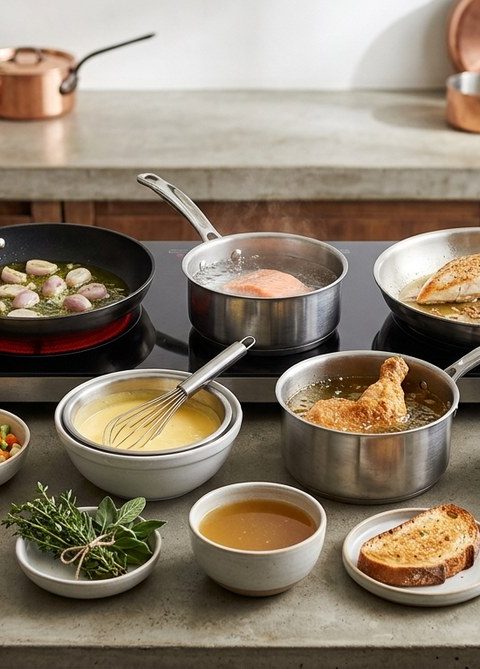
- Cook your main ingredient. Sear chicken, steak, pork chops, fish, or vegetables until they are beautifully browned. Remove them from the pan and set them aside on a plate.
- Pour off excess fat. Leave about one tablespoon of fat in the pan. Too much fat will make the sauce greasy and prevent the liquid from working properly.
- Add your liquid. Pour in about half a cup of wine, broth, stock, or even water. Bring it to a boil. The sizzle tells you the pan is hot enough.
- Scrape and stir. Use a wooden spoon or a sturdy spatula to scrape the bottom of the pan vigorously. As the liquid bubbles, the fond will dissolve into it. Let it reduce by half until it is syrupy. Swirl in a pat of butter for richness and shine.
That is it. Four steps. Less than five minutes. You just made a pan sauce.
Choosing Your Deglazing Liquid
Different liquids create different flavor profiles. Here is a breakdown of what to use and when.
- Dry red or white wine: The classic choice. Red wine works for beef, lamb, and mushrooms. White wine works for chicken, fish, and pork. Use something you would actually drink.
- Chicken, beef, or vegetable broth: Versatile and alcohol-free. This is your best bet for everyday cooking. It adds savory depth without changing the character of the dish.
- Balsamic vinegar or apple cider vinegar: Adds acidity and a touch of sweetness. Use it sparingly. A splash is enough. Great for pork chops or roasted vegetables.
- Water: In a pinch, water works. It will not add flavor, but it will still lift the fond. You can always season the sauce afterward.
- Beer or hard cider: Adds malty or fruity sweetness. Excellent for sausages, braised cabbage, or game meats.
- Juice (apple or orange): Works for sweeter dishes or Asian-inspired stir-fries. It pairs well with ginger, soy sauce, and garlic.
If you are feeling adventurous, you can combine liquids. A splash of wine and a splash of broth give you the best of both worlds.
Common Mistakes and How to Avoid Them
Even confident cooks make errors when deglazing. Here is how to identify and fix the most common problems.
| Mistake | Why It Happens | How to Fix It |
|---|---|---|
| Bitter sauce | Burnt fond. The pan was too hot or the bits cooked too long. | Start over. Lower the heat next time. Drink the wine instead. |
| Lumpy sauce | Liquid added too fast or too cold. The fat seized up. | Whisk vigorously. Use warm liquid. Strain the sauce if needed. |
| Greasy sauce | Too much fat left in the pan before adding liquid. | Pour off excess fat. Skim the surface of the sauce with a spoon. |
| Thin, watery sauce | Not enough reduction. The liquid did not cook down. | Simmer longer until it coats the back of a spoon. Add a cornstarch slurry. |
| No sizzle | Pan cooled down too much before adding liquid. | Make sure the pan is still hot. Work quickly after removing the meat. |
Fixing these mistakes is easy once you know what to look for. The more you practice, the more intuitive deglazing becomes.
When Should You Deglaze?
“If you have a pan with browned bits, you should deglaze. It is not just for fancy dinners. I deglaze the pan after making bacon and eggs to make a pan gravy for biscuits. It is a Sunday morning game-changer.” – Chef Maria Lopez, Culinary Instructor
You should deglaze anytime you have fond in the pan. That is almost every time you cook with heat.
- After searing steak or pork chops.
- After browning ground beef for chili or pasta sauce.
- After cooking chicken thighs or breasts.
- After roasting vegetables in a skillet.
- After making bacon (use the rendered fat and fond for a gravy).
Deglazing is not just for meat. If you cook mushrooms, onions, or tomatoes until they brown, deglazing will lift all that flavor. Use it to build a base for soups, stews, and braises.
If you enjoy learning about these foundational kitchen skills, you will also appreciate our guide on the complete guide to mise en place. Prepping properly makes everything easier.
The Best Tools for the Job
You do not need expensive equipment to deglaze. But using the right tool makes a difference.
- A sturdy metal spatula or a wooden spoon. Avoid metal utensils with non-stick cookware.
- A good quality skillet. Stainless steel or cast iron are best for creating fond. Non-stick pans do not develop fond as well.
- A whisk to smooth out any lumps after the liquid is added.
- A splatter screen to keep your stovetop clean while the sauce reduces.
Your skillet matters the most. If you are using a cheap non-stick pan, you will not get the browned bits you need. A stainless steel pan is worth the investment for techniques like this.
Where to Go From Here
Now you know exactly what deglaze means and how to do it. This one technique will instantly improve your cooking. The next time you sear a piece of meat, do not toss those browned bits. Grab some broth or wine and turn them into a luxurious sauce.
If you enjoyed learning about this foundational cooking method, you might also find it helpful to read about other common kitchen techniques. Check out our guide on the 15 Misunderstood Cooking Terms That Are Easier Than You Think. And if you want to build on your skills, our guide on how to build a flavor profile is a great next step. For the ultimate resource on sauce making, read our guide on what makes a sauce a mother sauce.
Go ahead. Get that pan hot, cook something delicious, and deglaze with confidence. You have got this.