You are standing in your kitchen, staring at a pile of onions. You want nice, even dice. But every time you slice, your pieces look like a geometry problem gone wrong. Big chunks here, slivers there, and one sad little sliver that got away. Sound familiar? You are not alone. Most home cooks hit this wall. The good news is you do not need a formal cooking class to fix it. A free knife skills class online can teach you professional techniques without leaving your kitchen or spending a cent. Let me show you how.
You can master professional knife cuts entirely for free using online resources from reputable culinary schools, YouTube chefs, and food blogs. Focus on five classic cuts: julienne, brunoise, batonnet, dice, and chiffonade. Practice with cheap vegetables like carrots and celery. Your knife skills will improve dramatically in just two weeks of daily 10 minute sessions. No expensive class required.
Why Knife Skills Matter More Than Fancy Recipes
A good recipe can save a bad cook. But great knife work makes every dish better. Even cooking means even roasting. Uniform pieces look professional. And speed? That comes with practice. When you can dice an onion in 30 seconds instead of two minutes, you free up time for the fun parts of cooking.
The culinary world respects precise cuts for a reason. They affect texture, cooking time, and presentation. A brunoise of garlic melts into a sauce. A rough chop of the same garlic leaves sharp, bitter chunks. Which one do you want in your pasta aglio e olio?
Most people think they need a $500 knife set and a formal class to get better. False. You can access a free knife skills class online from places like the Institute of Culinary Education or the YouTube channels of professional chefs. Let me show you exactly where to look.
Where to Find a Free Knife Skills Class Online
The internet is full of high quality free content. You just need to know where to search. Here are the best places to start:
- YouTube channels dedicated to knife skills: Channels like “ChefSteps”, “America’s Test Kitchen”, and “Gordon Ramsay” have specific videos on knife cuts. Search “julienne cut tutorial” and you will find dozens.
- Culinary school free resources: Many top schools like Le Cordon Bleu post free mini lessons on their websites or social media. They know you might later pay for a full course, but the basics are often free.
- Food blogs with photo guides: Sites like Serious Eats and The Kitchn break down cuts with step by step pictures. Pictures help you see exactly where the blade should go.
- Reddit communities: Subreddits like r/culinary and r/knifeskills have pinned posts with free resources compiled by enthusiasts.
One tip: look for content from trusted sources. A free knife skills class online from a professional chef is worth more than a random TikTok that shows a dangerous grip. Always check the instructor’s credentials.
The Essential Cuts You Will Learn in Any Free Knife Skills Class
A good free online class will teach you these five classic cuts. They form the foundation of professional cooking.
- Julienne (2mm x 2mm x 5cm matchsticks). This is the first cut most classes teach because it trains you to work with straight lines and even thickness. Use it for carrots in stir fries or garnishes.
- Brunoise (2mm x 2mm x 2mm tiny cubes). You get this by dicing a julienne. It is the gold standard for fine dice in sauces and mirepoix. Expect to practice this a lot.
- Batonnet (6mm x 6mm x 6cm sticks). Thicker than julienne. Think of french fries or crudites. This cut teaches you to control depth and length.
- Medium Dice (12mm x 12mm x 12mm cubes). Also called “dice” in many recipes. Cut from a batonnet. Great for soups and stews where the vegetable needs to hold shape.
- Chiffonade (thin ribbons). Used for leafy greens like basil, spinach, or kale. Roll the leaf tightly and slice perpendicular to the roll. It is elegant and simple.
- Mince (very fine, irregular chopping). Not a strict geometric cut but essential for garlic, ginger, and herbs. Many free classes include it because it is practical.
Here is a table that shows each cut, its dimensions, and the most common mistake beginners make.
| Cut | Ideal Size | Common Mistake |
|---|---|---|
| Julienne | 2mm x 2mm sticks | Cutting too thick or uneven taper |
| Brunoise | 2mm cubes | Not squaring off the vegetable first |
| Batonnet | 6mm x 6mm sticks | Slippery grip leads to irregular width |
| Medium Dice | 12mm cubes | Rushing the cross cut, producing wedges |
| Chiffonade | Ribbons 3-5mm wide | Cutting through the roll instead of slicing |
| Mince | Fine, no pieces larger than 2mm | Pressing down with blade instead of rocking |
“A sharp knife is a safe knife. A dull knife requires more force and is more likely to slip. If you take one piece of advice from a professional chef, let it be this: sharpen your blade before you start practicing.” — Chef Thomas Keller, July 2025 interview
How to Build Your Practice Routine for Free
You found a free knife skills class online. Great. Now what? Learning is useless without practice. Here is a simple routine you can start tonight.
- Use cheap, forgiving vegetables. Carrots, celery, zucchini, and potatoes are perfect. They are firm but not hard. Avoid onions until you feel confident with your grip.
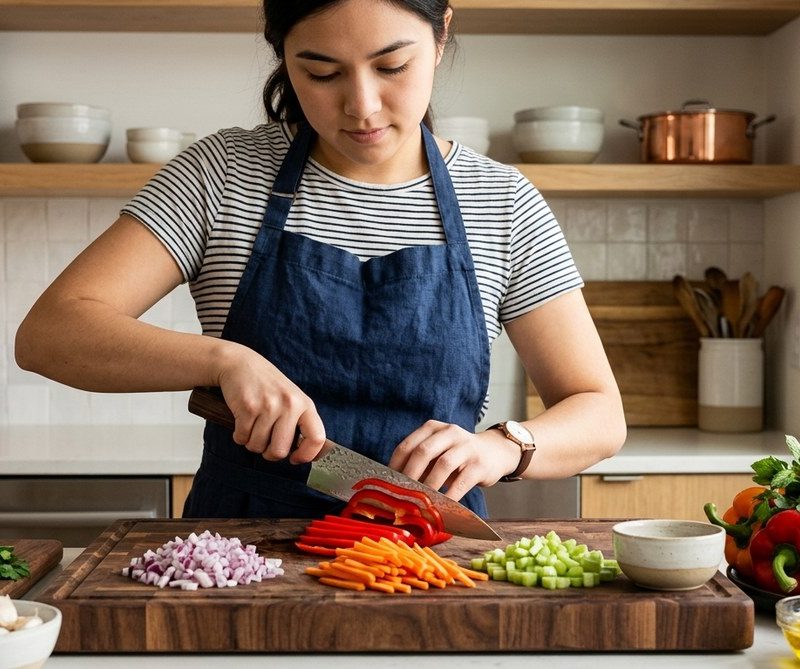
- Start with the claw grip. Tuck your fingertips under and use your knuckles to guide the blade. This protects your fingers and keeps cuts uniform.
- Practice one cut per session. Do not try all six in one day. Spend 10 minutes on julienne until you can produce 10 matchsticks that look identical. Then move to brunoise.
- Film yourself. Set your phone on a stand and record your hand. Watch the replay. You will spot errors you never notice in real time.
- Set a timer. Ten minutes a day is enough. Two weeks of daily practice will transform your consistency.
- Use a progression: Start with batonnet because it is forgiving (big sticks). Then julienne. Then brunoise. Save chiffonade for last.
Remember: speed comes after muscle memory. Do not rush. Focus on correct form first. The speed will appear naturally.
Common Pitfalls and How to Avoid Them
Even with a free knife skills class online, you might hit snags. Here are three big ones and how to fix them.
Pitfall 1: The knife is too dull. You cannot make clean cuts with a blunt blade. Invest in a honing steel (under $15) or a whetstone (free tutorials on YouTube). A sharp knife actually reduces accidents.
Pitfall 2: You cut with the wrong part of the blade. The heel of the blade is best for tough items like squash. The tip is for delicate work. The middle is your all purpose zone. Many beginners use only the middle and wonder why they lack control.
Pitfall 3: You hold the knife too tight. A death grip tires your hand and reduces precision. Hold it like you hold a pen. Firm but relaxed. Let the knife do the work.
If you want more structured learning, consider pairing your practice with a guide on mise en place. That way you learn both knife skills and kitchen organization. Check out The Complete Guide to Mise en Place: Why Professional Chefs Prep This Way to see how the two skills connect.
Free Resources to Bookmark in 2026
The best free knife skills class online often comes from unexpected places. Here are three resources that consistently impress.
- Escoffier School of Culinary Arts Free Videos: Their YouTube channel has a “Knife Skills 101” playlist that covers all the cuts above. No signup required.
- America’s Test Kitchen YouTube: Their knife skills videos are short, clear, and show you exactly what to do. Great for visual learners.
- BBC Good Food: Their “How to Chop” series uses simple language and clear camera angles.
Also consider following the 15 Misunderstood Cooking Terms That Are Easier Than You Think to make sure you understand the language used in those tutorials.
Start Your Free Knife Skills Journey Tonight
You have everything you need right now. A knife. A cutting board. A vegetable from your fridge. And a free knife skills class online that is just a search away. You do not need to enroll in a $2000 culinary program to learn how to dice properly. Professional chefs learned through repetition, not expensive tuition. You can too.
Tonight, pick one cut. Julienne is a great start. Watch one short video, then practice for ten minutes. Do not worry about perfection on day one. Just focus on the shape and the feel. In a week, you will see progress. In a month, you will own those cuts.
And when you finally nail that brunoise of carrots that looks like tiny perfect cubes, send a picture to a friend. Celebrate the small wins. That is how mastery happens. One slice at a time.