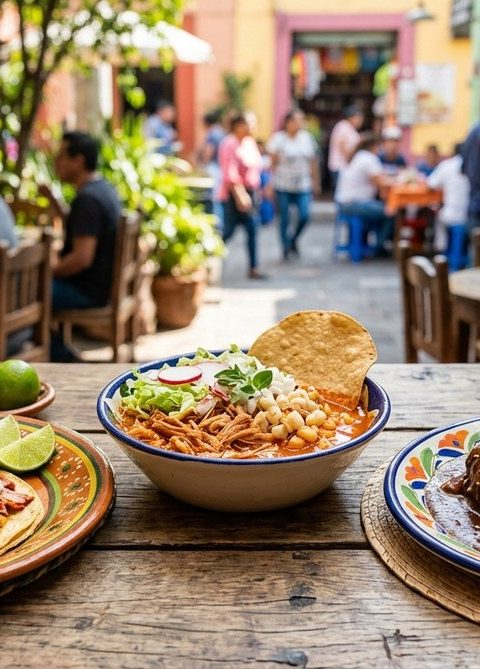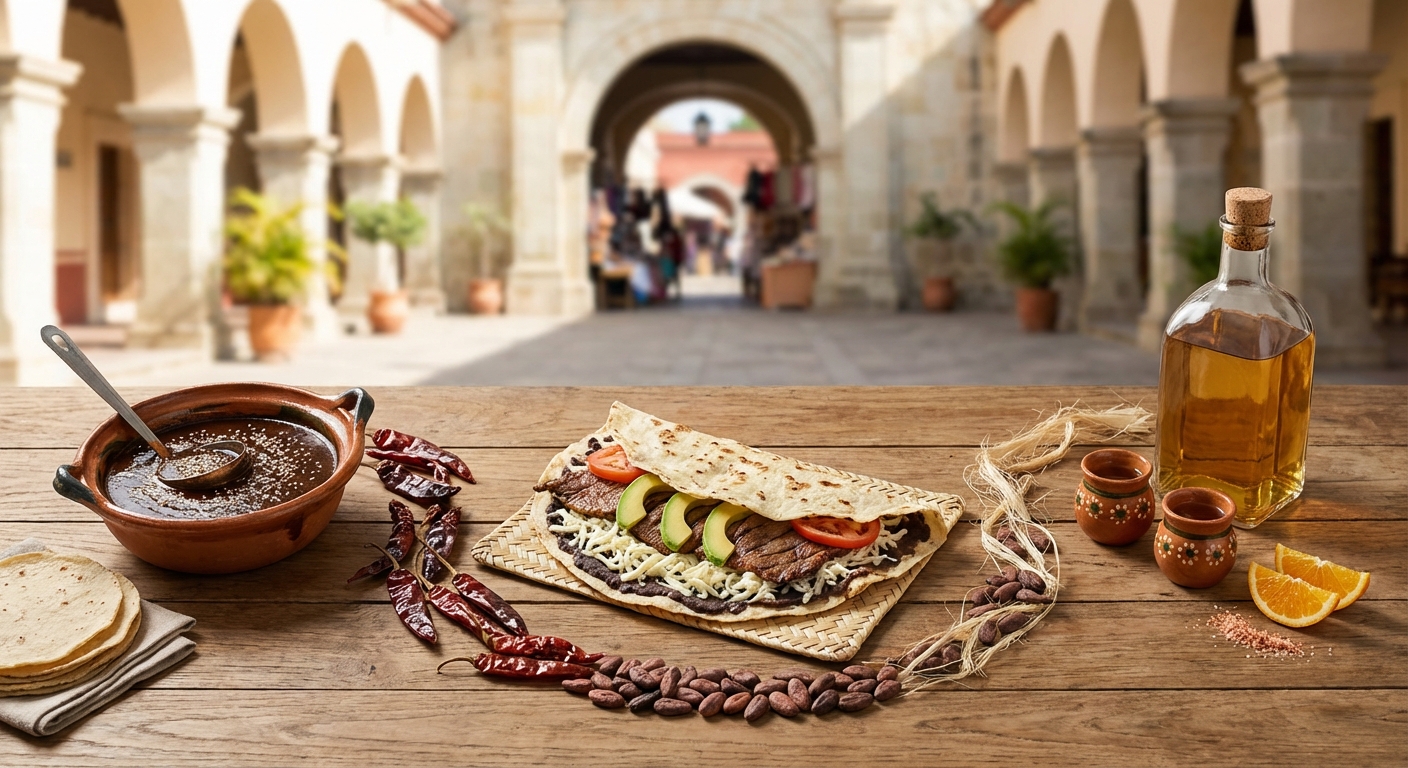
Oaxaca City feeds you stories with every bite. The smell of charred tortillas drifts from corner stands at dawn. Smoke rises from clay comals in century-old markets. Mezcal flows in candlelit bars where grandmothers’ recipes meet modern technique.
This is a city where food isn’t just sustenance. It’s identity, history, and art rolled into masa and wrapped in banana leaves.
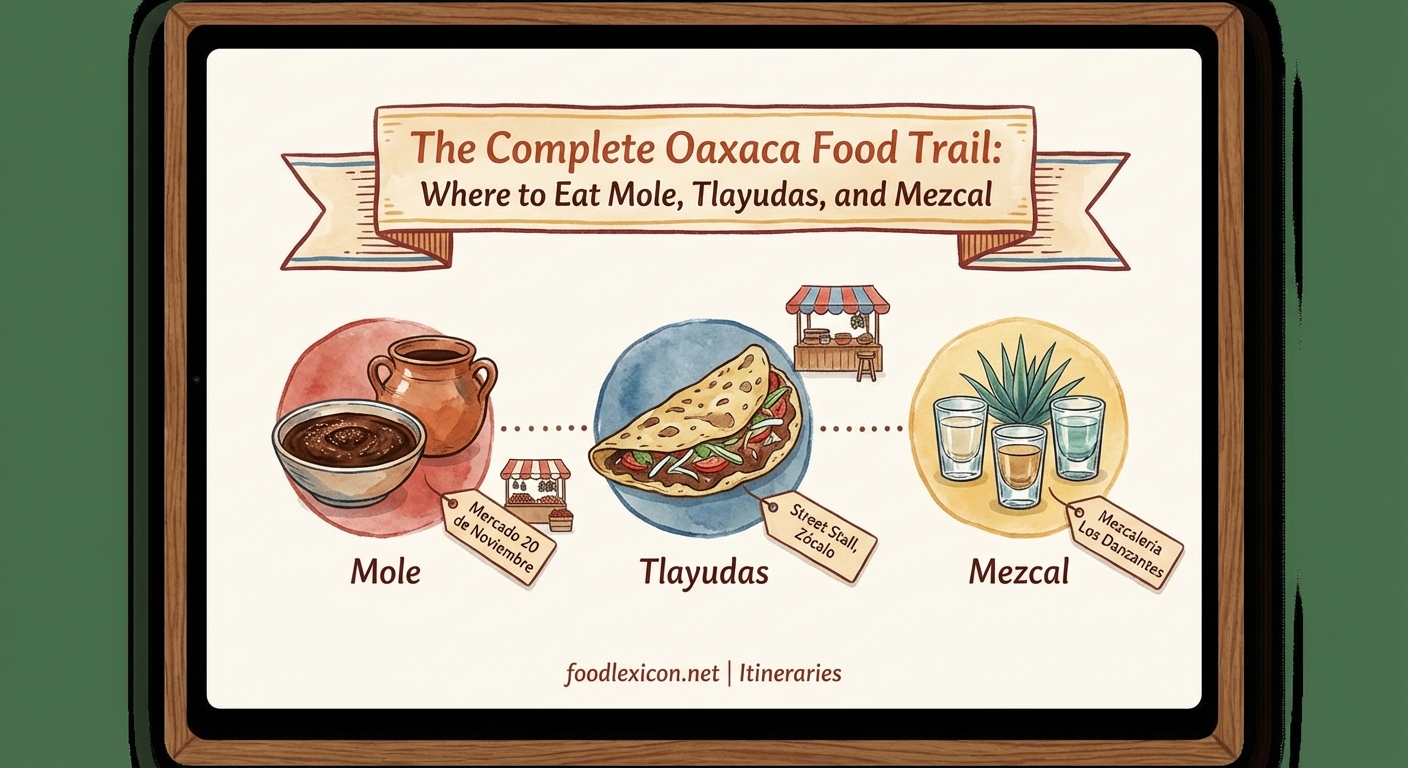
Oaxaca’s best food lives in its markets, street stalls, and family-run fondas rather than fancy restaurants. Start your mornings at Mercado 20 de Noviembre for tlayudas and barbacoa. Hunt down memelas at neighborhood stands. Sip mezcal at traditional palenques. The most memorable meals come from vendors who’ve perfected one dish over decades, not from menus with dozens of options.
Understanding Oaxaca’s Food Geography
The city spreads around the zócalo in a grid of colonial streets. But the real culinary map follows a different logic.
Three major markets anchor the food scene. Mercado 20 de Noviembre sits one block south of the main square. Mercado Benito Juárez runs parallel to it. Mercado de Abastos sprawls on the western edge, massive and overwhelming.
Each market serves different needs. 20 de Noviembre feeds locals and travelers with cooked food. Benito Juárez sells ingredients, chocolate, and chapulines. Abastos supplies restaurants and home cooks with everything from dried chiles to live chickens.
Street food clusters around these markets but also appears in residential neighborhoods. The best vendors often work from the same corner for twenty or thirty years. Locals know them by name, not by restaurant title.
The food that defines Oaxaca rarely comes with a printed menu. It comes from women who wake at 4 AM to grind masa, from families who tend wood-fired ovens, from mezcaleros who learned their craft from their grandfathers.
Geography shapes cuisine here in ways that matter. The Central Valleys produce different ingredients than the Sierra Norte mountains or the coastal regions. But in Oaxaca City, you can taste all seven regions of the state without leaving downtown.
Markets That Feed the City
Your first stop should always be a market. Not for shopping. For eating.
Mercado 20 de Noviembre
The tlayuda hall occupies the center of this market. Vendors grill enormous corn tortillas over charcoal, then layer them with asiento (unrefined pork lard), black beans, cabbage, tomato, and your choice of meat.
Order at any stall. They all make excellent tlayudas. The woman at the third stall on the left has been there for 32 years.
The barbacoa section sits in the back. Lamb and goat cook overnight in underground pits. Vendors serve it in consommé or as tacos. Go before 11 AM. They sell out.
Mercado Benito Juárez
This market feels more touristy but still delivers authentic food. The chocolate vendors will grind custom blends while you watch. Specify your cacao percentage and how much sugar, cinnamon, and almonds you want.
Chapulines (grasshoppers) come in three sizes. Small ones taste nutty and crisp. Large ones have more body but sometimes get stuck in your teeth. Buy a small bag of the medium size seasoned with chile and lime.
The tamales section operates from dawn until mid-morning. Oaxacan tamales differ from their northern cousins. They’re wrapped in banana leaves instead of corn husks. The masa tastes lighter, almost fluffy. Try the mole negro or the rajas con queso.
Mercado de Abastos
This market sprawls across multiple city blocks. It’s not designed for tourists. Locals shop here for bulk ingredients.
But the food stalls around the perimeter serve some of the city’s best breakfasts. Look for the comedores with plastic tables and women making tortillas by hand. Point at what looks good. You won’t go wrong.
The mole paste vendors occupy an entire section. Seven types of mole in various stages of preparation. Some sell the finished paste. Others sell the individual dried chiles and spices so you can make your own.
Street Food Stalls Worth Finding
The best street food requires some hunting. Vendors don’t advertise. They simply show up at the same spot every day and cook.
Here’s how to find them:
- Walk residential neighborhoods between 7 PM and 9 PM
- Look for smoke, crowds, and the smell of grilling meat
- Watch where locals eat, not where tour groups gather
- Ask your Airbnb host for their favorite taco or tlayuda spot
- Follow food smells even when they lead you off the main streets
Memelas and Tlayudas
Memelas are thick corn cakes topped with beans, cheese, salsa, and sometimes meat. They’re smaller than tlayudas and easier to eat while walking.
The best memela stand sits on Calle Libres near the Templo de Santo Domingo. No name. Just a woman with a comal and a basket of fresh masa. She works Tuesday through Sunday from 6 PM until she sells out.
For late-night tlayudas, head to the stands on Avenida Independencia after 10 PM. These vendors cater to the bar crowd. The tlayudas come loaded with chorizo, tasajo (thin-cut beef), or cecina (pork).
Tacos de Barbacoa
Sunday mornings belong to barbacoa. Families line up at neighborhood stands for lamb tacos and consommé.
The stand on Calle Reforma near Parque El Llano sets up at 7 AM. They bring the lamb in its cooking vessel, still wrapped in maguey leaves. The meat falls apart when touched. The broth tastes rich with rendered fat and spices.
Order tacos dorados (fried) or suaves (soft). Get a cup of consommé on the side. Add lime, onion, cilantro, and salsa verde.
Empanadas de Amarillo
These empanadas contain chicken or beef in amarillo sauce (a yellow mole made with chilhuacle amarillo chiles). The masa shell gets fried until crispy.
Empanadas del Carmen sits near the Carmen Alto church. They’ve operated from the same spot since 1985. The empanadas come out of the fryer hot enough to burn your tongue. Wait 60 seconds before biting in.
Traditional Restaurants and Fondas
Some dishes require a sit-down meal. Mole takes hours to prepare. Pozole needs to simmer. These restaurants specialize in the recipes that can’t be cooked on a street corner.
Casa Oaxaca El Restaurante
This restaurant occupies a restored colonial building near Santo Domingo. Chef Alejandro Ruiz focuses on traditional Oaxacan ingredients prepared with modern technique.
The mole tasting menu lets you sample multiple varieties in one sitting. Negro, rojo, amarillo, verde, coloradito, manchamanteles, and chichilo. Each one distinct in flavor and complexity.
Reservations help during high season. Lunch service tends to be less crowded than dinner.
Levadura de Olla
This bakery and restaurant serves Oaxacan food for breakfast and lunch. The pan de yema (egg bread) comes warm from the oven. The chocolate de agua (drinking chocolate made with water instead of milk) tastes intensely cacao-forward.
Try the enmoladas. These are like enchiladas but covered in mole instead of red or green sauce. The mole negro here rivals the best market versions.
Tlamanalli
A tiny restaurant that seats maybe 15 people. The menu changes based on what’s available at the market that morning.
The chef worked in Mexico City’s fine dining scene before returning to Oaxaca. She cooks her grandmother’s recipes with the precision she learned in professional kitchens.
No reservations. Show up when they open at 1 PM or expect to wait.
Mezcal Bars and Palenques
Mezcal is to Oaxaca what wine is to Bordeaux. It’s not just a drink. It’s culture, economy, and tradition distilled into liquid.
In Situ Mezcalería
This bar stocks over 200 mezcals from small producers across Oaxaca. The staff knows every bottle’s story. Where it was made. Which agave variety. How it was distilled.
Order a flight to compare different expressions. Try an espadín (the most common agave), then a tobalá (wild and expensive), then something completely different like a cuishe or a madrecuishe.
The bar serves small plates designed to pair with mezcal. The quesillo (Oaxacan string cheese) with chapulines works particularly well.
Mezcaloteca
Part bar, part museum, part education center. Mezcaloteca documents mezcal production methods and agave varieties.
The tasting format here is more structured. You learn while you drink. The staff explains how terroir affects flavor, how different distillation methods create different profiles, why some mezcals taste smoky and others don’t.
They also offer bottles you can’t find anywhere else. Small-batch productions from remote villages. Experimental blends. Rare agave varieties.
Palenque Visits
Several palenques (mezcal distilleries) near Oaxaca City welcome visitors. These aren’t polished tourist operations. They’re working distilleries where families have made mezcal for generations.
The palenque in Santiago Matatlán lets you see the entire process. Agave roasting in underground pits. Horse-drawn stone wheels crushing the cooked piñas. Fermentation in wooden vats. Distillation in clay or copper stills.
Tastings happen straight from the still or from aging vessels. The mezcal tastes different here than it does in city bars. Sharper. More alive.
Common Mistakes Visitors Make
| Mistake | Why It Matters | Better Approach |
|---|---|---|
| Only eating near the zócalo | Tourist-focused restaurants charge more and often serve mediocre food | Walk 5-10 blocks in any direction to find neighborhood spots |
| Ordering mezcal cocktails | Cocktails mask the spirit’s complexity and cost more | Drink mezcal neat with orange slices and sal de gusano |
| Visiting markets after noon | Best vendors sell out by late morning | Arrive between 8 AM and 10 AM for full selection |
| Skipping street food from safety concerns | Street vendors often maintain higher standards than restaurants | Look for busy stalls with high turnover and visible cooking |
| Eating only at recommended restaurants | You miss spontaneous discoveries and local favorites | Balance planned meals with wandering and following your nose |
Practical Eating Strategies
Oaxaca’s food scene rewards flexibility and curiosity. Here’s how to eat well without overthinking it.
Start your day early. Markets wake up at dawn. The best breakfast foods disappear by 11 AM. Set an alarm. Get to a market by 8 AM. Eat tamales or memelas while vendors set up their stalls.
Save room for street food. Don’t fill up at lunch if you want to try multiple street vendors at dinner. Eat smaller portions more frequently. Oaxacan food is rich. Three tlayudas in one day will make you regret your choices.
Ask locals constantly. “¿Dónde come usted?” (Where do you eat?) works better than any guidebook. Taxi drivers know the best barbacoa spots. Hotel staff can direct you to their family’s favorite mole restaurant.
Embrace the unfamiliar. Chapulines might seem strange at first. So might the texture of mole negro or the funk of some mezcals. Try everything once. Your palate adjusts faster than you expect.
Budget appropriately. Street food costs 30 to 60 pesos per item. Market meals run 80 to 150 pesos. Sit-down restaurants charge 200 to 500 pesos per person. Mezcal tastings vary wildly but expect 150 to 400 pesos for a good flight.
Similar to how street food in Bangkok requires strategic planning, Oaxaca rewards those who pace themselves and stay curious.
Seasonal Considerations
Oaxaca’s food changes with the seasons, though not as dramatically as in northern climates.
Rainy season (May through October) brings fresh corn, squash blossoms, and huitlacoche (corn fungus). Markets overflow with tropical fruits. Some mezcal producers pause production because humidity affects fermentation.
Dry season (November through April) sees more tourists but also better weather for eating outdoors. Day of the Dead (early November) brings special breads and moles. Christmas and New Year bring buñuelos and atole.
Guelaguetza (July) transforms the city. Regional foods from across Oaxaca appear at special markets. Dancers from different villages bring their traditional dishes. It’s the best time to taste the full diversity of Oaxacan cuisine.
Building Your Eating Itinerary
Three days gives you enough time to taste Oaxaca’s essential dishes. A week lets you go deeper.
Day One: Start at Mercado 20 de Noviembre for breakfast tlayudas. Walk to Benito Juárez for chocolate and chapulines. Lunch at a traditional restaurant for mole. Evening mezcal tasting at In Situ.
Day Two: Early barbacoa tacos at a neighborhood stand. Mid-morning visit to Mercado de Abastos. Afternoon cooking class (several schools teach traditional Oaxacan techniques). Dinner at a street food stall you discovered while wandering.
Day Three: Breakfast at Levadura de Olla. Day trip to a palenque in Santiago Matatlán. Late lunch at Tlamanalli. Evening empanadas at Empanadas del Carmen.
This structure balances planned meals with spontaneous eating. It mixes markets, restaurants, and street food. It gives you mezcal education without overdoing it.
The pattern mirrors approaches used in culinary journeys through Tuscany, where markets and traditional producers anchor the experience.
Beyond the City Center
Some of Oaxaca’s best food requires leaving downtown.
San Felipe del Agua sits in the foothills northeast of the city. Several excellent restaurants operate here, away from tourist crowds. The neighborhood also has hiking trails that work off all those tlayudas.
Santa María Atzompa produces the green-glazed pottery you see in every market. But it also has weekend barbacoa stands that draw families from across the valley. The lamb cooks in clay pots made in the village.
Tlacolula hosts a massive Sunday market. It’s worth the 45-minute bus ride. The market spreads through multiple streets. Food vendors sell regional specialties you won’t find in the city. The barbacoa section alone justifies the trip.
Teotitlán del Valle weaves rugs but also makes some of the valley’s best mole. Several family restaurants serve traditional meals in their courtyards. You can watch weavers work while waiting for your food.
When Food Tells Bigger Stories
Oaxacan cuisine carries meaning beyond flavor. Each dish connects to history, geography, and cultural identity.
Mole negro takes three days to prepare properly. The recipe requires over 30 ingredients. It represents patience, skill, and the blending of indigenous and Spanish influences. When you eat mole negro, you taste 500 years of cultural exchange.
Mezcal production preserves knowledge that predates the Spanish conquest. The agave varieties, the cooking methods, the distillation techniques all come from indigenous traditions. Supporting small mezcal producers means supporting cultural preservation.
Even simple street food tells stories. Tlayudas use the same basic ingredients as tacos but arrange them differently. The enormous tortilla creates a different eating experience. The asiento adds richness that defines Oaxacan flavor.
Understanding these connections enriches every meal. Food becomes more than sustenance. It becomes education and cultural exchange.
This concept of regional ingredients shaped by geography applies perfectly to Oaxaca, where altitude, climate, and soil create distinct culinary traditions.
Making the Most of Every Meal
Oaxaca rewards active eaters. The best experiences come from engagement, not passive consumption.
Talk to vendors. Ask about ingredients. Watch preparation techniques. Most people love sharing their knowledge when you show genuine interest.
Take notes. After three days of eating, tlayuda stands blur together. Write down addresses. Photograph storefronts. Record vendor names.
Pace yourself. Oaxacan food is rich and filling. Space out heavy meals. Walk between eating sessions. Drink plenty of water.
Be flexible. Your planned restaurant might be closed. Your targeted street vendor might not show up. Have backup options but also embrace spontaneity.
Share dishes when possible. Ordering multiple items and splitting them lets you taste more variety. Most vendors don’t mind dividing orders.
Your Oaxacan Food Journey Starts Here
The best meal in Oaxaca isn’t at a famous restaurant. It’s at a market stall where a woman has made the same dish for 30 years. It’s at a street corner where smoke rises from a charcoal grill. It’s in a mezcalería where the bartender pours you something you’ve never tasted before.
Planning helps. Research guides you to good starting points. But the magic happens when you wander off your itinerary and follow your senses. When you smell something amazing and chase it down a side street. When you see locals lining up and join the queue.
Oaxaca feeds you if you let it. The city reveals itself through food. Every bite tells you something about this place, these people, this culture. Your job is simply to show up hungry and stay curious.