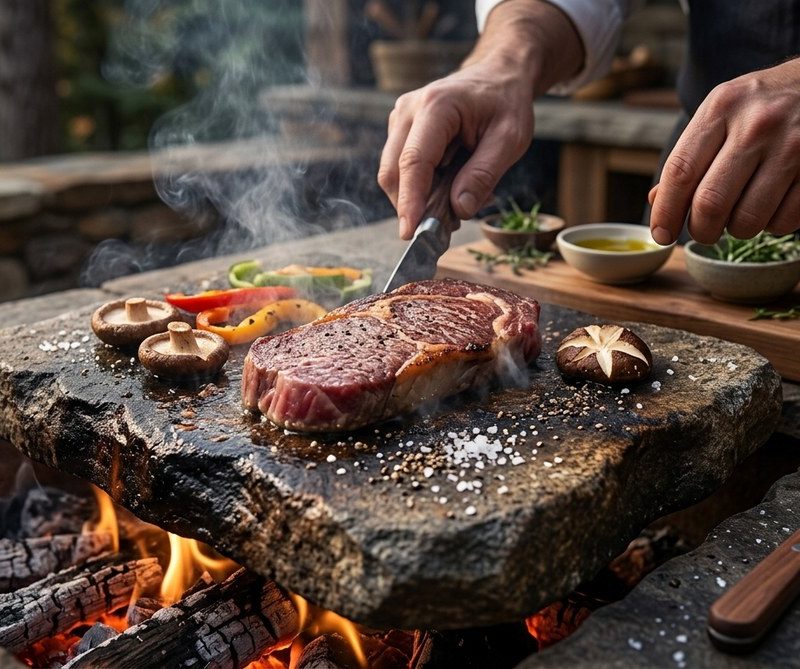
You have seared a steak on cast iron. You have grilled over charcoal. But have you ever cooked dinner on a rock that was heated directly in the fire? Hot stone cooking is one of the oldest culinary methods known to humanity, yet it feels radically fresh in a modern kitchen. The process is simple: you heat a flat stone until it glows with stored energy, then use it to sear, bake, or even boil. What you get is food with a deep, earthy crust and a tenderness that comes from even, radiant heat. This is not a gimmick. It is a genuine way to transform how you cook.
Hot stone cooking uses natural stones as a heat source to sear, bake, and steam food. It dates back thousands of years and appears in cultures from Scandinavia to the Andes. The method produces exceptional caramelization and even cooking without added oils. With the right stone and careful temperature control, you can recreate this ancient technique in your backyard or kitchen. It is one of the most accessible extreme cooking methods for adventurous home cooks.
What Exactly Is Hot Stone Cooking?
Hot stone cooking means using a preheated rock as the cooking surface. The stone absorbs heat from a fire, an oven, or a stovetop, then releases it slowly and evenly. This creates a stable temperature that is ideal for searing meats, baking breads, or simmering soups. Unlike metal pans, stone does not create hot spots. It radiates heat gently, which helps food cook more uniformly.
The technique is not new. Indigenous peoples in North America cooked on heated stones. Scandinavians used them for flatbreads. Polynesians built underground ovens with volcanic rocks. In Japan, the technique survives in ishiyaki (stone-grilled dishes). Today, chefs and home cooks are rediscovering hot stone cooking for its ability to produce a unique crust and retain moisture.
Why You Should Try Cooking on Stones
- Better caramelization because stone holds heat longer than most metals.
- No added fats needed unless you want them; the stone provides a nonstick surface when properly seasoned.
- Even heat distribution eliminates burnt edges and raw centers.
- Versatility allows searing, baking, and even boiling when stones are dropped into liquid.
- Connection to tradition adds a story to every meal.
How to Cook on a Hot Stone at Home
If you are ready to try this at home, follow these steps. Safety comes first. Always use stones that are safe for high heat.
- Choose the right stone. Look for dense, nonporous rocks like granite, basalt, or soapstone. Avoid river rocks that may contain moisture; they can explode when heated. Purchase cooking stones from a supplier or use a clean, dry paving stone from a hardware store (check for cracks).
- Preheat the stone slowly. Place it in a cold oven, then set the temperature to 400°F (204°C) and let it heat for at least 30 minutes. For an outdoor fire, place the stone near the coals and gradually move it closer over 15 minutes.
- Test the temperature. Sprinkle a few drops of water on the stone. If they dance and evaporate instantly, the stone is ready. If they sizzle slowly, let it heat longer.
- Oil the stone lightly (optional). Use a high-smoke-point oil like avocado or grape seed. A thin layer helps with initial release.
- Place your food on the stone. Work in batches to avoid crowding. The stone will cool slightly, so give it a minute between batches to recover heat.
- Flip when a crust forms. Stone cooking takes a little longer than a hot skillet because the heat is less aggressive.
- Clean the stone after it cools. Scrape off residue with a stiff brush and hot water. Do not use soap, as stone is porous. Dry thoroughly.
Common Mistakes and How to Avoid Them
Even experienced cooks make errors with stones. Here is a table to help you steer clear of pitfalls.
| Mistake | Result | Solution |
|---|---|---|
| Using a wet river rock | Rock may explode from steam pressure | Use dry, dense stone from a safe source |
| Heating too fast | Cracks appear; stone shatters | Warm the stone gradually in oven or at fire edge |
| Overcrowding the stone | Temperature drops and food steams | Cook in batches; let stone reheat between rounds |
| Skipping the oil | Food sticks even on a seasoned stone | Apply a thin coat of high-heat oil before cooking |
| Using soap to clean | Soap absorbs into stone, affects flavor | Scrub with salt and a damp cloth, then rinse |
Expert Advice on Mastering Stone Heat
“A hot stone is like a battery for heat. You charge it slowly, and it discharges steadily. The key is patience. If you rush the preheat, you lose the whole point. Let the stone become your partner, not your servant.”
— Chef Marco Reyes, author of Earth and Fire Cooking
Chef Reyes recommends starting with a piece of bread to test the surface. A perfect hot stone will give you a golden brown crust in about two minutes. If the bread burns before that, your stone is too hot. If it stays pale, the stone needs more time.
Pairing Hot Stone Cooking with Other Techniques
Once you master the basic sear, you can expand into more complex dishes. Use a hot stone for finishing a steak that was sous vide. The stone will create a crust without overcooking the interior. You can also bake flatbreads directly on a stone in your oven; the result is a crisp bottom and soft crumb. For an outdoor feast, try a stone boil: drop heated rocks into a broth to keep it bubbling without a stove. This technique is excellent for a campfire stew. If this kind of primal cooking fascinates you, you might enjoy reading about how to cook without a stove: harnessing solar, geothermal, and friction heat.
Safety First: Handling Hot Stones
Stones retain heat for a long time. Even after you finish cooking, the rock can burn skin or ignite surfaces. Always use heavy-duty tongs or heatproof gloves to move the stone. Set it on a trivet or a bed of sand. Never place a hot stone on a cold countertop, as the thermal shock can crack it. And keep children and pets away from the cooking area.
What about indoor use? You can use a stone on a gas stove, but be careful. Place a metal grate over the burner to lift the stone slightly. Heat it slowly on low to medium heat for 20 minutes. Some home cooks prefer to use the oven method, which is safer and more controlled.
Where to Find Cooking Stones
You do not need a specialty store. Many kitchenware shops sell “pizza stones” that work well. Soapstone slabs are available from suppliers of stone countertops (ask for offcuts). If you want a more rugged option, a landscape supply store may sell flagstone or slate. Avoid anything that contains quartz or has visible cracks. For more culinary adventures with unusual ingredients, check out 7 bizarre delicacies that will test your culinary courage.
A Simple Recipe to Get Started
Try a hot stone steak. Choose a 1-inch thick ribeye or sirloin. Preheat your stone to 450°F (232°C) in the oven. While it heats, pat the steak dry and season generously with salt and pepper. When the stone is ready, move it to a heatproof surface. Lightly oil the top. Place the steak on the stone and press gently. Cook for 3 minutes per side for medium-rare. Let the steak rest on a plate for 5 minutes before cutting. The crust will be deeply browned, and the interior will stay juicy. Serve with a simple chimichurri or a pat of herb butter.
The Deeper Benefits of Cooking with Stone
Beyond flavor, hot stone cooking connects you to a long line of cooks who worked with fire and earth. It slows you down. You cannot rush a stone. You must wait for it to heat, listen to its sizzle, and feel its warmth. In a world of induction burners and microwaves, that patience is a gift. Plus, stone cookware lasts forever. A good piece of soapstone will outlive you. It adds a rustic elegance to any meal.
A New Chapter in Your Culinary Story
Hot stone cooking is not just a technique. It is an invitation to experiment with heat in its purest form. Once you learn how a stone behaves, you start seeing every meal as a chance to play with texture and temperature. Whether you are camping in the mountains or cooking in a tiny apartment, a stone can become your most versatile tool.
Go ahead and try it this weekend. Pick up a stone, heat it slowly, and cook something simple. Listen to the crackle. Smell the sear. You might just find that the oldest way to cook is also the best way to make dinner feel like an event. And if you want to explore other primal methods, take a look at why food history matters: 5 lessons modern cooks can learn from ancestral traditions.