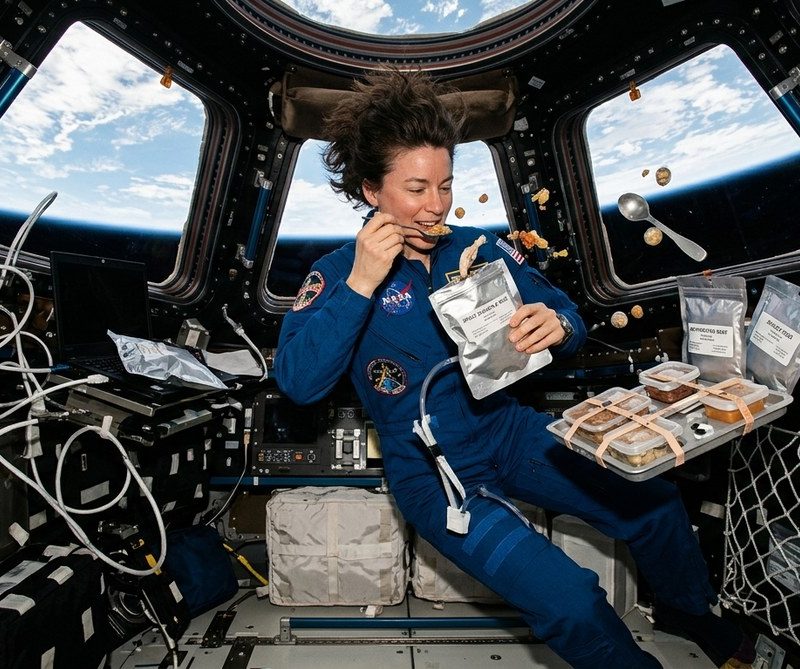
Space travel pushes human ingenuity to the limit, and something as simple as eating a meal becomes a high-stakes science experiment. When you float in a spacecraft orbiting Earth at 17,500 miles per hour, a single crumb can short‑circuit a control panel, a drop of water can drift into an air vent, and a stray grain of salt might end up lodged in an astronaut’s eye. Yet every day, crew members on the International Space Station sit down (or, technically, float up) to breakfast, lunch, and dinner. The way they do it is a fascinating blend of food science, engineering, and plain old human adaptation. This guide explains exactly how eating in space works, what foods make the cut, and why the experience is nothing like your kitchen table at home.
Eating in space is a carefully engineered process that prevents crumbs, liquid blobs, and floating debris from endangering equipment and the crew. Astronauts rely on specially packaged, freeze‑dried, and thermostabilized foods, often rehydrated with hot water. Tortillas replace sliced bread, and magnetic trays secure meals. The goal is to make dining safe, nutritious, and as normal as possible 250 miles above Earth.
Why Microgravity Changes Everything
On Earth, gravity pulls food down onto a plate and keeps your drink inside a cup. In space, nothing stays put unless it is strapped down, magnetized, or sealed. Liquids form floating spheres that wobble at the slightest breath. Crumbs drift lazily through the cabin until they get sucked into a filter or land on a sensitive instrument. Even the simple act of chewing becomes a hazard if a piece of food breaks free.
This is why space agencies treat meal design as seriously as rocket engineering. Every bite must be contained, every package must be easy to open with gloved hands, and every ingredient must last months without refrigeration. The result is a menu that looks more like a survival kit than a dinner plate, but it keeps astronauts healthy and happy on missions that last six months or longer.
A Short History of Space Food
The first meals in space were unappetizing. In 1961, Soviet cosmonaut Yuri Gagarin ate beef and liver paste from aluminum tubes, squeezing the goo directly into his mouth. American astronauts on the Mercury program followed a similar tube diet, plus bite‑sized cubes of food coated in gelatin to prevent crumbling.
By the Gemini program, NASA had improved packaging with freeze‑dried pouches that could be rehydrated with cold water. Apollo astronauts had hot water and could eat thermostabilized meals in flexible pouches. The big breakthrough came with the Space Shuttle and the International Space Station, where crews gained access to a galley with a water dispenser, a forced‑air convection oven, and eventually a refrigerator. Today’s astronauts enjoy more than 200 different food items, from shrimp cocktail to chocolate pudding.
The Three Main Food Categories on the ISS
Space food is processed in specific ways to survive launch, storage, and zero‑gravity handling. Here are the common types:
- Rehydratable foods – Freeze‑dried items like scrambled eggs, broccoli, and pasta that need hot water to return to their original texture. Water is injected through a special port on the package.
- Thermostabilized foods – Items like canned tuna, fruit cocktail, and pudding that are heat‑treated and sealed to prevent spoilage. They are ready to eat straight from the pouch.
- Natural form foods – Nuts, granola bars, tortillas, cookies, and other dry goods that come in their original state. These require careful packaging to avoid crumbs.
Beverages come as dry powders in sealed pouches. Astronauts add water through a needle‑like nozzle, then drink from a straw with a clip to prevent floating liquid.
Step by Step: How an Astronaut Prepares and Eats a Meal
Here is the exact process a crew member follows to enjoy dinner aboard the ISS:
- Select the meal from storage. Each astronaut has a personal pantry with pre‑packed menus that rotate every eight days. Items are stored in labeled locker trays.
- Rehydrate if needed. For freeze‑dried dishes, the astronaut inserts the package into a water dispenser, pushes a button to add a measured amount of hot or cold water, then kneads the pouch until the food reabsorbs the liquid.
- Heat thermostabilized or rehydrated items. The pouch goes into a forced‑air convection oven that sits in the galley. Heating takes about 20 to 30 minutes.
- Open the pouch in a controlled way. Scissors cut a slit along the top. The astronaut holds the pouch firmly to prevent it from escaping.
- Attach the meal to a tray. The tray has magnets and Velcro straps. The pouch sticks down, and any utensils (short‑handled fork, spoon) are held with magnets as well.
- Eat from the pouch. The astronaut brings the pouch to their mouth or uses utensils to scoop food. They must keep the utensil level and move slowly to avoid sending food airborne.
- Seal and store leftovers. Any unfinished food is resealed, clipped, and returned to storage. Packages are eventually disposed of in a trash container that will burn up on re‑entry.
This routine repeats three times a day, plus snacks. Cleanup involves wiping utensils and trays with sanitizing wipes, as running water is impossible.
Common Mistakes and Correct Techniques
The table below shows typical challenges new astronauts face and the methods they learn.
| Mistake | Correct Technique |
|---|---|
| Opening a pouch too quickly | Slit the top slowly with scissors while holding the pouch tight |
| Letting a spoon float away | Always use magnetic utensils and keep them attached to the tray |
| Pouring a drink into a cup | Use a sealed pouch with a straw; never an open container |
| Cracking a dry cracker | Eat crackers only inside a mesh bag to catch crumbs |
| Adding too much water to rehydratable food | Follow the marked line on the package; add water in small bursts |
| Forgetting that salt and pepper are liquid | Use liquid‑state seasonings from special dispensers (granules would float) |
| Leaving a pouch unsealed after eating | Always zip or clip the pouch immediately to prevent odors and leaks |
Mastering these techniques takes practice, but within a week most crew members feel comfortable with zero‑gravity dining.
Foods That Work and Foods That Absolutely Do Not
Not every Earth food makes it to space. Some become dangerous, others lose flavor, and a few just don’t hold up physically.
Foods that perform well in space:
- Tortillas – No crumbs, flexible, easy to wrap around fillings
- Dried fruit – Stays intact, high in energy
- Jerky – Chewy, long‑lasting, no crumbs
- Pre‑packaged condiments (mustard, hot sauce) – Squeeze packs with tight seals
- Single‑serve peanut butter – Sticky enough to stay on a spoon
- Beverage powders – Easy to mix with hot or cold water
Foods that are banned or avoided:
- Sliced bread – Creates too many crumbs; tortillas replace it entirely
- Crackers and chips – Crumble easily; if allowed, must be eaten inside a mesh bag
- Carbonated drinks – Gas expands in low pressure; soda can form foam that clogs equipment
- Fresh produce – Most fruits and vegetables spoil quickly; only a few fresh items (like apples or lemons) are carried on short missions
- Salt and pepper shakers – The granules would float and contaminate cabin air; they exist only as liquid solutions
“The first time you eat in space, your brain tells you the food should be falling onto your lap. But it doesn’t. After a few days, you forget about gravity entirely. The real trick is to avoid anything that floats away without permission. Tortillas are our best friend up here.” – Astronaut Chris Hadfield (paraphrased from multiple interviews)
How Taste and Smell Change in Microgravity
One surprising challenge is that food tastes different in space. Fluids in the body shift upward toward the head, causing nasal congestion similar to a mild cold. This dulls the sense of smell and reduces the ability to taste sweetness and saltiness. As a result, astronauts often crave spicy or strongly flavored foods. Hot sauce is in high demand. Shrimp cocktail with extra horseradish is a favorite because the sharp vinegar cuts through the sensory fog.
NASA and other space agencies add extra seasoning to many entrees and offer a variety of condiments to keep appetites up. In 2026, researchers are still studying how long‑duration missions to Mars might affect taste, and whether crops grown on the spacecraft could provide fresh flavors that ground‑packaged food cannot.
The Future of Space Dining
As human missions push farther from Earth, eating in space will evolve beyond packaged pouches. NASA’s Artemis program plans to send crews to the Moon’s surface, where they will have access to small freezers and eventually grow leafy greens and herbs in hydroponic chambers. The goal is to supplement packaged rations with fresh ingredients that boost nutrition and morale.
Private companies like SpaceX and Axiom Space are designing commercial stations with larger galleys, including ovens and even espresso machines. In 2024, a specially built oven aboard the ISS baked the first cookies in space. The next step might include roasting coffee, fermenting yogurt, or cooking pasta from scratch. For a future Mars mission, astronauts will need to grow most of their food themselves, using systems that recycle water and nutrients.
The culinary lessons learned in orbit also have Earth‑side benefits. Freeze‑drying, aseptic packaging, and high‑efficiency water use all originated from space food research. The same technologies help feed hikers, military troops, and disaster relief teams.
What Space Dining Teaches Us About Earthly Eating
Eating in space forces you to think about every bite. You cannot mindlessly grab a bag of chips while reading your phone. You must be deliberate: choose your food, prepare it, secure it, and consume it without waste. That mindfulness is something we can all bring back to our own kitchens. When you sit down to a meal, try to eliminate distractions. Pay attention to texture, temperature, and flavor. Even without zero gravity, you can appreciate the science behind every meal.
From the first squeeze tube of beef paste to the prospect of fresh tomatoes on Mars, the story of eating in space is a story of human creativity. Next time you wrap a sandwich in a tortilla or season a dish with liquid hot sauce, you are using a trick perfected 250 miles above your head. And if you are curious about how other unusual eating experiences compare, check out our guide to eating insects from around the world or discover why some cultures crave foods that scare others. The universe of food is vast, and we are only beginning to taste it.