You know that moment when you taste a dish at a restaurant and think, “How did they make this so flavorful?” The answer usually lies in the first few minutes of cooking, when aromatics hit hot oil and transform into something magical. These foundational combinations, known as flavor bases, are the building blocks that give each cuisine its distinctive character. They’re not complicated or expensive. They’re just smart.
Flavor bases are combinations of aromatic vegetables, herbs, and spices that form the foundation of dishes across different cuisines. Understanding these essential combinations allows home cooks to build authentic, layered flavors from the ground up. From [French mirepoix](https://en.wikipedia.org/wiki/Mirepoix) to Thai curry paste, mastering these bases transforms ordinary ingredients into restaurant quality meals with depth and regional character.
What Makes a Flavor Base Essential
A flavor base is more than just ingredients thrown together. It’s a deliberate combination that creates depth through chemical reactions.
When you cook aromatics slowly in fat, their cell walls break down. Sugars caramelize. Volatile compounds develop. The result is a complex foundation that supports everything you add later.
Different cuisines developed their signature bases based on local ingredients and cooking traditions. French cooks had access to carrots, celery, and onions. Thai cooks worked with lemongrass, galangal, and chilies. Each combination reflects both geography and generations of refinement.
The beauty of these bases is their efficiency. You’re building multiple flavor layers in one step. That’s why professional kitchens rely on them, and why your home cooking will improve dramatically once you understand how they work.
Building Blocks From Around the World
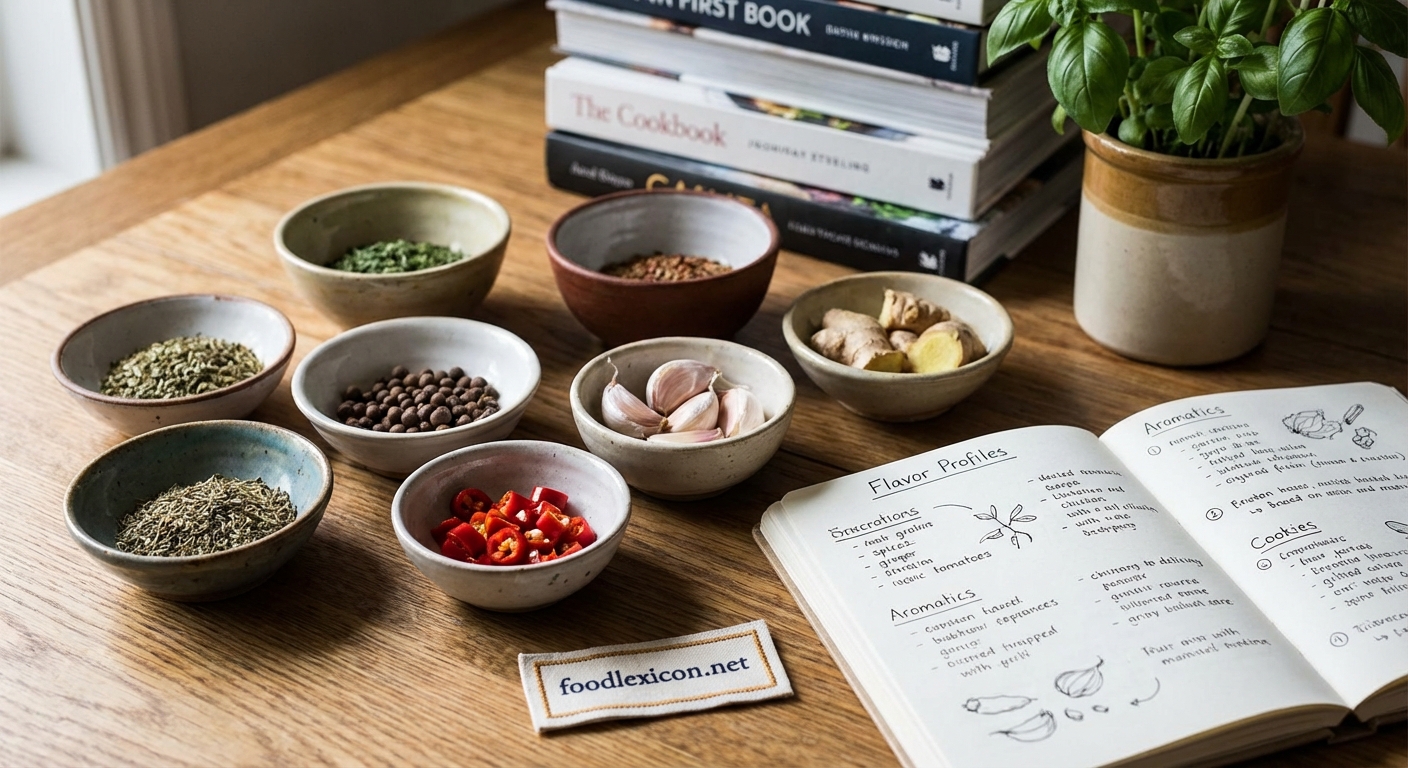
Let’s look at the most influential flavor bases and how they shape their respective cuisines.
French Mirepoix
The classic ratio is two parts onion, one part carrot, one part celery. You dice them uniformly and cook them low and slow in butter until they soften and sweeten.
Mirepoix appears in stocks, braises, and sauces throughout French cooking. It provides a subtle, balanced background that doesn’t compete with main ingredients. The vegetables almost disappear into the dish, leaving only their essence behind.
For white mirepoix, substitute parsnips and leeks for carrots and use them in light colored sauces where you want to avoid browning.
Italian Soffritto
Similar to mirepoix but with a Mediterranean twist. The Italian version uses onion, carrot, and celery like the French base, but often includes garlic, parsley, and sometimes pancetta or prosciutto.
The key difference is texture and timing. Italian cooks often mince their soffritto more finely and cook it until it nearly melts into the oil. This creates a more integrated flavor rather than distinct vegetable notes.
You’ll find soffritto at the start of pasta sauces, risottos, and braised meat dishes. If you’ve spent time learning traditional cooking methods in Italian kitchens, you’ve seen how this base appears in nearly every savory preparation.
Spanish Sofrito
Not to be confused with Italian soffritto, Spanish sofrito takes a completely different approach. The base combines onions, garlic, and tomatoes, often with bell peppers added.
The mixture cooks down until thick and concentrated. Many Spanish cooks make large batches and store them because the base appears in paella, stews, and rice dishes throughout the cuisine.
Regional variations exist across Spain and Latin America. Some versions include paprika for smokiness. Others add cumin or oregano depending on the dish.
Cajun and Creole Holy Trinity
The Louisiana answer to French mirepoix replaces carrots with bell peppers. You get onions, celery, and green bell peppers in roughly equal proportions.
This combination forms the base of gumbo, jambalaya, étouffée, and countless other dishes from the region. The bell pepper adds a distinct sweetness and slight bitterness that carrots can’t provide.
Many Cajun cooks add garlic, parsley, and green onions as supporting aromatics once the trinity has cooked down.
Chinese Aromatics
Chinese cooking doesn’t rely on a single base but rather on flexible combinations that change based on the dish and region.
The most common trio is ginger, garlic, and scallions. You typically slice or mince them and cook them briefly in very hot oil to release their essential oils without burning.
For Sichuan dishes, cooks add Sichuan peppercorns and dried chilies. Cantonese preparations might include fermented black beans. The key is understanding that Chinese aromatics cook fast and hot, unlike the slow cooked bases of European cuisines.
Thai Curry Paste
Thai flavor bases are pastes rather than chopped vegetables. They combine fresh ingredients pounded into a smooth mixture that becomes the foundation for curries and stir fries.
Red curry paste includes red chilies, shallots, garlic, lemongrass, galangal, coriander root, shrimp paste, and kaffir lime zest. Green curry paste uses green chilies and adds more fresh herbs. Yellow curry paste incorporates turmeric.
These pastes take time to make properly, which is why many home cooks buy quality commercial versions. The paste fries in coconut cream until fragrant before liquid is added, a technique that develops deep flavor complexity.
Street vendors across Bangkok use these bases to create the incredible dishes you’ll find when sampling authentic Thai street food.
Indian Tadka
Also called tarka or chaunk, tadka is a technique and a base. Whole spices bloom in hot oil or ghee, then get poured over a finished dish or stirred into it at the start.
Common tadka combinations include cumin seeds, mustard seeds, curry leaves, dried chilies, and asafoetida. The spices crackle and pop, releasing their aromatic compounds into the fat.
Regional variations are endless. South Indian cooking uses more mustard seeds and curry leaves. Northern preparations might feature cumin, coriander seeds, and whole dried chilies.
Japanese Dashi
Unlike other bases on this list, dashi is a liquid foundation made by steeping kombu seaweed and katsuobushi (dried bonito flakes) in water.
This creates an umami rich broth that forms the base of miso soup, noodle broths, and countless simmered dishes. The flavor is subtle but essential to Japanese cooking.
Vegetarian versions use only kombu or add dried shiitake mushrooms. The principles remain the same: extracting umami rich compounds that provide savory depth without heaviness.
Korean Aromatics
Korean cooking builds flavor through fermented ingredients and specific aromatic combinations. Garlic, ginger, and scallions appear frequently, but so do gochugaru (Korean chili flakes), doenjang (fermented soybean paste), and gochujang (fermented chili paste).
These ingredients often combine into marinades or cooking sauces rather than being cooked as a separate base. The fermented elements provide complexity that fresh aromatics alone can’t achieve.
Sesame oil adds a finishing touch to many dishes, contributing its distinctive nutty aroma at the end of cooking rather than the beginning.
Caribbean Green Seasoning
This bright, herbaceous paste combines cilantro, culantro, scallions, garlic, peppers, and thyme. Some versions add parsley or other herbs depending on which island you’re on.
The mixture gets blended into a thick paste and used to marinate meats or season stews and rice dishes. The fresh herb flavor is intense and distinctive, giving Caribbean food its characteristic brightness.
Many families have their own proportions and secret additions passed down through generations.
How to Apply These Bases in Your Cooking
Understanding these foundations is one thing. Using them effectively is another.
Here’s a practical approach to incorporating flavor bases into your everyday cooking.
-
Choose your cuisine direction first. Don’t mix French mirepoix with Thai curry paste in the same dish. Pick a regional direction and commit to it.
-
Prep your base ingredients before you start cooking. Having everything cut and ready prevents burning and allows you to focus on proper technique.
-
Use the right cooking fat. Butter for French bases, olive oil for Mediterranean, vegetable oil for Asian, ghee for Indian. The fat matters.
-
Control your heat carefully. Most European bases want low, slow cooking. Asian aromatics need high heat for short periods. Match your technique to your cuisine.
-
Cook until the aroma changes. Your nose tells you when aromatics are ready. Raw onion smells sharp. Properly cooked onion smells sweet and mellow.
-
Don’t rush the process. Flavor development takes time. A proper mirepoix needs 15 to 20 minutes. Thai curry paste needs to fry until the oil separates. Be patient.
The key is repetition. Make the same base multiple times until you can do it without thinking. Then it becomes a tool you can apply to any dish within that cuisine.
Common Mistakes and How to Avoid Them
Even experienced cooks make errors with flavor bases. Here’s what to watch for.
| Mistake | Why It Happens | The Fix |
|---|---|---|
| Burning garlic | Added too early or heat too high | Add garlic after onions soften, or use lower heat |
| Watery vegetables | Overcrowded pan or insufficient heat | Use a larger pan or cook in batches |
| Raw taste | Didn’t cook long enough | Give aromatics time to fully soften and develop |
| Mushy texture | Overcooked for the dish type | Match cooking time to cuisine (longer for French, shorter for Chinese) |
| Wrong proportions | Guessing instead of measuring | Use standard ratios until you develop intuition |
| Bland result | Low quality ingredients | Fresh aromatics make a massive difference |
Temperature control causes most problems. Too hot and you burn the outside before the inside softens. Too cool and vegetables steam instead of caramelize.
A heavy bottomed pan helps maintain even heat. Stainless steel or enameled cast iron work better than thin pans that develop hot spots.
“The foundation of any great dish is built in the first ten minutes. If your base is weak, nothing you add later will fix it. But if your base is strong, everything else falls into place naturally.”
This principle applies across all cuisines. Master the base and the rest becomes much easier.
Adapting Bases for Different Dishes
Once you understand the classic combinations, you can modify them for specific applications.
For lighter dishes, reduce the cooking time. Your vegetables will retain more texture and a brighter flavor. This works well for seafood dishes or vegetable focused preparations.
For heartier dishes, cook the base longer and add more fat. The deeper caramelization supports rich meats and long braises.
Consider adding supporting aromatics after the main base cooks. Bay leaves, thyme, rosemary, or other herbs can layer in additional complexity without overwhelming the foundation.
Some dishes benefit from toasting whole spices before adding the wet aromatics. This extra step adds another dimension of flavor that makes your cooking taste more professional.
Practical Shopping and Storage Tips
Building these bases regularly means keeping the right ingredients on hand.
For your pantry:
– Quality cooking oils (olive, vegetable, sesame)
– Whole spices that you toast and grind fresh
– Dried herbs for when fresh aren’t available
– Canned tomatoes for Spanish sofrito
– Dried chilies for multiple cuisines
For your refrigerator:
– Onions, garlic, and ginger (store properly for longest life)
– Celery and carrots for European bases
– Fresh herbs like cilantro, parsley, and thyme
– Scallions and shallots
– Bell peppers for Cajun cooking
For your freezer:
– Pre-made curry pastes if you don’t make your own
– Extra portions of cooked bases (mirepoix and sofrito freeze well)
– Lemongrass and galangal if you can’t find them fresh regularly
– Kaffir lime leaves
Many flavor bases can be prepped in advance. Chop your mirepoix on Sunday and store it in an airtight container. Make a large batch of sofrito and freeze it in ice cube trays. These small preparations save time during busy weeknights.
Fresh aromatics lose potency over time. Buy smaller quantities more frequently rather than letting things go soft in your crisper drawer.
Building Your Flavor Base Toolkit
You don’t need specialized equipment, but a few tools make the process easier.
A sharp chef’s knife is non negotiable. Dull knives crush aromatics instead of cutting them cleanly, releasing less flavor.
A heavy bottomed pan distributes heat evenly and prevents burning. Invest in one good pan rather than a set of mediocre ones.
A mortar and pestle helps with making pastes and grinding whole spices. The manual process releases oils better than electric grinders for small quantities.
Measuring spoons and cups ensure consistency while you’re learning. Once you develop muscle memory, you can eyeball proportions.
A wooden spoon won’t scratch your pans and allows you to scrape up the flavorful bits that stick to the bottom.
Why Mastering These Bases Changes Everything
Understanding flavor bases transforms you from someone who follows recipes to someone who understands cooking.
You start recognizing patterns across cuisines. You see how different cultures solved the same problem (building flavor) with different ingredients.
Your improvisations improve because you’re working from solid foundations. You can look at what’s in your refrigerator and create something coherent rather than just throwing things together.
Restaurant dishes become less mysterious. You taste the base underneath and understand the building blocks the chef used.
Most importantly, your everyday cooking gets better without requiring more time or expensive ingredients. You’re just using what you have more intelligently.
The techniques you learn with one base transfer to others. The patience required for proper mirepoix teaches you the patience needed for tadka. The heat control for Chinese aromatics improves your technique across the board.
These foundations connect you to cooking traditions refined over centuries. You’re not inventing new techniques. You’re learning what works and why it works.
Making These Techniques Your Own
Start with one cuisine that appeals to you. Learn its primary flavor base inside and out.
Cook it ten times. Twenty times. Make it until you can do it while having a conversation or helping kids with homework. That’s when it becomes a real tool rather than something you have to think about.
Then add a second cuisine. Notice the differences and similarities. See how the principles translate even when the ingredients change.
Pay attention to how professional cooks in different cultures approach their bases. Watch cooking videos not for recipes but for technique. Notice their timing, their heat levels, their movements.
The goal isn’t to memorize every possible combination. The goal is to understand the underlying principles so you can apply them flexibly.
Regional cooking exists because people worked with what they had and refined it over generations. You’re tapping into that accumulated wisdom every time you properly cook a flavor base.
From Foundation to Finished Dish
These bases are starting points, not complete recipes. What you build on top of them is where your creativity comes in.
The same mirepoix that starts a French beef stew can begin a vegetable soup or a pan sauce for chicken. The technique stays consistent while the final dish changes completely.
Thai curry paste becomes different curries depending on whether you add coconut milk, stock, or a combination. The protein you choose and the vegetables you include create endless variations from one base.
This flexibility is what makes flavor bases so powerful. You learn one technique and apply it across dozens of dishes.
As you get comfortable, you’ll start creating hybrid approaches that make sense for your palate and your ingredients. Maybe you use mirepoix technique with different vegetables. Maybe you combine elements from two traditions in a way that works for your family.
The rules exist to give you a foundation. Once you understand why they work, you can break them intelligently.
Your Kitchen as a Global Flavor Laboratory
Cooking with authentic flavor bases connects you to culinary traditions around the world without leaving your kitchen.
You don’t need to travel to understand how regional ingredients shape cuisines, though experiencing food in its place of origin certainly deepens your appreciation.
What you need is attention to detail, quality ingredients, and proper technique. The same things that matter in professional kitchens matter in yours.
Start tonight. Pick one base that interests you. Gather the ingredients. Take your time with the preparation. Pay attention to how the flavors develop as the aromatics cook.
That simple act of mindful cooking teaches you more than reading a dozen articles. The knowledge lives in your hands and your senses, not just your head.
These foundations have fed families and communities for generations. Now they’re yours to use, adapt, and pass on.