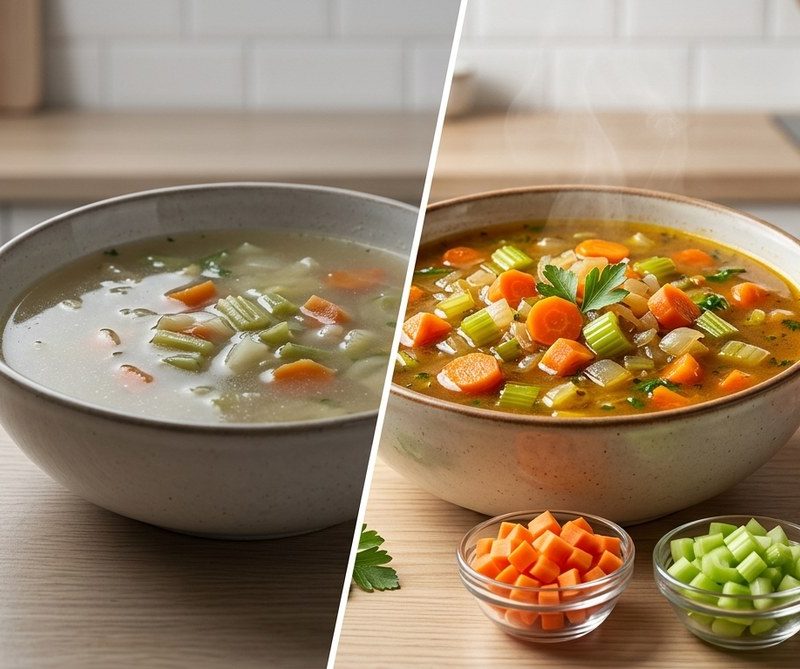
You pull the lid off a pot of soup you have been simmering for an hour. The aroma is promising. You grab a spoon, blow on the steam, and take a sip. And then you feel it. That hollow, one-note disappointment. The soup tastes like hot water with a vague hint of something. You are not alone. This is the exact moment most home cooks ask the internet: why does my soup taste flat?
The answer is almost never about salt. It is about structure. A soup needs a savory foundation that supports every other ingredient. Professional chefs call that foundation a mirepoix. It is a simple blend of diced onion, carrot, and celery gently cooked in butter or oil before any liquid goes into the pot. That humble trio is the difference between a bowl that tastes complete and one that tastes like it is missing something.
A mirepoix is a 2:1:1 ratio of finely diced onion, carrot, and celery cooked slowly in fat to create a flavor base. This mixture releases natural sugars and savory compounds that give soup depth. Without it, your soup lacks the aromatic backbone needed to carry other ingredients. Building a proper mirepoix before adding liquid solves flat soup every time.
What a Mirepoix Actually Does to Your Soup
A mirepoix is not a recipe. It is a technique. The word comes from French classical cooking, but the concept is universal. You take three vegetables that are cheap, shelf-stable, and packed with natural flavor. You chop them into small, uniform pieces. Then you cook them gently in fat until they soften and release their essence.
The onion brings sulfur compounds that taste savory and slightly sweet once heated. The carrot contributes beta-carotene and natural sugar that caramelizes in the pan. The celery adds a grassy, slightly bitter note that balances the sweetness. Together they form a triangle of flavor that nothing else can replicate.
When you skip this step and throw raw vegetables straight into water, you miss the chemical reaction that happens in the pan. The fat in the pan extracts fat-soluble flavor molecules that water alone cannot grab. That is why your soup tastes flat. You never gave the vegetables a chance to do their job.
The Three Most Common Reasons Your Soup Tastes Flat
Before you can fix bland soup, you need to know exactly where the problem started. Most home cooks make one of these three mistakes.
- You added vegetables directly to the liquid without cooking them in fat first.
- You used too much liquid relative to your solid ingredients, diluting the flavor.
- You did not season in layers, so the salt never integrated properly.
Let us break each one down.
Cooking vegetables directly in broth or water is the number one culprit. Raw vegetables release flavor slowly as they boil. But they never develop the deep, roasted notes that come from browning. A mirepoix solves this because you cook the vegetables in butter or oil before adding any liquid. That step alone changes the entire outcome.
Too much liquid is another common issue. A standard soup pot can hold a gallon of water. If you fill it to the top and only add a few cups of vegetables, the math does not work. The flavor gets spread too thin. A good rule is to keep your solid ingredients at about one-third of the total volume.
Salt added only at the end never penetrates the ingredients. It sits on the surface. You need to season the mirepoix as it cooks, then season the broth, then adjust at the end. This layered approach builds flavor from the inside out.
How to Build a Mirepoix in Four Steps
This process takes about ten minutes. It is not complicated. But it is intentional. Follow these steps the next time you make soup.
-
Dice one large onion, one large carrot, and two ribs of celery into pieces about a quarter inch across. Keep the sizes uniform so they cook at the same rate.
-
Heat two tablespoons of butter or olive oil in your soup pot over medium heat. Add the diced vegetables and stir to coat them in the fat.
-
Cook the mixture for five to seven minutes, stirring often. You are not trying to brown the vegetables. You want them to go translucent and soft. This is called sweating.
-
Once the vegetables look wet and glossy and the kitchen smells sweet and savory, add your liquid. Broth, water, canned tomatoes, whatever your recipe calls for. The mirepoix has already done its work.
Expert advice from chef Thomas Keller: “A mirepoix is not about the vegetables themselves. It is about the time you give them to release their flavor into the fat. Do not rush this step. The patience you show in the first ten minutes pays off in every spoonful.”
Mirepoix Mistakes and How to Avoid Them
Even experienced cooks make errors with this technique. Here is a table that shows the most common mistakes and the simple fix for each one.
| Mistake | What Goes Wrong | The Fix |
|---|---|---|
| Dicing pieces too large | Vegetables take too long to soften, and the fat burns before they release flavor | Keep pieces at 1/4 inch or smaller |
| Using too much heat | Vegetables brown instead of sweat, creating bitterness instead of sweetness | Keep heat at medium or medium-low |
| Skipping the fat | Vegetables steam in their own water and never develop depth | Always use butter, oil, or rendered bacon fat |
| Adding garlic or herbs to the mirepoix | Garlic burns and turns bitter; herbs lose volatile oils too early | Add garlic after the liquid goes in; add fresh herbs at the end |
| Overcrowding the pan | Vegetables release water and boil instead of sweat | Use a pot wide enough for a single layer of diced vegetables |
What to Do If Your Soup Is Already Flat
You have already made the soup. It is sitting on the stove. You taste it and that familiar flatness hits your tongue. Do not panic. You can fix it without starting over.
First, pull out about a cup of the liquid and set it aside. In a separate small pan, build a new mirepoix with fresh vegetables. Cook them slowly in butter until soft. Then puree that cooked mixture with a stick blender or a small food processor. Stir the paste back into the soup. The concentrated vegetable flavor will boost the entire pot.
Second, add an acid. A squeeze of lemon juice or a splash of white wine vinegar wakes up dull flavors. Acid cuts through the muddiness and makes every other flavor more distinct.
Third, finish with a fat. A drizzle of good olive oil, a pat of butter, or a spoonful of heavy cream adds mouthfeel and carries aroma. Fat is the vehicle that carries flavor to your taste buds.
The Science Behind Why a Mirepoix Works
Vegetables contain flavor compounds locked inside cell walls. Heat breaks those walls down. But the type of heat matters. When you cook vegetables in water, the water-soluble compounds like sugars and amino acids leach out into the liquid. That is good. But the fat-soluble compounds stay locked inside the vegetable fibers. They never make it into your soup.
When you cook the same vegetables in butter or oil, the fat pulls those fat-soluble compounds out. You get both the water-soluble and the fat-soluble flavors. That is why a mirepoix creates a fuller taste. It extracts the complete range of flavor that the vegetables have to offer.
This is also why soups made with a mirepoix taste richer even with less salt. The natural glutamates in the onion and celery provide umami, the savory taste that makes broth feel satisfying. If you want to understand umami at a deeper level, read the complete guide to umami-rich ingredients every home cook should know.
How a Mirepoix Compares to Other Soup Foundations
Some recipes call for a stock base. Some use a roux. Some rely on bones or meat. Each method has its place. But a mirepoix is the most accessible and fastest way to build flavor without special ingredients.
- Stock or broth requires hours of simmering bones and aromatics. A mirepoix takes ten minutes.
- A roux thickens soup but does not add vegetable flavor. A mirepoix adds both body and taste.
- Bones and meat give collagen and richness but can be expensive. A mirepoix costs pennies.
That does not mean you should skip stock. If you have homemade chicken stock, use it. But even the best stock tastes better when you start with a mirepoix. The two work together.
Seasonal Variations on the Classic Mirepoix
The standard mirepoix uses onion, carrot, and celery. But you can adapt it to the season or the cuisine you are cooking.
In spring, swap the carrot for fennel and add a leek. The flavor becomes lighter and more floral. This works well for vegetable soups and broths for fish.
In summer, use shallots in place of onion and add a small amount of bell pepper. The mirepoix stays sweet but gains a subtle grassy note that pairs with tomatoes and corn.
In fall, use parsnip instead of carrot and add a rib of celery root. This creates a deeper, earthier base that supports squash and root vegetable soups.
In winter, keep the classic trio but cook the mirepoix in bacon fat instead of butter. The smokiness carries through the whole pot and makes bean soups and lentil soups taste like they cooked all day.
For more on how to handle ingredients properly, check out 15 misunderstood cooking terms that are easier than you think. Many of those terms relate directly to the techniques used in building a mirepoix.
One Mirepoix, Many Soups
You do not need a different technique for every kind of soup. The mirepoix works across almost every style.
For a creamy potato leek soup, sweat the mirepoix in butter, add diced potatoes, pour in broth, and puree at the end. The mirepoix provides the savory backbone while the potato adds starch.
For a clear broth like a consommé, cook the mirepoix gently, add cold water, and simmer without stirring. The vegetables release their flavor without clouding the liquid.
For a chunky minestrone, cook the mirepoix, add canned tomatoes and water, then add the heartier vegetables like beans and cabbage later. The mirepoix dissolves into the background and supports everything else.
For a spicy tortilla soup, use oil instead of butter and add a pinch of cumin to the mirepoix as it sweats. The fat carries the cumin aroma through the whole bowl.
If you want to build a full week of meals around these principles, read how to build a weekly meal plan using ingredients you already have. It pairs naturally with the mirepoix method.
The One Tool That Makes Mirepoix Easier
You do not need a fancy knife or a mandoline. You need a sharp chef’s knife and a flat cutting board. Dull knives crush the vegetables and cause uneven cooking. A sharp knife gives you clean cuts and uniform pieces.
If you struggle with knife skills, focus on the size rather than the shape. A rough dice is fine as long as all the pieces are close to the same size. Uneven pieces mean some will overcook and some will stay raw. That creates an inconsistent flavor base.
For a deeper look at knife work, visit how to master the art of knife cuts without a cooking class. The techniques there transfer directly to dicing a mirepoix.
A Simple Soup Recipe to Practice the Technique
Try this once, and you will never skip the mirepoix again.
Dice one medium yellow onion, one medium carrot, and two celery ribs. Heat two tablespoons of butter in a heavy pot over medium heat. Add the vegetables and a pinch of salt. Stir for six minutes until the onion turns translucent and the carrot softens.
Add four cups of low-sodium chicken broth. Bring to a gentle simmer. Add a bay leaf and a sprig of thyme. Let it cook for twenty minutes. Taste it. You will notice the broth has a roundness and depth that plain broth never has. That is the mirepoix at work.
Season with salt and pepper. Serve as is, or add cooked chicken, noodles, or beans. The base is strong enough to carry any addition.
Your Soup Will Never Taste Flat Again
That question you typed into the search bar, why does my soup taste flat, has a clear answer. You were missing the aromatic foundation that professional cooks rely on. A mirepoix is not a secret. It is not a fancy trick. It is a simple, repeatable method that takes ten minutes and costs almost nothing.
The next time you make soup, start with the mirepoix. Dice the vegetables small. Cook them slowly in fat. Watch them go soft and glossy. Then add your liquid. That single step will transform your soup from flat to full. You will taste the difference in the first spoonful. So will everyone at your table.