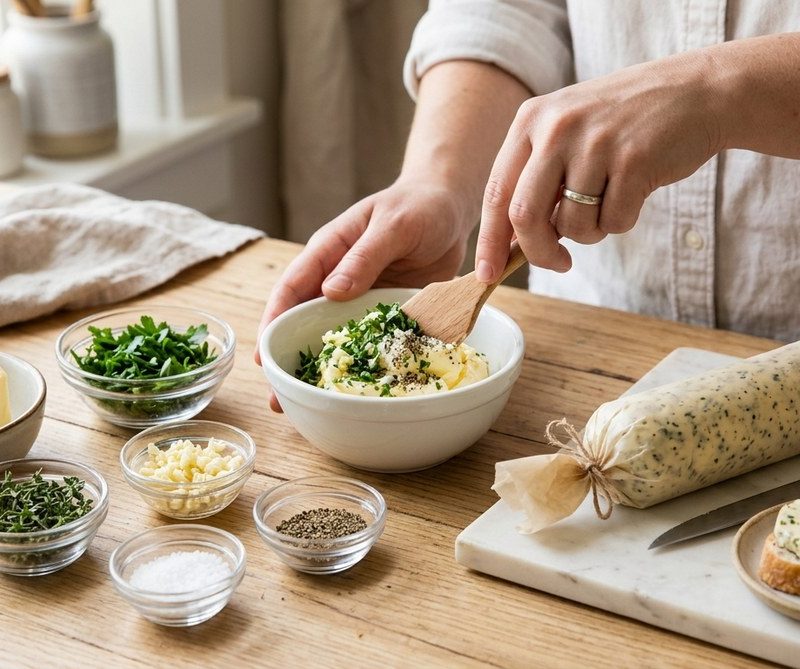
You have probably ordered a steak at a restaurant that arrived glistening with a glossy, herbed butter melting over the top. That steak tasted incredible. The secret was not a complicated sauce. It was compound butter. This simple mixture of softened butter and flavorful ingredients is a tool every home cook should keep ready. It transforms plain vegetables, grilled fish, pasta, or even a slice of bread into something memorable. The process is nearly effortless, and the results are consistently impressive.
Compound butter is simply unsalted butter blended with fresh herbs, spices, citrus zest, or savory aromatics to create a versatile finishing ingredient. To make it, soften butter to room temperature, thoroughly mix in your chosen flavors, roll it firmly into a compact log using parchment paper, and chill until completely firm. It lasts up to two weeks in the refrigerator and freezes beautifully for up to six months.
What Makes Compound Butter So Special
Compound butter, sometimes called beurre composé in French kitchens, is a flavored butter used to finish dishes. The science behind it is straightforward. Fat carries flavor exceptionally well. When you mix aromatic ingredients into butter, those flavors get suspended in a rich, creamy base that melts at body temperature. That is why a slice of compound butter on a hot steak melts into a smooth, flavorful sauce without any extra work.
Professional chefs rely on compound butter for two reasons. It saves time during service, and it adds a polished finish to plates. For home cooks, the advantages are even bigger. You can prepare a log of compound butter on a Sunday and use it throughout the week to improve everything from scrambled eggs to roasted chicken. It is one of the most practical techniques in modern cooking.
The Core Process for Making Compound Butter
The method for making compound butter is simple. Once you understand the basic steps, you can create endless variations. Here is the standard process broken down into five clear stages.
-
Choose and soften your butter. Always start with unsalted butter. Salted butter has inconsistent salt levels, which makes it harder to control the final flavor. High fat butter, like European-style brands, works best because it has less water and a richer taste. Let the butter sit at room temperature for about 45 to 60 minutes. It should be soft enough to dent easily with your finger but not shiny or greasy. If it starts to melt, it is too warm.
-
Prep your flavor ingredients. While the butter softens, prepare your add-ins. Chop fresh herbs finely. Grate citrus zest. Mince garlic or shallots. Toast spices or nuts. If you are using ingredients with high water content, like raw garlic or wet herbs, consider lightly sweating or roasting them first. Excess moisture can make the butter watery and reduce its shelf life.
-
Combine and taste. Place the softened butter in a medium bowl. Add your prepared ingredients. Use a rubber spatula to fold everything together until the ingredients are evenly distributed. Do not overmix, but make sure there are no streaks of plain butter. Once it looks uniform, taste it. Smear a tiny amount on a cracker or a piece of bread. This is your only chance to adjust the seasoning before it chills.
-
Season and adjust. Most compound butters need a little salt and a touch of acid. A pinch of flaky sea salt and a few drops of fresh lemon juice can make the difference between a flat butter and a bright, balanced one. If the flavor tastes muted, it likely needs salt. If it tastes heavy, it needs acid.
-
Shape into a log and chill. Scoop the mixture onto a sheet of plastic wrap or parchment paper. Form it into a rough log shape about 1.5 inches in diameter. Roll the paper tightly around the butter, using a bench scraper or ruler to push the butter into a compact cylinder. Twist the ends closed like a candy wrapper. Refrigerate for at least 2 hours, or until the butter is firm enough to slice cleanly.
Compound Butter Flavor Combinations
One of the best things about making compound butter is the range of flavors you can create. Here are some reliable combinations to get you started. Each recipe uses one standard stick of butter (4 ounces or 113 grams).
- Classic Garlic and Herb Butter: Mix in 3 cloves of roasted garlic (mashed into a paste), 2 tablespoons of finely chopped fresh parsley, 1 tablespoon of chopped chives, and 1 teaspoon of lemon zest.
- Sweet Honey and Thyme Butter: Combine 2 tablespoons of high-quality honey, 1 tablespoon of fresh thyme leaves, and a generous pinch of flaky sea salt. This is fantastic on cornbread or roasted carrots.
- Smoky Chipotle and Lime Butter: Stir in 2 chipotle peppers from a can of adobo sauce (minced), the zest of 1 lime, 1 teaspoon of smoked paprika, and a pinch of cumin.
- Rich Gorgonzola and Walnut Butter: Use a fork to mash 1/4 cup of crumbled Gorgonzola cheese into the butter. Fold in 1/4 cup of toasted, chopped walnuts and a generous crack of black pepper.
- Everything Bagel Butter: Mix in 2 tablespoons of everything bagel seasoning, 1/2 teaspoon of garlic powder, and 1/2 teaspoon of onion powder. This is ideal for finishing a warm bagel or topping a baked potato.
Common Mistakes and How to Avoid Them
Making compound butter is easy, but a few small errors can lead to disappointing results. The table below outlines the most common problems and how to solve them.
| Common Mistake | Why It Happens | How to Fix It |
|---|---|---|
| Butter is too soft or greasy | Over-softening or letting it get too warm | Start over with chilled butter. You want it pliable, not melted. |
| Flavor tastes flat or bland | Not enough salt or acid | Add a pinch of salt and a drop of lemon juice, then re-taste. |
| Butter log is watery | Using wet ingredients like raw garlic or un-dried herbs | Pat herbs dry. Roast or sweat high-moisture vegetables before adding. |
| The log is misshapen or has air pockets | Not rolling tightly enough | Use parchment and apply firm pressure while rolling. Twist the ends tight. |
| Butter crumbles when sliced | It is too cold, or the mix was too dry | Let the log sit at room temperature for 5 to 10 minutes before slicing. |
Expert Advice on Letting Flavors Develop
“The most common mistake home cooks make is using the compound butter immediately after mixing. While you can technically do that, the flavors are not married yet. Give the log at least two hours in the fridge, but overnight is better. The garlic mellows, the herbs infuse the entire stick, and the salt distributes evenly. That rest time turns a simple flavored butter into a deeply cohesive ingredient. Patience is the secret.” This advice comes from years of watching cooks rush the process. A little waiting goes a long way.
How to Store Compound Butter
Compound butter stores beautifully, which makes it perfect for cooking ahead. Wrap the log tightly in plastic wrap or parchment paper. For extra protection in the freezer, wrap it again in aluminum foil or place it inside a freezer bag.
In the refrigerator, compound butter stays fresh for one to two weeks. In the freezer, it keeps its quality for three to six months. To use it, simply slice off a round from the frozen log. It will melt directly onto hot food without any problem. You never need to thaw it first.
Practical Ways to Use Compound Butter
A log of compound butter in your fridge or freezer opens up many possibilities. You can use it in several ways.
- Finishing proteins: Place a slice on top of a grilled steak, pan-seared chicken breast, or baked fish fillet.
- Vegetables: Toss hot steamed or roasted vegetables in a pat or two until they are glossy and seasoned.
- Pasta: Stir a few tablespoons into hot pasta along with a splash of pasta water for an instant sauce.
- Bread: Spread it on crusty bread and broil until bubbly and golden.
- Rice and grains: Add a slice to cooked rice, quinoa, or couscous for richness.
If you enjoy learning techniques that make weeknight cooking easier, you might also like this guide on building a flavor profile. It teaches the same layering principles used in compound butter. For those who love preparing ingredients ahead of time, compound butter fits perfectly into a realistic batch cooking routine. And if you are curious about how fats and liquids combine to create stable sauces, reading about emulsification in cooking will deepen your understanding of the process.
Build Your Own Signature Blend
The best part of making compound butter is the freedom to experiment. Think about flavors you already love. If you enjoy a certain herb blend on roasted potatoes, try mixing those herbs into butter. If you have a favorite cheese, crumble it into the mix. Trust your palate.
Start with a single stick of butter. Pick one herb, one spice, and one aromatic. Mix them together, taste, and adjust. Before long, you will have a fridge stocked with flavor packed logs ready to improve any simple meal. Give it a try this weekend. You will be surprised how something so simple can change the way you cook every day.