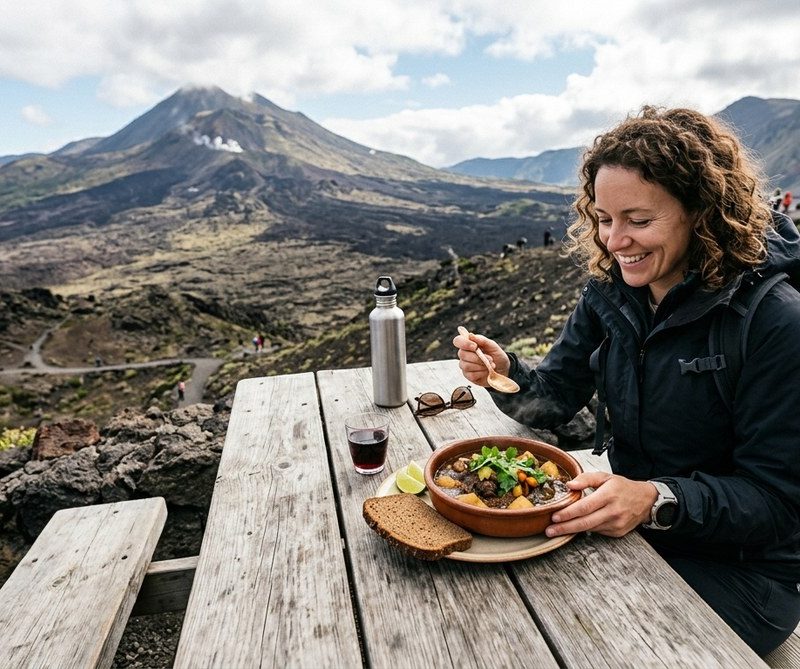
Picture yourself sitting on a ridge overlooking a steaming caldera, fork in hand, ready to dig into a hot meal. The view is unreal, the air smells faintly of sulfur, and your lunch is steaming too. But that steam is not just from the pot. In volcanic regions, the ground itself can cook your food, burn your hands, or send toxic gases into your picnic spot. Eating near active geology is not like dining at your local park. It takes a little know-how to keep the experience memorable for the right reasons. This guide will show you exactly how to safely enjoy a meal in volcanic terrain, whether you are hiking Hawaii Volcanoes National Park, trekking Mount Etna, or exploring Iceland’s Reykjanes Peninsula.
Eating safely in a volcanic region means choosing the right foods, using proper gear, and understanding how heat and gas behave around active vents. Avoid sealed containers that may explode, never cook directly on lava without a barrier, and keep your food covered against ash. With smart planning, you can enjoy hot meals without burns or contamination.
Why Volcanic Dining Is a Different Kind of Heat
Volcanic heat is not like a campfire. It radiates from the ground unevenly, can exceed 1,000 degrees Fahrenheit in some spots, and often comes with invisible dangers like hydrogen sulfide gas. You cannot just throw a steak on a rock and call it dinner. The ground may look solid but could be a thin crust over molten material. Ash from eruptions can contaminate your food with sharp silica particles. And the temperature around steam vents can scorch your skin in seconds.
Even in dormant volcanic areas, geothermal activity can heat the soil to unsafe levels for food preparation. Think of it this way: you would not set up a picnic on a hotplate left on high. Volcanic terrain is that hotplate, but you cannot see the dial. That is why you need specific strategies to how to safely eat in a volcanic region.
Essential Gear for Volcanic Food Prep
Before you pack your cooler, make sure you have the right tools. Standard camping gear will not cut it here. You need items that protect against heat, ash, and gas.
- Heat-proof gloves made of silicone or Kevlar. Regular oven mitts can melt on hot rocks.
- A portable gas stove with a wind guard. Avoid using volcanic steam vents to cook; they can release toxic gases.
- Insulated food containers that keep hot foods hot and cold foods cold without leaching chemicals.
- A respirator or N95 mask in case of ashfall during meals.
- Silicone or metal utensils rather than plastic, which deforms under high ground heat.
- Sealable bags for storing leftovers to keep out ash and insects.
Do not forget a sturdy mat or blanket to sit on. The ground may be warm, but direct contact with hot soil can cause burns through thin fabric.
The 5 Steps to a Safe Volcanic Meal
Follow this numbered process every time you eat in an active or dormant volcanic zone. It will keep you out of trouble.
-
Scout your spot carefully. Look for flat ground at least 100 feet away from steam vents, fumaroles, or visibly hot surfaces. Check wind direction so smoke and gas blow away from you. If the ground feels warm through your shoe, find another location.
-
Prepare food away from the heat source. On a portable stove, cook your meal at a safe distance. Never place cookware directly on volcanic rock unless you have a heatproof barrier like a steel plate. The rock can crack or explode from moisture trapped inside.
-
Cover food immediately after cooking. Ash can drift for miles even if no eruption is happening. Keep a lid or foil on everything. If you are eating outdoors, use a mesh food tent to block falling debris while letting steam escape.
-
Check the temperature before eating. Use a food thermometer. Food cooked on a stove is fine, but any food that sat on warm ground may have heated unevenly. Bacteria thrive in the “danger zone” between 40 and 140 degrees.
-
Clean up with minimal waste. Pack out all trash. Volcanic environments are fragile. Burying food scraps can attract animals that may dig into unstable ground. Carry a sealable bag for used wipes and utensils.
Smart Food Choices for Volcanic Adventures
Not every meal works well when you are near a volcano. You want foods that are easy to handle, do not spoil quickly, and do not require complicated prep. Here is a table comparing good options versus ones that can cause trouble.
| Good Choices | Why They Work | Bad Choices | Why to Avoid |
|---|---|---|---|
| Canned beans (puncture open before heating) | Low risk of explosion if vented | Sealed canned drinks | Can burst from pressure buildup near vents |
| Dehydrated meals | Minimal prep, no raw ingredients | Eggs | Can cook unevenly on hot ground, risk of salmonella |
| Cheese and cured meats | Low moisture, resistant to ash | Fresh berries | Perishable and easily contaminated by ash |
| Bread or tortillas | Portable, no cooking needed | Greasy fried foods | Oil can spatter on hot rocks and ignite |
| Nuts and trail mix | Shelf stable, no cleanup | Chocolate bars | Melt instantly in high ambient heat |
“I have seen travelers try to boil water directly in a steam vent. The water turned acidic and made them sick. Use your own stove and bring your own water. The geothermal show is for your eyes, not your stomach.”
Dr. Elena Marchetti, volcanologist and backcountry chef
Common Mistakes That Lead to Burns or Illness
Even experienced hikers can slip up. Here are the most frequent errors people make when learning how to safely eat in a volcanic region.
- Sitting too close to steam vents. The air temperature can spike suddenly if wind shifts. You may not feel the heat until your skin turns red.
- Using metal utensils on hot rocks without a barrier. The metal heats up instantly and can give you second-degree burns through the handle.
- Drinking from open bottles near gas vents. Hydrogen sulfide can dissolve into water, giving it a rotten egg taste and causing nausea.
- Leaving food unattended on the ground. Animals like rats and birds can carry ash onto your meal. Also, hot ground can melt plastic wrap.
- Forgetting that volcanic soil is often acidic. Roots and plants that grow in it can concentrate heavy metals. Foraging for wild edibles near a volcano is risky unless you know the specific species.
When Emergencies Happen: First Aid for Volcanic Dining
Even with all precautions, accidents happen. A burn from a hot rock or a splash of scalding water needs quick action. Always carry a small first aid kit with burn cream, sterile gauze, and clean water. If you inhale volcanic gas while eating, move to fresh air immediately and drink plenty of water. Seek medical help if you feel dizzy or have trouble breathing.
In 2026, many volcanic parks have updated their safety guidelines. Check ranger stations for real time warnings about gas levels or ash plumes. Some trails close without notice when volcanic activity picks up.
Turning Volcanic Dining into a Trip Highlight
Eating safely does not mean you have to miss out on the fun. In places like Iceland, you can find geothermal bakeries where bread is baked in the ground by natural steam. These are professionally operated and safe. In Hawaii, you can enjoy a picnic on the rim of Kilauea as long as you follow park rules. The key is to respect the land and use the right techniques.
If you love combining adventure with food, you might also enjoy a week long culinary journey through Tuscany where the heat comes from wood fired ovens, not lava. Or check out the [[48 Hours of Street Food Paradise in https://foodlexicon.net/48-hours-of-street-food-paradise-your-ultimate-bangkok-eating-guide/) for a different kind of spice.
Your Next Meal on the Edge
Volcanic regions offer some of the most dramatic backdrops for a meal you will ever experience. With the right preparation, you can enjoy a hot coffee while staring into a crater without worrying about burns or contaminated food. Remember the basics: scout your spot, use your own stove, cover your food, and keep your fingers away from anything that is steaming without a clear source. Practice the steps above on your next hike, and you will come home with stories of amazing views, not a trip to the emergency room.
Now pack your heat resistant gloves, choose your trail, and go taste the edge of the world. Just keep the food on your plate, not on the volcano.