Southeast Asia is a place where you can find a meal on almost every corner. But some of the most memorable dishes are the ones that hide in plain sight. They are not served in the famous night markets or written about in guidebooks. These are the elusive street foods. The dishes that require a bit of local knowledge, a willingness to ask for directions, and a sense of adventure. They might be a bowl of soup sold from a bicycle at 5 AM, or a grilled skewer that only appears when the monsoon rain stops. Finding them changes how you understand a place.
Tracking down elusive street foods in Southeast Asia is about process, not luck. This guide teaches you how to find vendors without social media, how to communicate without a common language, and how to eat safely when you are far from the tourist path. You will learn the specific techniques to locate, order, and enjoy the rarest street foods.
What Makes a Street Food Truly Elusive
A dish becomes elusive for a few reasons. It might be seasonal, like the deep fried insects that appear only during the rainy season in Isan, Thailand. It might be hyper local, like the mont lin ma yar (a crunchy fermented tea leaf salad) found only in a specific neighborhood in Yangon. Or it might be disappearing, as younger generations move away from traditional cooking methods.
Elusive foods are not the same as exotic foods. You can find fried scorpions in tourist markets across Bangkok. Those are easy. An elusive food requires you to know someone who knows someone. It is the khao soi (a curried noodle soup) made by a family in Chiang Mai who does not advertise. It is the isaw (grilled chicken intestines) sold from a cart that moves to a different spot every night in Manila.
A Step by Step Process for Tracking Them Down
You cannot just wander around hoping to stumble upon these dishes. You need a strategy. Here is a process that works across the region.
-
Identify the dish by name first. Do your research before you arrive. Learn the local name for the food you want to try. For example, if you want to find balut (a fertilized duck egg) in the Philippines, you need to know that word. Saying “the egg with the duck inside” will not get you far. Use resources like our guide on discovering hidden culinary gems in Vietnam’s street food cities to get started on specific dishes.
-
Ask the right people. Do not ask your hotel concierge. They are trained to send you to safe, easy places. Instead, ask a tuk tuk driver, a market vendor, or a barista at a local coffee shop. Use this exact phrasing: “Where do you eat [dish name]?” Not “Where can I find [dish name]?” The word “you” changes everything. It signals that you want their personal spot, not a tourist spot.
-
Go at the right time. Many elusive foods are only available at certain hours. The noodle soup that sells out by 7 AM. The fried banana vendor who only sets up after 10 PM. Ask about timing when you ask for the location. If they say “morning,” ask “What time?” and confirm by saying “5 AM or 8 AM?”
-
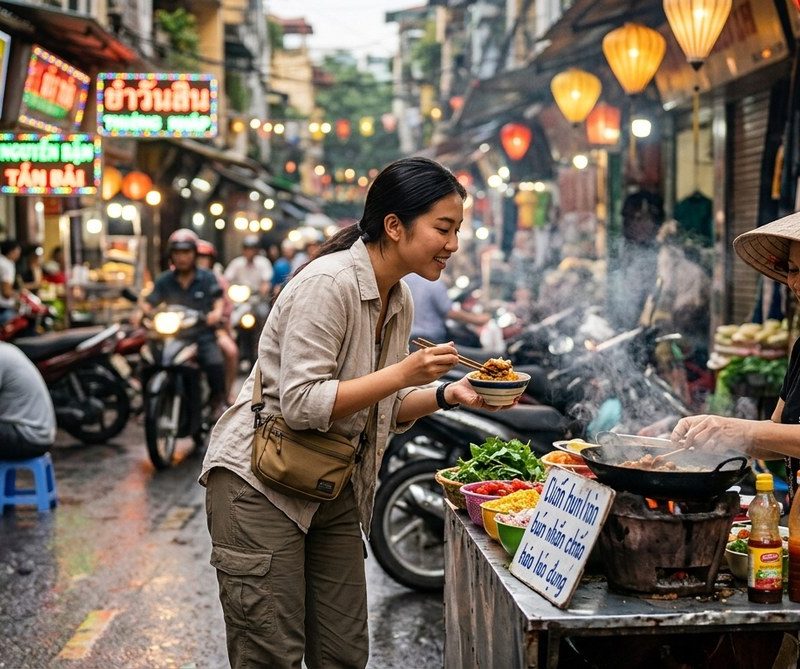
Follow the locals, not the crowds. Look for a line of people who are not holding cameras. If everyone in line is on their phone and looks like a traveler, you are in the wrong spot. A line of local workers in uniforms is a good sign. A line of people holding selfie sticks is not.
-
Use a map pin, not a name. When someone tells you where to go, ask them to drop a pin on Google Maps on their phone. Street names are often inconsistent in Southeast Asia. A pin is reliable. Save the location and screenshot the pin in case you lose signal.
Key Techniques for Ordering and Eating
Once you find the vendor, the real work begins. You might face a language barrier, a lack of a menu, or a cooking process you have never seen before. These techniques will help.
- Point, smile, and say “one.” If there is no menu, point at what someone else is eating. Smile. Hold up one finger. This works in every country.
- Watch how locals eat it first. Notice the condiments they add. Notice if they peel something, dip something, or mix something. Copy them exactly. You might miss a crucial step otherwise.
- Carry small bills. Vendors who sell elusive foods often do not have change for large bills. Have small denominations of the local currency ready.
- Use Google Translate offline. Download the language pack for the country before you arrive. Type in “I want to try your specialty” and show the screen. It is not perfect, but it shows respect.
“The best advice I ever got was from a vendor in Luang Prabang. He said, ‘Do not ask me what is in it. Just eat it and tell me if you like it.’ That is the spirit you need. Trust the cook. They have been making this for decades.” — Chef Ananda, street food tour guide in Laos.
Common Mistakes and How to Avoid Them
Even experienced food travelers make errors when hunting for elusive foods. Here is a table of the most common mistakes and the correct approach.
| Mistake | Why It Fails | The Correct Approach |
|---|---|---|
| Asking for “the best” food | It signals you want a tourist recommendation. | Ask for “your favorite” or “where you go.” |
| Going to a famous market at peak hour | Vendors are rushed and may serve lower quality. | Go at off hours. Early morning or late evening. |
| Refusing to try something unfamiliar | You miss the whole point of the hunt. | Say yes to the first three things offered. |
| Taking photos before eating | It signals that you care more about the photo than the food. | Eat first. Ask permission to photograph after. |
| Not confirming the price | You risk being overcharged or creating awkwardness. | Ask “How much?” before they start cooking. Point to the money if needed. |
The Elusive Foods Worth the Hunt
Some dishes are worth a dedicated trip. Here are a few that fit the definition of elusive and rewarding.
Khao soi (Chiang Mai, Thailand)
This is not the same as khao soi in other parts of Thailand. The Chiang Mai version is a rich, coconut based curry with soft egg noodles, often topped with crispy fried noodles. It is served from morning until it runs out, usually by 11 AM. You will find it in the old city, but the best versions are in residential areas. Look for a cart with a long line of scooters parked nearby.
Mont lin ma yar (Yangon, Myanmar)
This is a fermented tea leaf salad that is crunchy, sour, and savory. It is often sold by women carrying baskets on their heads in the morning. It is not a restaurant dish. You have to catch them as they walk through neighborhoods. The best way to find it is to stay in a local guesthouse and ask the owner to introduce you to the woman who passes by each morning.
Balut (Manila, Philippines)
This fertilized duck egg is sold by vendors who push carts through residential areas in the evening. They announce themselves with a distinct call. You will hear “Balut! Balut!” echoing through the streets after dark. The trick is to find a vendor who sells them hot, not reheated. The best ones are cooked that afternoon. Ask the vendor “Bago ba ito?” (Is this new?) to confirm freshness.
Grilled scorpions and silkworms (Isan region, Thailand)
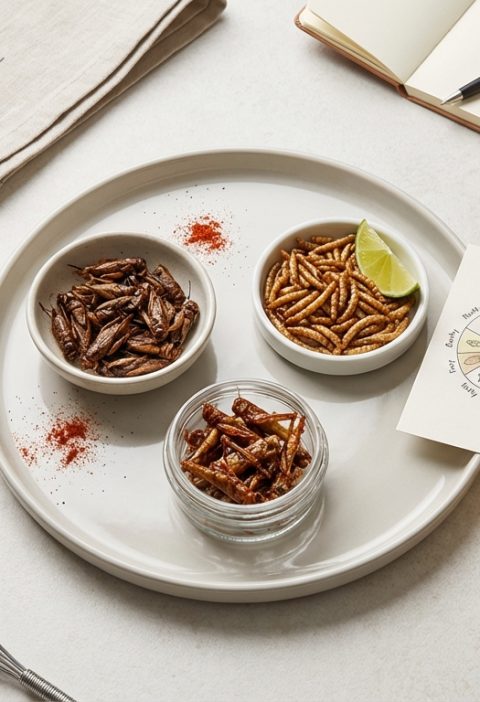
While you can find these in Bangkok, the authentic experience is in the northeastern Isan region. Vendors there fry them fresh, often using a family recipe for seasoning. They are not a novelty item. They are a protein source with a long history. To find them, visit a local market during the rainy season (May to October). Look for baskets of live insects. The vendor will grill or fry them to order.
Durian (various locations)
Durian is not technically elusive, but finding a truly good one is. The best durians are sold from roadside trucks, not in supermarkets. The trucks often appear at night and sell until the fruit is gone. In Malaysia, look for trucks with a large sign that says “Durian” and a small crowd gathered around. The vendor will open the fruit for you to inspect. If they hesitate, walk away.
How to Eat Safely When You Are Off the Tourist Path
Eating elusive foods comes with some risk. Your stomach may not be used to the local bacteria or the level of spice. Here is how to minimize problems without missing out.
- Eat where the locals eat. If a vendor has a steady stream of customers, the food is fresh and the turnover is high. Stale food is the real danger, not street food itself.
- Watch the cooking process. Make sure the food is cooked in front of you or kept at a high temperature. Avoid anything that has been sitting out uncovered for hours.
- Bring your own utensils. Carry a small set of chopsticks or a spoon. Some vendors reuse utensils without proper washing.
- Start with small portions. Order one item first. Wait 30 minutes. If your stomach feels fine, order more.
- Stay hydrated with bottled water. Do not drink tap water. Avoid ice unless you see it being made from sealed bags.
- Pack digestive enzymes or probiotics. Taking them before your meal can help your body adjust to unfamiliar foods. You can find more advice on handling extreme eating in our guide to bizarre delicacies.
A Final Piece of Advice
The best elusive street food experience I ever had was in a small alley in Ho Chi Minh City. I was following a tip from a xe om (motorbike taxi) driver. He told me to go to an alley near the Ben Thanh market at 6 AM and look for a woman with a blue hat. I found her. She was selling a version of banh canh (thick noodle soup) with crab. There was no sign. No menu. Just a small plastic stool and a line of local workers.
I sat down. I pointed. I ate. It was the best meal of my trip. I never learned her name. I never saw her again. That is the nature of elusive street foods. They are not meant to be collected or checked off a list. They are meant to be found, enjoyed, and remembered.
So get out there. Talk to people. Follow the scent of charcoal and fish sauce. And when you find something strange and wonderful, sit down and eat it. Your taste buds will thank you.
If you want to build a longer trip around these experiences, check out our 48 hour street food guide to Bangkok or our guide to navigating a traditional night market for more practical tips.