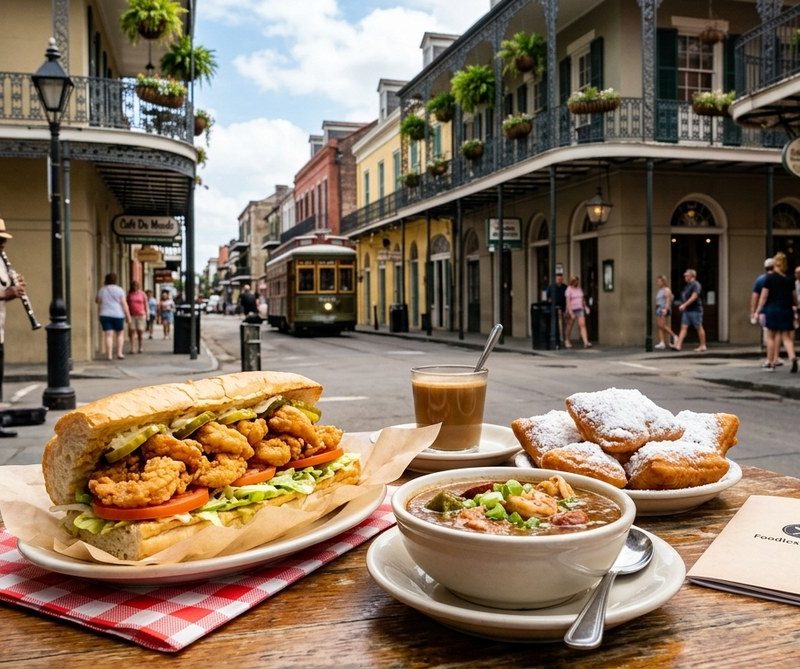
The smell of hot frying oil and warm powdered sugar hits you before you even reach the front door. A block away, a brass band spills out onto Royal Street. Someone walks past carrying a paper bag with a loaf of French bread stuffed with fried shrimp, and you know you are in the right place. New Orleans does not just have good food. It breathes food. Every corner, every menu, every late-night counter tells a story of French, Spanish, African, and Native American influences that have simmered together for centuries. For a food-focused traveler with just three or four days, the challenge is not finding something good to eat. The challenge is deciding what to eat first.
New Orleans is a city built on flavor. From crispy fried oysters tucked into a po’ boy to powdered sugar dusting a warm beignet, every bite tells a story. This long weekend itinerary guides you through essential dishes: gumbo, po’ boys, beignets, and more. You will learn where to eat, what to order, and how to eat like a local in just three days. Let the good times roll with this carefully curated eating plan.
How New Orleans Became a Food Lover’s Paradise
New Orleans sits at a unique crossroads. The port city drew people from around the world: French colonists, Spanish governors, enslaved Africans, Sicilian immigrants, German butchers, and Vietnamese fishermen. Each group brought ingredients and techniques that blended into Creole and Cajun cooking. Creole cuisine developed in the city, using butter, cream, and tomatoes. Cajun food came from the rural bayous, relying on pork, rice, and the dark roux that gives gumbo its deep color.
The result is a regional food culture with no equal in the United States. When you order a po’ boy, you are eating a sandwich that fed streetcar workers during a 1920s strike. When you bite into a beignet, you are tasting a tradition that goes back to French settlers. When you spoon up gumbo, you are tasting West African okra, French roux, and Choctaw filé powder all in one bowl.
You can read about the broader history of how different cultures shaped American kitchens in our piece on how immigration transformed American cuisine.
Your Three-Day Food Itinerary
This plan assumes you arrive Friday afternoon and leave Monday morning. That gives you three full days of eating with room for rest and wandering. Each day focuses on a different part of the city and a different set of iconic dishes.
Day 1: The French Quarter Classics
Start your trip where most visitors begin: the French Quarter. But skip the tourist-trap spots on Bourbon Street. You want the places where locals still line up.
Breakfast at Café du Monde. This is non-negotiable. The beignets arrive three to an order, puffy and golden, buried under a blizzard of powdered sugar. Order a café au lait made with chicory. The chicory root gives the coffee a slightly bitter, almost chocolatey note that balances the sugar. Grab a table outside and watch the horse-drawn carriages clatter by.
Lunch at Johnny’s Po-Boys. Walk a few blocks to this no-frills counter on St. Louis Street. Order the fried shrimp po’ boy dressed. Dressed means lettuce, tomato, pickle, and mayonnaise. The bread should be crusty on the outside and soft inside. If the shell of the shrimp cracks when you bite, you are in good hands.
Afternoon snack at Central Grocery. Head to Decatur Street for a muffuletta. This massive round sandwich layers salami, mortadella, ham, provolone, and olive salad on sesame bread. It was invented here in 1906. Share one with a friend. It is a meal, not a snack.
Dinner at Commander’s Palace. This Garden District institution is worth the short streetcar ride. Order the turtle soup with sherry and the bread pudding soufflé. The dress code is smart casual. Reservations are required. If you want a more casual option, try Mandina’s in Mid-City for a bowl of seafood gumbo and a roast beef po’ boy.
Late night at Coop’s Place. Tucked away on Decatur, this dive bar serves rabbit and sausage jambalaya that will ruin you for all other jambalaya. Cash only. Go before 10 p.m. to avoid the line.
Day 2: Beyond the Quarter
Today you leave the French Quarter and see how the rest of the city eats. The neighborhoods of Tremé, Bywater, and Uptown hold some of New Orleans’ best food.
Breakfast at Elizabeth’s. This Bywater gem serves praline bacon. Yes. Bacon glazed with pecan praline. It sounds gimmick. It is not. Order it alongside a plate of cheese grits and a Bloody Mary. The outdoor patio is perfect for a slow morning.
Lunch at Li’l Dizzy’s. This Tremé spot feels like someone’s grandmother opened a restaurant. Order the fried chicken and the gumbo. The gumbo comes dark and thick, with andouille sausage, chicken, and a generous scoop of rice. Ask for a side of potato salad. In New Orleans, potato salad goes right on top of gumbo.
Afternoon snack at Hansen’s Sno-Bliz. This frozen treat stand has been making snowballs since 1939. The ice is shaved so fine it feels like fresh snow. Order nectar cream or satsuma flavor. This is not a snow cone. This is a New Orleans snowball, and it is a perfect break from the heat.
Dinner at Brigtsen’s. Chef Frank Brigtsen runs this Uptown cottage restaurant that feels like a dinner party. The menu changes daily, but you want anything with crawfish, duck, or Gulf fish. The pecan-crusted drum is a standout.
Late night at Willie Mae’s Scotch House. This legendary fried chicken spot in Tremé stays open late enough for a second dinner. The chicken is brined, battered, and fried to a deep golden crust that shatters when you bite. Expect a wait. It is worth it.
Day 3: A Final Feast
Your last full day. Time to hit the dishes you missed and buy souvenirs to take home.
Breakfast at the Ruby Slipper. Multiple locations across the city. Order the bananas Foster French toast. It uses caramelized bananas, rum sauce, and a custard-soaked bread that borders on dessert.
Lunch at Parkway Bakery and Tavern. This Mid-City institution serves what many call the best po’ boy in the city. Order the roast beef debris. Debris is the slow-cooked beef that falls apart into the gravy. Get it fully dressed with extra gravy on the side.
Afternoon at the French Market. This is where you shop for gifts and snacks. Pick up a jar of Zatarain’s Creole seasoning, a bag of chicory coffee, and a bottle of Crystal hot sauce. Every pantry needs these.
Last dinner at Galatoire’s. This Bourbon Street restaurant has been serving Creole classics since 1905. The dress code is coat and tie for men. Order the shrimp remoulade, the trout amandine, and the crème brûlée. This is your final meal. Make it count.
Nightcap at the Carousel Bar. Inside the Hotel Monteleone, the bar actually rotates slowly. Order a Vieux Carré, a cocktail invented here in 1938. It blends rye whiskey, cognac, sweet vermouth, Benedictine, and bitters. Sip it slowly while the room spins gently around you.
Must-Try Dishes at a Glance
This table covers the core dishes you need to try and tells you what to look for in each.
| Dish | What Makes It Authentic | Where to Find a Great Version |
|---|---|---|
| Po’ Boy (shrimp) | Crispy fried Gulf shrimp, Leidenheimer French bread, dressed with lettuce, tomato, pickles, mayo | Johnny’s Po-Boys or Parkway Bakery |
| Gumbo | Dark roux cooked until mahogany, andouille sausage, chicken or seafood, okra or filé powder | Li’l Dizzy’s or Mandina’s |
| Beignet | Deep-fried pillowy dough, powdered sugar, served hot in orders of three | Café du Monde (open 24 hours) |
| Muffuletta | Round sesame bread, layered meats, provolone, olive salad | Central Grocery |
| Jambalaya | Rice cooked with meat and vegetables, not soupy, deeply seasoned | Coop’s Place |
| Fried Chicken | Brined, battered, fried until deep golden brown | Willie Mae’s Scotch House |
| Bread Pudding | Custard-soaked bread, often with whiskey sauce, served warm | Commander’s Palace |
How to Plan Your Food Weekend Like a Local
Follow these steps to make sure you eat well without burning out.
-
Make reservations early. Commander’s Palace, Galatoire’s, and Brigtsen’s book up weeks ahead. Call or use OpenTable as soon as you book your flight.
-
Share everything. Portions in New Orleans are generous. A muffuletta feeds two. A po’ boy half is enough for lunch. Sharing lets you try more dishes.
-
Build in breaks. Do not schedule five meals in a row. Walk through the Garden District. Nap in your hotel room. Sit in Jackson Square and watch the artists. Your stomach needs rest.
-
Carry cash. Coop’s Place, Hansen’s Sno-Bliz, and Willie Mae’s are cash only. Many smaller spots have minimums for credit cards.
-
Drink water. Between the heat, the spice, and the frying, New Orleans can dehydrate you. Drink a glass of water between every cocktail.
-
Eat at odd hours. Lunch at 11:00 a.m. Dinner at 5:00 p.m. You skip the lines and get better service. Late night is for jambalaya and beignets, not sit-down meals.
If you love this kind of structured eating trip, you might enjoy our guide to how to eat your way through Mexico City in three days. The approach is similar, but the flavors are completely different.
Local Wisdom for First-Time Visitors
“Do not order the gumbo at a place that also serves hamburgers. Do not order a po’ boy at a place that calls it a sub. And for the love of all that is holy, do not put ketchup on your red beans and rice. The locals will know.” — A Creole chef on Royal Street
This advice cuts to the heart of eating in New Orleans. The best food comes from places that specialize. A po’ boy shop should look like a po’ boy shop, with a long counter and a fryer going nonstop. A gumbo spot should smell like roux before you walk in. If a restaurant serves everything from pizza to pad thai, skip it. New Orleans rewards focus.
A Final Word on Eating Your Way Through the Big Easy
A long weekend in New Orleans will stretch your waistband and your understanding of what American food can be. This city does not chase trends. It perfects traditions. The po’ boy you eat on Friday has roots in the 1920s. The beignet you dust with sugar comes from a recipe older than the United States. The gumbo you spoon up on Sunday afternoon holds centuries of trade, migration, and survival in every bite.
Eat slowly. Talk to your server. Ask what they order on their day off. Walk between meals. Drink something cold and sweet. And when you get home, order a box of beignet mix and a bag of chicory coffee so the trip does not have to end.
For another city that rewards a similar food-first approach, check out our guide to how to plan a perfect culinary weekend in Portland, Oregon. Both cities prove that the best way to understand a place is through its food.