Insects are already on the menu for over two billion people worldwide. If you’re curious about joining them, you’re not alone. More people in Western countries are trying edible insects every year, drawn by sustainability benefits, nutritional value, and simple curiosity about new flavors. But knowing where to start can feel overwhelming when you’re staring at a bag of dried crickets for the first time.
Eating insects begins with sourcing food-grade specimens from reputable suppliers, then preparing them through roasting, frying, or incorporating into familiar dishes. Start with mild-flavored species like crickets or mealworms, season them well, and integrate them into recipes you already love. Proper preparation removes the intimidation factor and reveals nutty, earthy flavors that complement many cuisines.
Sourcing Your First Edible Insects
Never collect insects from your backyard or local park. Wild insects may carry pesticides, parasites, or harmful bacteria. You need food-grade insects raised specifically for human consumption.
Online retailers specializing in edible insects offer the most reliable options. Look for suppliers who provide details about their farming practices and food safety certifications. Many ship dried, roasted, or frozen insects that arrive ready to cook or eat.
Local specialty food stores and international markets sometimes stock edible insects, particularly in areas with large Asian or Latin American communities. Bangkok street markets have long featured insects as everyday snacks, and similar products now reach Western markets.
Start with these beginner-friendly options:
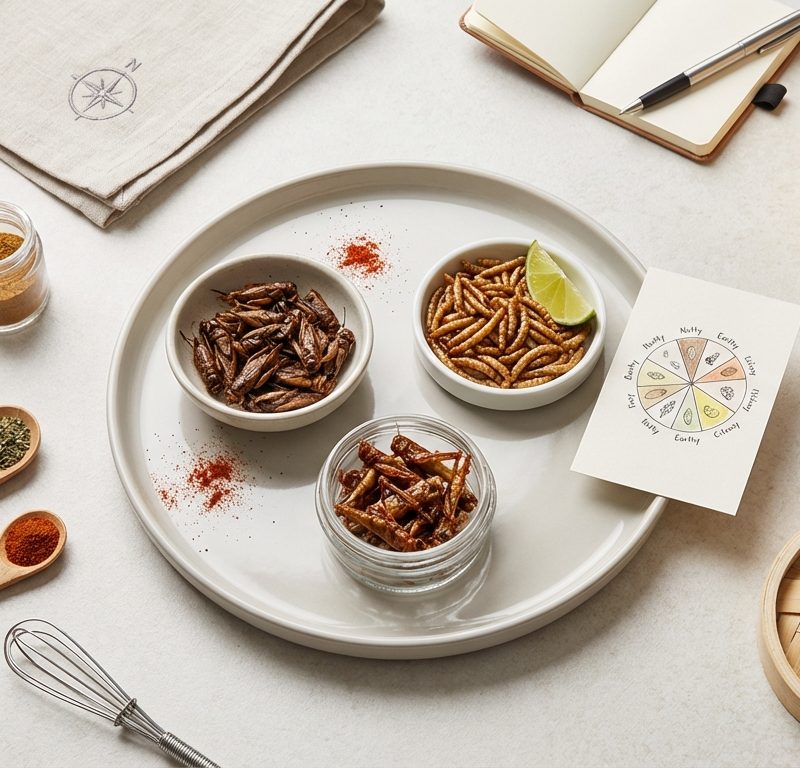
- Crickets – Mild, slightly nutty flavor similar to sunflower seeds
- Mealworms – Subtle taste with a texture like crispy nuts when roasted
- Grasshoppers – Earthy and robust, comparable to leafy greens
- Black ants – Citrusy and tangy from natural formic acid
Avoid jumping straight to more challenging insects like water bugs or scorpions. Build your confidence first.
Safety Considerations Before You Cook
Treat insects like any other protein. Food safety rules still apply.
Check for allergies first. People with shellfish allergies often react to insects because both groups share similar proteins called tropomyosins. If you’re allergic to shrimp, crab, or lobster, consult your doctor before trying insects.
Verify the expiration date on packaged insects. Dried insects typically last several months when stored in a cool, dry place. Frozen insects should remain solidly frozen until you’re ready to use them.
Inspect your insects before cooking. They should smell neutral or slightly nutty, never sour or rotten. Discard any that show signs of mold or unusual discoloration.
Always cook insects thoroughly unless the package explicitly states they’re ready to eat. Cooking kills potential pathogens and improves digestibility. Most insects need at least 10 minutes at 350°F or higher.
“Cooking insects isn’t just about safety. Heat develops flavor through the Maillard reaction, the same chemical process that makes roasted coffee and grilled meat taste good. Raw insects taste bland. Cooked insects taste interesting.” – Chef Joseph Yoon, Brooklyn Bugs
Preparing Insects for Cooking
Preparation varies by species and how you purchased them.
For dried insects: Rehydrate them in warm water for 15 to 20 minutes if you want a softer texture. Pat them completely dry before cooking. Skip rehydration if you prefer extra crunch.
For frozen insects: Thaw them in the refrigerator overnight. Drain any excess liquid and pat dry with paper towels.
For live insects: Some suppliers sell live insects, particularly mealworms. Freeze them for at least 48 hours to humanely kill them, then proceed as you would with frozen insects.
Remove wings and legs from larger insects like grasshoppers and crickets. These parts turn papery and unpleasant when cooked. Pull them off with your fingers or kitchen tweezers. Smaller insects like ants or mealworms need no prep beyond rinsing.
Rinse all insects under cold water before cooking, even if they look clean. This removes any residual debris from farming or processing.
Five Essential Cooking Methods
Different cooking methods produce different textures and flavors. Master these five techniques and you’ll handle any insect recipe.
1. Dry Roasting
Spread insects in a single layer on a baking sheet. Roast at 350°F for 10 to 15 minutes, shaking the pan halfway through. They’re done when they turn golden brown and feel completely dry.
This method works perfectly for crickets and mealworms. The result tastes like roasted nuts with a satisfying crunch.
2. Pan Frying
Heat two tablespoons of oil in a skillet over medium-high heat. Add insects in a single layer. Fry for 5 to 7 minutes, stirring occasionally, until crispy and golden.
Pan frying adds richness and creates the most familiar texture for hesitant beginners. The oil carries seasonings beautifully.
3. Boiling
Bring salted water to a rolling boil. Add insects and cook for 5 minutes. Drain thoroughly and pat dry.
Boiling works well as a first step before finishing with another cooking method. It softens the exoskeleton and makes insects easier to incorporate into dishes.
4. Grinding Into Powder
Roast insects until completely dry and crispy. Let them cool, then pulse in a spice grinder or food processor until you get a fine powder.
Insect powder disappears into recipes. Mix it into flour for baking, stir it into smoothies, or sprinkle it over finished dishes for a protein boost without the visual impact.
5. Incorporating Into Familiar Dishes
Cook insects using any method above, then add them to recipes you already love. Toss roasted crickets into stir-fries. Fold mealworms into tacos. Sprinkle ants over salads.
This approach removes intimidation. You’re not eating “bug food.” You’re eating your normal food with an interesting new ingredient.
Seasoning and Flavor Pairing Strategies
Plain insects taste mild and slightly nutty. Seasonings transform them into something memorable.
Salt enhances natural flavors. Season insects immediately after cooking while they’re still hot. The salt sticks better and penetrates deeper.
Try these proven seasoning combinations:
| Insect Type | Best Seasonings | Flavor Profile |
|---|---|---|
| Crickets | Chili powder, lime, garlic | Spicy, tangy, savory |
| Mealworms | Cinnamon, sugar, vanilla | Sweet, warm, dessert-like |
| Grasshoppers | Soy sauce, ginger, sesame | Umami-rich, Asian-inspired |
| Ants | Salt, black pepper, herbs | Bright, citrusy, fresh |
Insects pair naturally with bold flavors. Their subtle taste won’t compete with strong seasonings. This makes them perfect for highly spiced cuisines.
Mexican seasonings work exceptionally well. Chapulines (grasshoppers) seasoned with chili, lime, and salt are a traditional Oaxacan snack. The regional food traditions of Mexico have perfected insect preparation over centuries.
Asian flavors complement most insects. Soy sauce, fish sauce, lemongrass, and ginger all enhance the earthy, umami qualities of cooked insects.
Western herbs like rosemary, thyme, and sage create familiar flavor bridges. Roasted crickets with rosemary and sea salt taste similar to seasoned nuts.
Your First Insect-Eating Experience
Mental preparation matters as much as physical preparation. Acknowledge that eating insects feels strange at first. That’s normal and expected.
Start small. Eat one cricket, not a handful. Notice the texture and flavor without judgment. Most people report surprise at how unremarkable the experience feels once they actually try it.
Eat insects with friends. Social eating reduces anxiety and creates positive associations. When everyone tries something new together, the experience becomes an adventure rather than a challenge.
Choose familiar contexts for your first attempts. Add insects to foods you already enjoy. Crickets taste less intimidating when they’re mixed into chocolate chip cookies or sprinkled over pizza.
Don’t force yourself to look closely at whole insects if that creates resistance. Close your eyes for the first bite. Focus on flavor and texture rather than appearance.
Remember that texture often challenges beginners more than taste. Roasted insects feel crispy and dry, similar to puffed rice cereal or roasted chickpeas. The crunch becomes familiar after a few bites.
Common Mistakes and How to Avoid Them
New insect eaters make predictable errors. Learning from others’ mistakes saves you disappointment.
Mistake: Undercooking insects, leaving them chewy and unpleasant.
Solution: Cook longer than you think necessary. Insects should feel completely dry and crispy, never soft or rubbery.
Mistake: Using too few seasonings, resulting in bland, forgettable flavors.
Solution: Season aggressively. Insects absorb flavors well and need bold seasonings to shine.
Mistake: Buying insects from unverified sources without food safety certifications.
Solution: Purchase only from established suppliers who specialize in edible insects and provide transparent sourcing information.
Mistake: Trying the most challenging insects first and getting discouraged.
Solution: Build confidence with mild-flavored crickets or mealworms before attempting stronger-tasting species.
Mistake: Serving whole insects to skeptical friends without preparation or context.
Solution: Introduce insects gradually through familiar dishes or ground into powder form first.
Practical Recipes to Get Started
Theory only takes you so far. These three recipes give you concrete starting points.
Roasted Chili Lime Crickets
- Preheat your oven to 350°F
- Rinse 1 cup of food-grade crickets and pat completely dry
- Toss crickets with 1 tablespoon olive oil, 1 teaspoon chili powder, juice of half a lime, and 1/2 teaspoon salt
- Spread on a baking sheet in a single layer
- Roast for 12 minutes, stirring once halfway through
- Let cool for 5 minutes before eating
The result tastes like spicy, tangy, crunchy snacks. Serve them like you would roasted nuts.
Mealworm Energy Balls
- Roast 1/2 cup mealworms until crispy and golden
- Pulse roasted mealworms in a food processor until coarsely ground
- Mix ground mealworms with 1 cup rolled oats, 1/2 cup peanut butter, 1/4 cup honey, and 1/4 cup chocolate chips
- Roll mixture into 1-inch balls
- Refrigerate for at least 1 hour before eating
These taste like no-bake cookies with extra protein. The mealworms add subtle nuttiness without overwhelming sweetness.
Cricket Flour Pancakes
- Mix 1 cup all-purpose flour with 1/4 cup cricket powder
- Add 1 tablespoon sugar, 2 teaspoons baking powder, and 1/2 teaspoon salt
- Whisk in 1 cup milk, 1 egg, and 2 tablespoons melted butter
- Cook on a griddle like regular pancakes
- Serve with maple syrup and butter
Cricket powder adds protein and a subtle earthy flavor without changing the familiar pancake experience. Similar to how traditional cooking methods build complex flavors through technique, cricket flour enhances nutrition through simple substitution.
Understanding Nutritional Benefits
Insects deliver impressive nutrition in small packages. This matters if you care about the environmental or health aspects of your food choices.
Crickets contain about 65% protein by dry weight. That’s roughly twice the protein content of chicken breast. They also provide all nine essential amino acids your body needs.
Insects offer significant amounts of iron, calcium, and B vitamins. Mealworms contain more omega-3 fatty acids than fish in some cases.
The environmental benefits extend beyond nutrition. Insects require dramatically less water, land, and feed than traditional livestock. They produce minimal greenhouse gases and can be raised on organic waste streams.
Farming insects uses about 2,000 gallons less water per pound of protein compared to beef. They need roughly 12 times less feed to produce the same amount of protein.
These facts won’t make insects taste better, but they might make you feel better about eating them. Understanding why we eat what we eat often involves both cultural and practical considerations.
Building Confidence Over Time
Your relationship with edible insects will evolve. Most people progress through predictable stages.
Stage 1: Curiosity mixed with hesitation. You research but don’t commit.
Stage 2: First tentative taste. You try one cricket at a social event or buy a small sample online.
Stage 3: Experimentation. You test different species and cooking methods to find what you enjoy.
Stage 4: Integration. Insects become occasional ingredients in your regular cooking rotation.
Stage 5: Advocacy. You introduce insects to friends and family with confidence.
Not everyone reaches stage five, and that’s fine. Even occasional insect consumption contributes to sustainability goals and expands your culinary repertoire.
Some people never move past curiosity, and that’s acceptable too. Food choices remain personal. The goal isn’t converting everyone to regular insect consumption. The goal is removing barriers for people who want to try.
Where to Find Inspiration and Community
You’re not alone in this culinary territory. Communities of insect enthusiasts share recipes, tips, and encouragement.
Online forums dedicated to entomophagy connect beginners with experienced insect eaters. Members share sourcing recommendations, troubleshoot cooking problems, and post creative recipes.
Social media hashtags like #edibleinsects and #entomophagy showcase beautiful insect dishes that challenge preconceptions about what bug food looks like.
Insect-focused cookbooks provide structured guidance. They offer tested recipes and explain the science behind insect cooking in accessible language.
Some cities now host insect-tasting events where chefs prepare elaborate multi-course meals featuring insects. These events normalize insect eating and demonstrate professional techniques.
Food festivals increasingly include insect vendors. Trying insects in a festive atmosphere with curious crowds reduces anxiety and creates positive associations.
If you’re the type who seeks out culinary adventures in unfamiliar territories, insects represent an accessible challenge that doesn’t require international travel.
Making Insects Part of Your Regular Cooking
Once you’re comfortable with basic preparation, insects can slot into your normal meal planning just like any other protein.
Keep dried crickets in your pantry like you keep nuts or seeds. Sprinkle them over salads, blend them into smoothies, or toss them into trail mix.
Stock cricket powder alongside your regular flour. Substitute 10% to 25% of the flour in any recipe with cricket powder for a protein boost. Baked goods, pasta, and breading all work well.
Treat larger insects like grasshoppers as you would shrimp. They work in stir-fries, curries, tacos, and grain bowls. Season them the same way you’d season conventional proteins.
Meal planning becomes more interesting when you expand your ingredient options. Insects add variety without requiring completely new cooking skills.
Batch-cook roasted insects on weekends. Store them in airtight containers and use them throughout the week. They stay crispy for several days and add protein to any meal.
From Curiosity to Confidence
Learning to eat insects isn’t about forcing yourself to choke down something unpleasant. It’s about expanding your definition of food through proper preparation and an open mind.
Start with quality ingredients from reliable sources. Cook them thoroughly using methods that create appealing textures. Season them boldly to highlight their natural flavors. Integrate them into familiar dishes that provide context and comfort.
The first bite feels like a bigger deal than the second. By the fifth or sixth, you’ll focus on flavor rather than novelty. That’s when insects transition from curiosity to ingredient, from challenge to choice.
Your kitchen already contains the tools and skills you need. The only missing element is willingness to try something unfamiliar. Thousands of people make this leap every day, discovering that insects taste better than expected and fit more easily into regular cooking than they imagined.
Give it a try. You might surprise yourself.