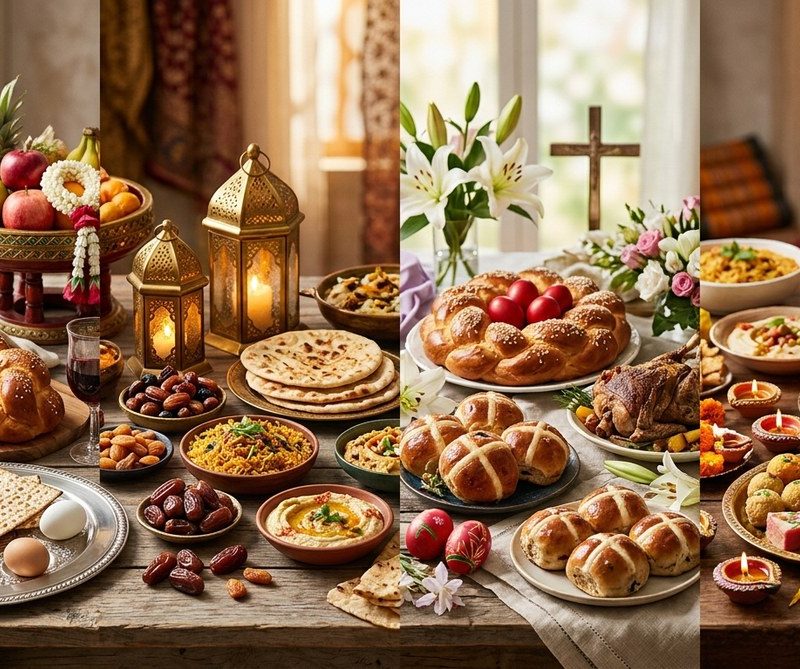
Food carries meaning far beyond nutrition in religious communities worldwide. A single dish can represent centuries of faith, mark the passage of sacred time, or connect believers to divine principles through taste and ritual.
Religious food traditions shape how billions of people eat, celebrate, and express devotion. From Christian communion bread to Hindu prasad offerings, these culinary practices encode theological principles, mark sacred calendars, and strengthen community bonds. Understanding these traditions reveals how faith transforms ordinary ingredients into vehicles of spiritual meaning and cultural identity across generations.
Why Food Matters in Religious Practice
Religious communities have always understood that eating is never just physical sustenance. Meals create community. Specific ingredients carry symbolic weight. Preparation methods honor divine commandments.
Food appears in sacred texts across traditions. The Bible describes manna from heaven. The Quran details permissible and forbidden foods. Hindu scriptures outline offerings that please different deities. Buddhist teachings address mindful consumption.
These aren’t arbitrary rules. Each tradition uses food to teach core beliefs, mark time, and create shared identity.
Christianity and the Sacred Table
Christian food traditions center on remembrance and celebration. The Eucharist or Communion stands as the most significant ritual meal, where bread and wine represent Christ’s body and blood.
Lent brings 40 days of fasting or dietary restriction before Easter. Many Christians give up meat, sweets, or other foods. This mirrors Jesus’s time in the wilderness.
Easter Sunday reverses this restraint. Families prepare lamb, ham, eggs, and rich breads. The egg symbolizes resurrection and new life.
Christmas tables vary by culture but share abundance. Italian families serve the Feast of the Seven Fishes on Christmas Eve. German traditions include stollen bread. Mexican celebrations feature tamales and ponche.
“The Christian table teaches that physical hunger and spiritual hunger connect. Fasting makes feasting meaningful. Shared meals build the body of believers.” — Religious Studies Scholar
Islamic Dietary Laws and Celebrations
Halal guidelines govern what Muslims eat daily. The term means “permissible” in Arabic. Animals must be slaughtered in specific ways, with prayers said during the process. Pork and alcohol are forbidden.
Ramadan transforms the entire rhythm of eating for one lunar month. Muslims fast from dawn until sunset, breaking each evening’s fast with dates and water, following the Prophet Muhammad’s example.
The pre-dawn meal, suhoor, provides sustenance for the day ahead. Families wake early to eat together before the fast begins.
Eid al-Fitr marks Ramadan’s end with festive meals. Dishes vary by region but share celebratory richness. Middle Eastern tables feature lamb, rice dishes, and sweets like baklava. South Asian communities prepare biryani and sheer khurma, a vermicelli pudding.
Eid al-Adha commemorates Abraham’s willingness to sacrifice his son. Families who can afford it slaughter an animal, distributing meat to relatives, neighbors, and those in need.
Jewish Kashrut and Festival Foods
Kosher laws, or kashrut, structure Jewish eating. These rules separate meat and dairy, prohibit certain animals, and require specific slaughter methods.
Keeping kosher means maintaining separate dishes, utensils, and sometimes entire kitchens for meat and dairy. Fish with fins and scales are permitted. Shellfish are not. Land animals must have split hooves and chew cud.
Shabbat begins Friday evening with two braided challah loaves representing the double portion of manna God provided before the Sabbath in the wilderness. Families share wine, bread, and a festive meal.
Passover eliminates all leavened bread for eight days, commemorating the Israelites’ hasty exodus from Egypt. Matzo, unleavened crackers, replace regular bread. The Seder meal follows a specific order, with symbolic foods on the Seder plate.
Rosh Hashanah, the Jewish New Year, features apples dipped in honey for a sweet year ahead. Round challah symbolizes the cycle of the year. Pomegranates represent the hope for abundant blessings.
Yom Kippur requires a complete fast for 25 hours. The break-fast meal afterward often includes dairy dishes, bagels, and fish.
Hindu Offerings and Vegetarian Principles
Many Hindus practice vegetarianism, viewing it as an expression of ahimsa, or non-violence. The cow holds sacred status, making beef consumption taboo for most practitioners.
Prasad refers to food offered to deities during puja (worship) and then distributed to worshippers. This transforms ordinary food into blessed sustenance. Common prasad items include fruits, sweets, and coconut.
Different deities receive specific offerings. Ganesha receives modak, sweet dumplings. Krishna receives butter and milk products. Durga receives sweets and fruits during Navaratri.
Fasting, or upvas, takes many forms. Some Hindus avoid grains on certain days, eating only fruits and dairy. Others consume one meal daily during specific observances. Navaratri brings nine nights of restricted eating for many devotees.
Diwali, the festival of lights, brings an abundance of sweets. Families prepare or purchase boxes of mithai (sweets) to share with neighbors and relatives. Popular varieties include ladoo, barfi, and jalebi.
Holi celebrations include thandai, a spiced milk drink, and gujiya, sweet pastries filled with dried fruits and nuts.
Buddhist Mindfulness and Monastic Meals
Buddhism emphasizes mindful eating rather than strict dietary laws. Many Buddhists choose vegetarianism to practice compassion, though this isn’t universal across all Buddhist traditions.
Monks follow the Vinaya, monastic rules that include eating guidelines. Theravada monks eat only before noon, consuming nothing but water and medicine afterward. They accept whatever food laypeople offer, though they may refuse meat if the animal was killed specifically for them.
Zen Buddhist monasteries practice oryoki, a formal meal ritual using nested bowls. Practitioners eat in silence, taking only what they need and cleaning bowls with tea and a pickle at meal’s end.
Vesak, celebrating Buddha’s birth, enlightenment, and death, brings vegetarian feasts to temples. Devotees prepare elaborate vegetarian dishes to share with the community.
Chinese Buddhist traditions observe additional restrictions during specific lunar months, with many laypeople adopting vegetarian or vegan diets during these periods.
How to Respectfully Participate in Religious Meals
Understanding religious food traditions helps you navigate interfaith gatherings, educational settings, and cross-cultural friendships. Here’s how to approach these situations with respect.
- Ask before attending what dietary requirements the meal follows.
- Inform hosts of your own restrictions or allergies in advance.
- Observe how others begin eating (prayers, blessings, or specific rituals may come first).
- Follow serving customs, which may include elders eating first or specific seating arrangements.
- Accept small portions of unfamiliar foods rather than refusing outright.
- Thank hosts using appropriate phrases from their tradition when possible.
Common Religious Food Practices Across Traditions
| Practice | Religions | Purpose | Example Foods |
|---|---|---|---|
| Fasting | Christianity, Islam, Judaism, Hinduism, Buddhism | Spiritual discipline, remembrance, purification | Water only, limited meals, specific food avoidance |
| Feast days | All major religions | Celebration, community building, marking sacred time | Holiday-specific dishes, abundant meals |
| Dietary restrictions | Judaism, Islam, Hinduism, some Christian denominations | Obedience, identity, ethical practice | Kosher, halal, vegetarian foods |
| Ritual meals | Christianity, Judaism, Hinduism | Worship, connection to divine | Communion elements, Seder foods, prasad |
| Symbolic foods | All major religions | Teaching, remembrance | Eggs for rebirth, honey for sweetness, bitter herbs for suffering |
Regional Variations Within Religious Traditions
Religious food traditions adapt to local ingredients and cultural contexts. Mexican Catholics celebrate the Virgin of Guadalupe with tamales and atole. Ethiopian Orthodox Christians prepare doro wat, a spicy chicken stew, for feast days after fasting periods.
Indian Muslims prepare different biryanis than Arab Muslims, though both follow halal guidelines. Regional spices, cooking methods, and ingredient availability shape these variations.
Jewish communities developed distinct cuisines based on geography. Ashkenazi Jews from Eastern Europe eat gefilte fish, matzo ball soup, and kugel. Sephardic Jews from Mediterranean regions prepare dishes like shakshuka and sambusak.
These regional differences don’t diminish religious authenticity. They demonstrate how faith traditions root themselves in specific places while maintaining core principles. Understanding why we eat what we eat helps clarify how geography shapes religious foodways.
Teaching Religious Food Traditions in Educational Settings
Educators can use food to make religious studies tangible and engaging. Cooking demonstrations, shared meals, and taste tests transform abstract concepts into sensory experiences.
Here are effective approaches:
- Partner with families from different faith communities to present authentic traditions
- Focus on the meaning behind foods rather than just recipes
- Address common misconceptions about religious dietary practices
- Create comparison charts showing similarities across traditions
- Include students’ own family traditions, religious or secular
Avoid treating religious foods as exotic curiosities. Present them as meaningful practices that billions of people follow daily. Respect that some students may observe these traditions themselves.
Common Mistakes When Learning About Religious Food Traditions
Many well-meaning people stumble when approaching religious foodways. Here’s what to avoid.
Assuming all members of a faith follow identical practices. Individual observance varies widely within every tradition. Some Muslims drink coffee during Ramadan fasting hours (it’s debated). Some Jews keep kosher at home but not in restaurants. Some Hindus eat meat. Personal interpretation and cultural context matter.
Treating religious food rules as arbitrary. These practices carry deep meaning for believers. Dismissing them as “just tradition” or “outdated rules” shows disrespect. You don’t have to believe, but you should understand the reasoning believers offer.
Conflating ethnicity and religion. Not all Arabs are Muslim. Not all Indians are Hindu. Not all Americans are Christian. Religious identity and ethnic identity overlap but aren’t identical.
Focusing only on restrictions. Religious food traditions include celebration, abundance, and joy. The festive meals matter as much as the fasts.
Appropriating without understanding. Enjoying foods from religious traditions you don’t practice is fine. Stripping them of meaning or misrepresenting their significance isn’t.
How Religious Food Traditions Strengthen Communities
Shared meals build bonds. Preparing festival foods together passes knowledge between generations. Dietary restrictions create visible markers of identity.
When Muslims break fast together during Ramadan, they reinforce community ties. When Jewish families gather for Shabbat dinner, they create weekly anchors of connection. When Hindu temples distribute prasad, they affirm that all who worship receive divine blessing equally.
These practices also create interfaith connection points. Many religious communities invite neighbors to festival meals. Sharing food becomes a way to share culture, build understanding, and create friendships across difference.
Food traditions make abstract beliefs concrete. Children learn theology through taste. The bitterness of Passover’s maror teaches about slavery’s hardship. The sweetness of Eid’s dates teaches about breaking fasts with gratitude. The simplicity of Buddhist monastic meals teaches about non-attachment.
Religious food traditions also preserve cultural heritage. Recipes pass through families for centuries. Preparation methods connect contemporary practitioners to ancestors. Even as communities migrate and adapt, certain foods maintain links to homelands and histories. Learning about traditional food rituals from around the world reveals these deeper cultural connections.
Modern Adaptations and Continuing Traditions
Religious food traditions evolve while maintaining core principles. Kosher and halal certifications now appear on packaged foods, making observance easier in modern life. Vegetarian and vegan alternatives allow Buddhist and Hindu principles to align with contemporary dietary movements.
Technology changes practice too. Apps help Muslims find halal restaurants. Websites offer kosher product databases. Online communities share recipes for traditional festival foods, helping diaspora communities maintain connections.
Yet the essential purposes remain. Food still marks sacred time. Meals still build community. Dietary practices still express devotion and identity.
Young people adapt traditions to their contexts. College students organize Iftar dinners in dorm common rooms. Jewish students host Shabbat meals in campus apartments. Hindu student associations celebrate Diwali with potlucks featuring both traditional sweets and fusion dishes.
These adaptations don’t dilute traditions. They demonstrate vitality and relevance. Religious food practices survive because they meet real human needs for meaning, connection, and identity.
Bringing Faith to Your Table
Religious food traditions offer wisdom beyond their original contexts. The practice of mindful eating, central to Buddhism, benefits anyone seeking healthier relationships with food. The Jewish concept of making ordinary meals sacred through blessings adds gratitude to daily life. The Islamic emphasis on sharing food with those in need models generosity.
You don’t need to adopt a faith to appreciate these insights. Understanding how others use food to express devotion, mark time, and build community enriches your own relationship with eating and sharing meals.
Whether you’re a student researching world religions, an educator planning lessons, or simply someone curious about how faith shapes daily life, religious food traditions provide accessible entry points. They connect ancient wisdom to present practice through the universal human experience of eating together.
The next time you share a meal, consider what it represents beyond nutrition. Every table tells a story. Every dish carries meaning. Religious communities have understood this for millennia, transforming everyday eating into sacred practice.