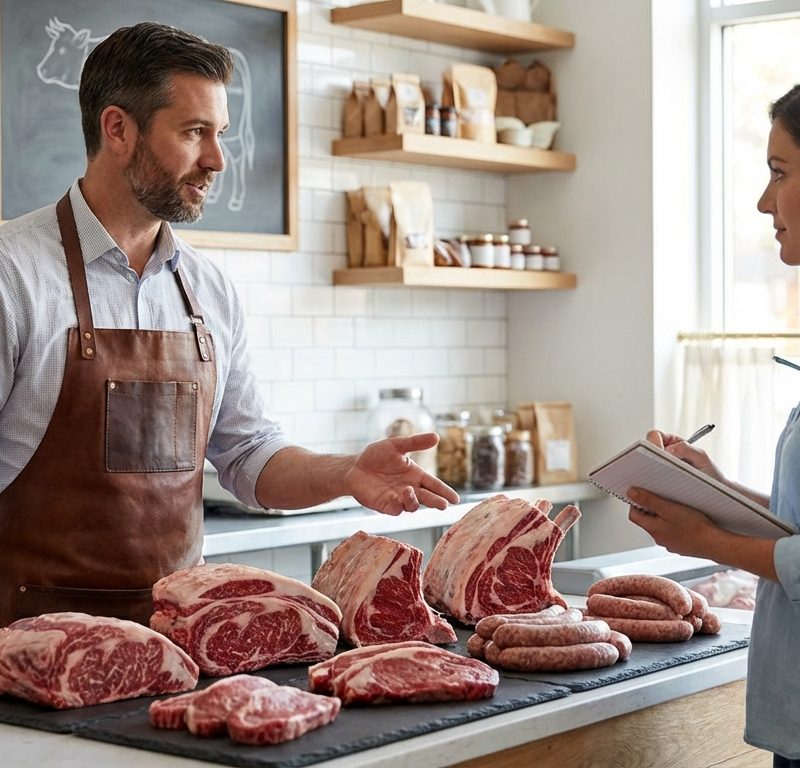
Walking into a butcher shop can feel intimidating if you’re used to grabbing pre-packaged meat from the supermarket. But your butcher is one of the most valuable resources in your kitchen arsenal. They know every cut in the case, understand how different cooking methods affect flavor and texture, and can guide you toward the best choice for your budget and recipe. The difference between a good meal and a great one often starts with asking the right questions before you buy.
Asking your butcher about sourcing, aging, cooking methods, and cut recommendations transforms your shopping experience. These conversations help you select better meat, learn preparation techniques, avoid waste, and build a relationship that gives you access to specialty cuts and expert advice. The questions you ask determine the quality of what ends up on your plate.
Where does this meat come from?
Understanding the origin of your meat matters for quality, flavor, and peace of mind.
A good butcher can tell you exactly where their beef, pork, chicken, and lamb originate. They should know the farm names, the region, and how far the animals traveled to reach the shop. Local sourcing often means fresher meat and better traceability.
Ask if the animals were raised on pasture or in confinement. Grass-fed beef tastes different from grain-finished beef. Pasture-raised pork develops more marbling than factory-farmed alternatives. Heritage breed chickens have firmer texture than commercial broilers.
Some butchers work directly with farmers. Others source from regional processors. Both approaches can yield excellent results, but knowing the supply chain helps you make informed choices.
What did these animals eat?

Diet directly affects flavor, fat composition, and nutritional content.
Grass-fed cattle produce leaner meat with a more pronounced mineral flavor. Grain-finished beef develops sweeter fat and more marbling. Some ranchers use a hybrid approach, finishing grass-fed cattle on grain for the final weeks to balance flavor and tenderness.
Pork from pigs fed acorns or nuts tastes noticeably different from pork raised on corn. Chickens allowed to forage develop richer-tasting dark meat. Even the type of grain matters. Barley-fed beef has different characteristics than corn-fed.
Ask about what goes into the feed. Organic certification means no synthetic pesticides or GMOs in the diet. Some farms add flax or other supplements to boost omega-3 content.
How long has this been aged?
Aging transforms tough cuts into tender, flavorful centerpieces.
Dry-aged beef develops concentrated flavor and buttery texture as enzymes break down muscle fibers and moisture evaporates. Most butchers age beef for at least 14 days. Premium shops offer 21, 28, or even 45-day aged cuts.
Wet-aged meat is vacuum-sealed and aged in its own juices. It’s more common and less expensive than dry-aging. The texture improves, but the flavor stays milder.
Not all cuts benefit from aging. Lean cuts like tenderloin don’t have enough fat to protect them during the dry-aging process. Pork and chicken are rarely aged at all.
Ask your butcher which cuts they age and for how long. If you’re planning a special dinner, request a specific aging period. Many shops will accommodate if you order ahead.
Which cut works best for my cooking method?
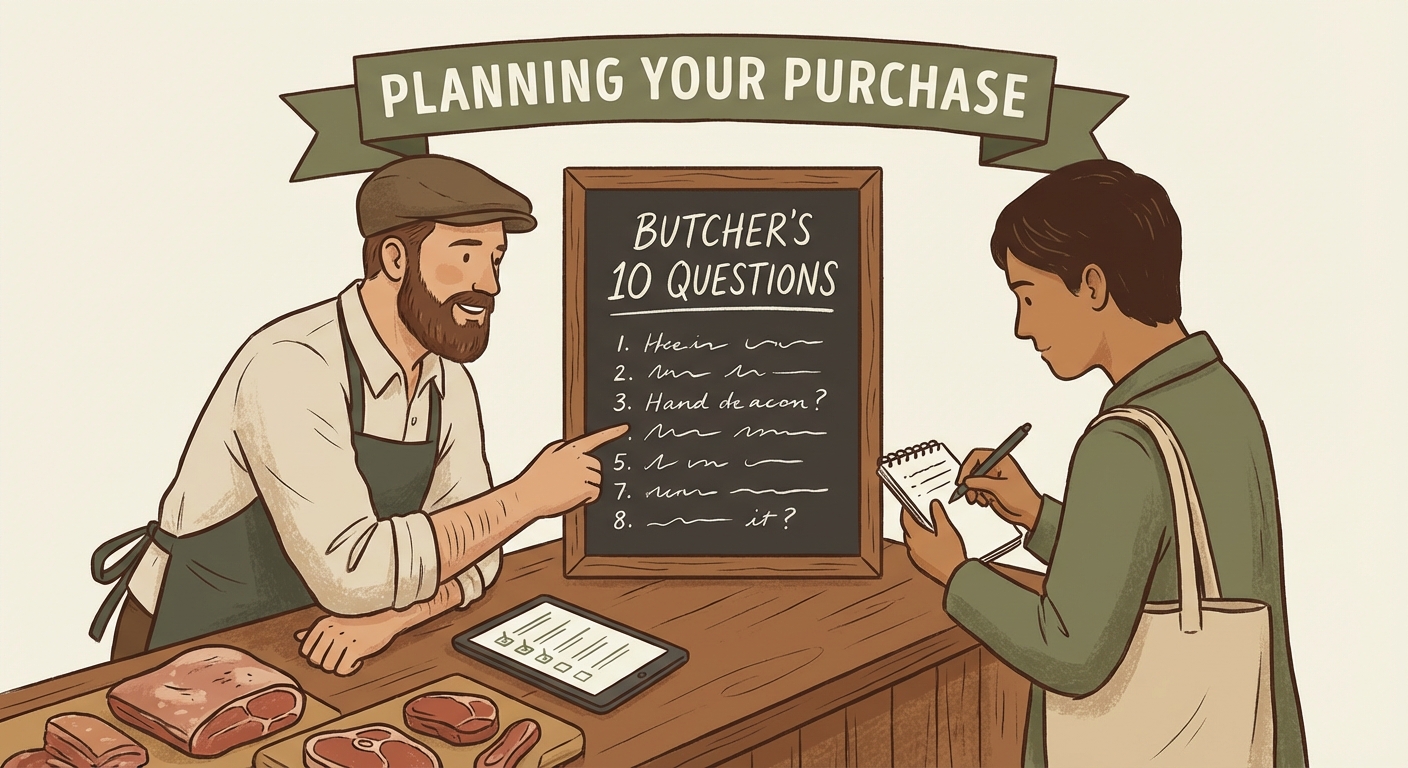
Matching the cut to your cooking technique prevents disappointment.
Tender cuts like ribeye, strip steak, and tenderloin shine with high-heat methods. Grill them, pan-sear them, or broil them. They cook fast and stay juicy.
Tougher cuts with more connective tissue need low, slow cooking. Chuck roast, short ribs, and brisket become tender and rich when braised, smoked, or slow-roasted. The collagen melts into gelatin, creating that melt-in-your-mouth texture.
Some cuts work multiple ways depending on thickness and preparation. Flank steak can be grilled hot and fast if you slice it thin against the grain. Pork shoulder can be roasted whole or cut into cubes for stew.
Your butcher knows these distinctions. Tell them what you’re making, and they’ll steer you toward the right cut. If you’re planning to braise, they might suggest a bone-in option for extra flavor. If you’re grilling, they’ll point you toward cuts with good marbling.
Can you cut this a specific way?
Custom cutting gives you exactly what you need.
Butchers can butterfly thick chops for even cooking. They can french a rack of lamb for elegant presentation. They can cut steaks thicker or thinner than what’s in the case.
If you’re making stir-fry, ask them to slice beef or pork into thin strips. For kebabs, request uniform cubes. For roulades, they can pound cutlets to an even thickness.
Some preparations require specific cuts that aren’t always on display. If you want beef cheeks for braising or oxtail for soup, ask. Many butchers keep these cuts in the back or can order them with notice.
Don’t hesitate to request modifications. Removing excess fat, tying a roast, or splitting a whole chicken are all standard services. Most butchers are happy to accommodate.
What’s the best way to cook this particular cut?
Expert cooking advice comes free with every purchase.
Your butcher handles these cuts daily and knows how they respond to heat. They can tell you the ideal internal temperature, whether to sear first or reverse-sear, and how long to let it rest.
For tougher cuts, they might suggest braising liquid ratios or smoking temperatures. For delicate cuts, they’ll warn you about overcooking. They know which cuts benefit from marinades and which are better with just salt and pepper.
Ask about timing. A thick ribeye needs different handling than a thin skirt steak. A whole chicken roasts differently than spatchcocked chicken.
Many butchers will share family recipes or preparation tricks. These insights are worth as much as the meat itself.
“The relationship you build with your butcher is like having a cooking coach who also controls your ingredient quality. They want you to succeed because your success brings you back.”
Do you make your own sausages and ground meat?
House-made products often outperform commercial alternatives.
Butchers who grind their own meat can tell you exactly what goes into it. They control the fat ratio, the blend of cuts, and the seasoning. Fresh-ground beef made from chuck and short rib tastes completely different from generic supermarket ground beef.
House-made sausages let you try flavor combinations you won’t find elsewhere. Butchers experiment with regional styles, seasonal ingredients, and creative spice blends. The casings are usually natural, and the texture is coarser and more satisfying than factory sausages.
Ask what they grind daily. Some shops make fresh batches of ground beef, pork, and lamb every morning. Others grind to order, which guarantees maximum freshness.
If you have specific needs, many butchers will create custom grinds. Want 80/20 ground lamb? They can do it. Need a specific sausage for a recipe? Give them a few days’ notice.
What’s the most underrated cut you carry?
Hidden gems save money and expand your cooking repertoire.
Every butcher has a favorite cut that customers overlook. It might be hanger steak, which has incredible flavor but odd shape. It could be pork collar, which has perfect marbling for grilling. Or beef shank, which makes the richest braises.
These cuts are often less expensive because they’re less familiar. But in the hands of someone who knows how to cook them, they rival premium options.
Ask your butcher what they take home for their own dinners. That’s usually the best value in the case. They’ll explain how to prepare it and what to expect.
Trying new cuts keeps your meals interesting and your budget flexible. As you become comfortable with these options, you’ll have more tools for different occasions.
Can I see the marbling and color up close?
Visual inspection tells you about freshness and quality.
Good beef has bright red color with white or cream-colored fat. If the meat looks brown or the fat is yellow, it might be oxidized or old. Pork should be pale pink with white fat. Chicken should look plump and moist, not dry or discolored.
Marbling is the white flecks of fat within the muscle. More marbling usually means more flavor and tenderness. Look for even distribution rather than large pockets of fat.
Your butcher should be happy to show you different options and explain what you’re seeing. If they’re reluctant to let you examine the meat closely, that’s a red flag.
Some cuts naturally have less marbling. Tenderloin is lean by nature. But within each cut, you can still compare marbling levels and choose what fits your preference.
Do you have bones, fat, or trim available?
These extras add depth to stocks, sauces, and rendered cooking fat.
Beef bones make rich stock for soups and sauces. Chicken backs and necks are perfect for broth. Pork bones add body to ramen and bean dishes.
Many butchers sell bones inexpensively or even give them away. They’re often already cut to fit in a stockpot. Some shops roast them first for deeper flavor.
Fat trimmings can be rendered into cooking fat. Beef tallow is excellent for frying. Pork fat becomes lard for baking and sautéing. Both are more flavorful than neutral oils.
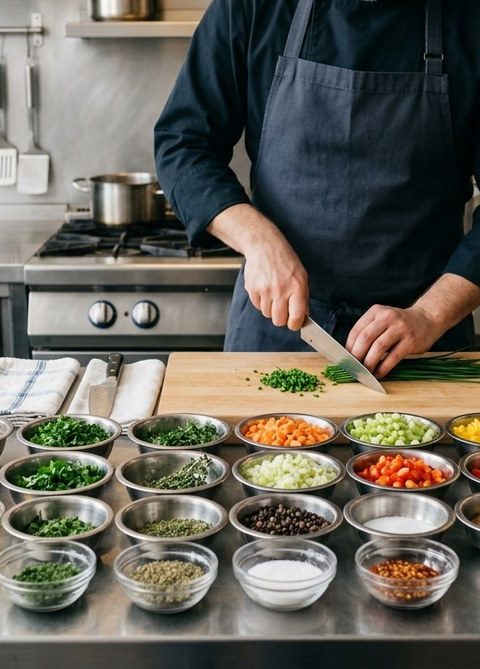
Ask what’s available and how much it costs. Building these ingredients into your cooking routine improves flavor and reduces waste. The complete guide to mise en place explains how professional kitchens use every part of their ingredients.
How should I store this at home?
Proper storage extends freshness and maintains quality.
Fresh meat should be refrigerated immediately and used within a few days. If you’re not cooking it right away, freeze it. Your butcher can tell you how long each cut stays good in the freezer and the best way to wrap it.
Some cuts freeze better than others. Steaks and chops freeze well if wrapped tightly to prevent freezer burn. Ground meat should be used within three months. Cured or smoked products have different requirements.
Ask about thawing methods. Slow thawing in the refrigerator preserves texture better than microwave defrosting. Some cuts can be cooked from frozen if you adjust timing.
If you’re buying in bulk, your butcher might vacuum-seal portions for you. This extends freezer life significantly and makes meal planning easier.
Common mistakes when buying meat
| Mistake | Why it matters | Better approach |
|---|---|---|
| Buying only by price per pound | Cheap cuts with lots of waste cost more per serving | Ask about yield after trimming and cooking |
| Choosing lean cuts for slow cooking | Low fat means dry, tough results | Use well-marbled cuts for braises and roasts |
| Skipping the conversation | You miss expert advice and better options | Describe your meal plan and ask for recommendations |
| Buying too far ahead | Meat loses quality even when refrigerated | Purchase closer to cooking day or freeze immediately |
| Ignoring thickness | Uneven thickness causes uneven cooking | Request uniform cuts or adjust cooking method |
Building trust with your butcher
Regular visits create a relationship that benefits both sides.
When your butcher knows your preferences, they can set aside special cuts, alert you to sales, and suggest new options that match your taste. They’ll remember that you like thick-cut pork chops or prefer grass-fed beef.
Be honest about your skill level. If you’re learning, say so. Good butchers enjoy teaching and want you to succeed. They’ll suggest forgiving cuts and simple preparations until you build confidence.
Give feedback. If something was amazing, tell them. If a cut didn’t work out, ask what went wrong. This helps them serve you better and improves your cooking.
Consider buying whole chickens, larger roasts, or variety packs. This shows commitment and often unlocks better pricing. Many butchers offer bulk discounts or loyalty programs for regular customers.
Shopping strategies for better value
Smart shopping stretches your budget without sacrificing quality.
- Buy whole chickens and break them down yourself
- Purchase larger cuts and portion them at home
- Ask about weekend specials or end-of-day markdowns
- Try different cuts from the same animal to find favorites
- Stock up when prices drop and freeze extras
- Consider splitting bulk orders with friends
- Request trim and bones for stocks and rendered fat
Timing matters. Some shops mark down meat on Sunday evenings or before holidays. Others have weekly specials on specific cuts. Ask when they reduce prices or run promotions.
Building flexibility into your meal planning helps you take advantage of deals. If you’re comfortable cooking different cuts, you can buy what’s on sale rather than sticking to a rigid shopping list.
What to look for in a quality butcher shop
Not all butcher shops offer the same level of service or quality.
The best shops keep their cases clean and well-organized. The meat looks fresh, not dried out or discolored. The staff seems knowledgeable and eager to help rather than rushed or dismissive.
Temperature control matters. The display case should be cold enough that you can feel the chill. Meat shouldn’t be sitting out at room temperature.
Watch how they handle meat. Clean gloves, sanitized cutting boards, and separate areas for different proteins indicate good food safety practices.
A diverse selection suggests strong supplier relationships and customer demand. Shops that carry unusual cuts, house-made products, and seasonal specialties usually have experienced butchers who care about their craft.
Making the most of every visit
Preparation helps you get better results from each trip.
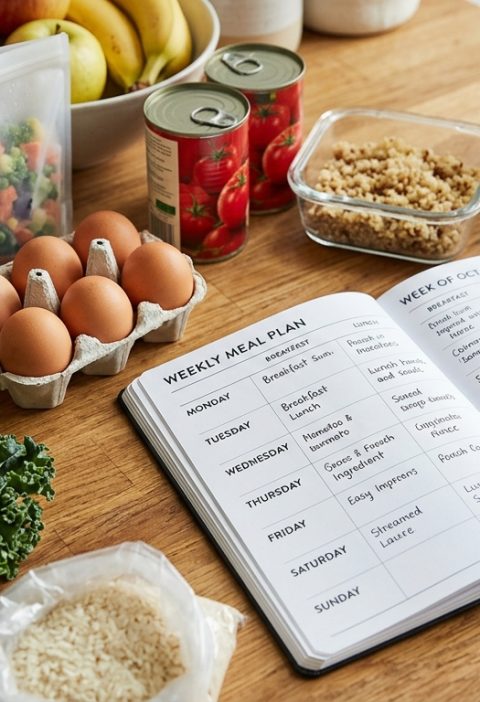
Think about your meals for the week before you go. Know roughly what you want to cook, even if you’re flexible on specific cuts. This helps your butcher make useful suggestions.
Bring a cooler if you’re buying multiple items or if the weather is warm. Keeping meat cold from shop to home preserves quality.
Don’t rush. Good butchers need time to cut custom orders, answer questions, and offer advice. Shopping during off-peak hours gives you more attention.
Take notes on what you buy and how it turns out. This builds your knowledge and helps you make better choices next time. Over time, you’ll develop preferences and expertise that make shopping faster and more satisfying.
Your butcher is your cooking partner
The questions you ask transform a simple transaction into a learning opportunity. Each conversation teaches you something new about meat, cooking, or food sourcing. Your butcher’s expertise becomes your advantage in the kitchen.
Start with one or two questions on your next visit. As you get comfortable, add more. The relationship grows naturally when both sides benefit. You get better meat and cooking advice. They get an engaged customer who appreciates their knowledge and craft. That partnership elevates every meal you make.